Construction Costs
The rising cost of labor and materials in the construction industry means that every insured dollar now rebuilds less, widening the recovery gap after disasters across the U.S. This trend is not just a local issue; it affects the entire nation, making disaster recovery more challenging and expensive.
Why This Matters
Understanding the rising costs of construction is crucial for several reasons. It impacts insurance policyholders, construction companies, and even the broader economy. As the cost of rebuilding increases, so does the financial burden on insurance companies and policyholders. This, in turn, affects the availability and affordability of insurance, particularly in areas prone to natural disasters.
The Impact of COVID-19 on Construction Costs
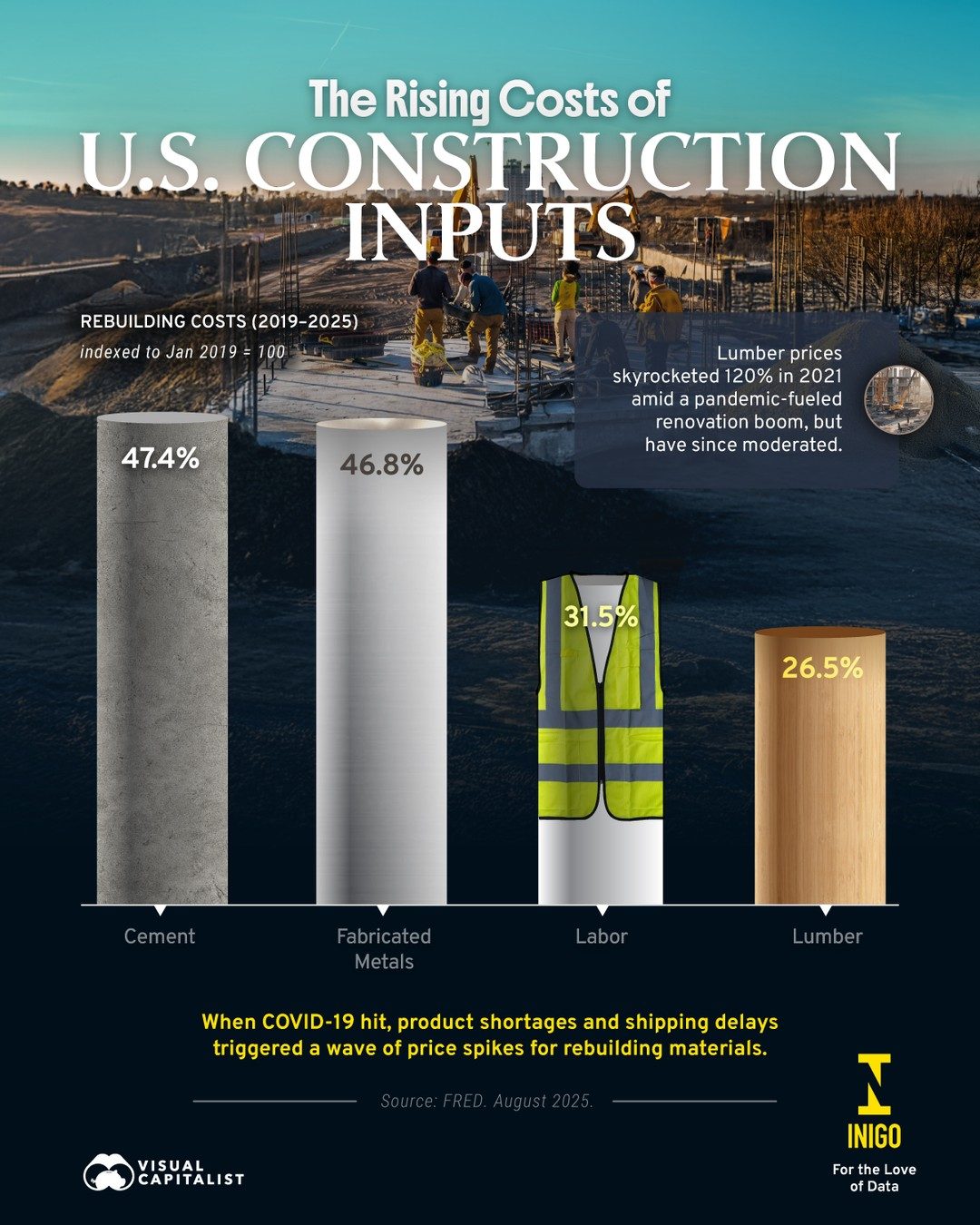
The COVID-19 pandemic had a significant impact on the construction industry, leading to a surge in prices for various building materials. Lumber prices, for instance, skyrocketed by 120% in 2021 due to supply chain disruptions, increased demand for home renovation projects, and other pandemic-related factors. Additionally, cement and fabricated metals saw substantial increases as well, with costs rising by 47.4% and 46.8% respectively. Construction labor costs also increased by 31.5%.
These price spikes were driven by a combination of product shortages and shipping delays. The pandemic disrupted global supply chains, leading to delays in the production and delivery of construction materials. This scarcity drove up prices as demand outstripped supply.
Rebuilding Costs from 2019 to 2025
The infographic highlights the period from 2019 to 2025, showing how construction costs have evolved. While the pandemic triggered a wave of price spikes, these costs have since moderated. However, the baseline for these materials remains higher than pre-pandemic levels. As a result, the cost of rebuilding after a disaster has increased significantly.
Cement
Cement costs increased by 47.4% over the period. This is a crucial material for construction, and its cost increase has a significant impact on overall building costs. The rise in cement prices can be attributed to increased demand and supply chain disruptions.
Fabricated Metals
Fabricated metals, essential for structural support and various construction applications, saw a 46.8% increase in cost. This includes materials like steel, which is a critical component in construction projects. The increase in metal prices can be linked to global supply chain issues and increased demand.
Labor
Labor costs in the construction industry increased by 31.5%. This increase is due to various factors, including a shortage of skilled labor and rising wages to attract and retain workers. The labor cost increase adds to the overall cost of construction projects, making them more expensive to complete.
Lumber
Lumber prices skyrocketed by 120% in 2021, driven by high demand and limited supply. The pandemic-led price surge has since moderated, but lumber prices remain higher than pre-pandemic levels. This increase has particularly affected home construction and renovation projects, which rely heavily on lumber.
The Broader Economic Impact
The rising cost of construction materials and labor has broader economic implications. It affects the overall cost of living, as higher construction costs lead to increased housing prices and rents. Additionally, it impacts the affordability of insurance premiums, as insurers must account for higher rebuilding costs.
Insurance Implications
For insurance companies, the rising cost of construction means that every insured dollar now rebuilds less. This means that policyholders may face higher deductibles or co-insurance requirements to cover the increased cost of rebuilding. In areas prone to natural disasters, this can make insurance unaffordable for some policyholders, leaving them vulnerable to financial losses.
Practical Tips
For those in the construction industry or planning a construction project, here are some practical tips to navigate the rising costs:
Plan Ahead
Careful planning can help mitigate the impact of rising construction costs. This includes budgeting for potential cost increases and identifying alternative materials or suppliers that may offer better value.
Negotiate Contracts
Negotiating contracts with suppliers and contractors can help manage costs. This includes locking in prices for materials and labor, as well as negotiating payment terms that work in your favor.
Monitor Market Trends
Staying informed about market trends and price fluctuations can help in making informed decisions. This includes keeping an eye on commodity prices, supply chain disruptions, and other factors that may impact construction costs.
Important Takeaways
The rising cost of construction materials and labor has significant implications for disaster recovery, insurance, and the broader economy. Key takeaways include:
- The COVID-19 pandemic triggered a wave of price spikes for construction materials, which have since moderated but remain higher than pre-pandemic levels.
- Cement, fabricated metals, labor, and lumber have seen significant cost increases, impacting the overall cost of construction projects.
- The rising cost of construction affects insurance premiums, making it more challenging for policyholders to rebuild after disasters.
- Planning ahead, negotiating contracts, and monitoring market trends can help manage the impact of rising construction costs.
Conclusion
The rising cost of construction materials and labor is a significant challenge for the industry and has broad economic implications. By understanding the factors driving these cost increases and taking proactive steps, individuals and businesses can better navigate this changing landscape. Whether you're an insurance policyholder, a construction company, or a homeowner planning a renovation, staying informed and proactive is key to managing the impact of rising construction costs.
Watch the Reel
Questions readers ask
How have rising construction costs affected post-disaster rebuilding efforts in the U.S.?
Rising construction costs have made post-disaster rebuilding significantly more expensive. This is due to increased labor and material expenses, which means that the same amount of insurance coverage now rebuilds less than it did in previous years, widening the recovery gap in disaster-prone areas.
What role has COVID-19 played in the increase of construction costs?
COVID-19 exacerbated the rise in construction costs by disrupting supply chains and causing labor shortages. These factors led to increased prices for essential construction materials like lumber, cement, and metals, further complicating disaster recovery efforts.
How do construction cost trends impact insurance affordability in disaster-prone areas?
As construction costs rise, so do the costs associated with rebuilding after disasters. This increased financial burden is passed on to insurance companies, which can lead to higher premiums for policyholders. In disaster-prone areas, this can make insurance less affordable, potentially leaving some homeowners uninsured.
What were the key construction input costs in 2019, and how have they changed?
In 2019, key construction input costs included labor, lumber, cement, and metals. Since then, there has been a notable increase in these costs, with lumber prices, in particular, experiencing significant volatility. These rising costs have contributed to the overall increase in construction expenses, making rebuilding efforts more challenging.
What is the projected trend for rebuilding costs by 2025?
By 2025, rebuilding costs are projected to continue rising due to sustained increases in construction material costs and labor expenses. This trend will likely exacerbate the recovery gap, making it even more challenging and costly to rebuild after disasters.
How do rising construction costs impact economic stability in the U.S.?
The rising costs of construction can lead to increased financial strain on both insurance companies and policyholders, particularly in areas prone to frequent natural disasters. This, in turn, can affect the broader economy by making insurance less accessible and affordable, potentially leading to economic instability in these regions.
Related deep dives
Similar reads based on topic and creator.


Recent articles
Fresh deep dives from the latest Reels we unpacked.




Comments
Be the first to comment.