Auto Loan Debt: A Rising Concern for Younger Americans
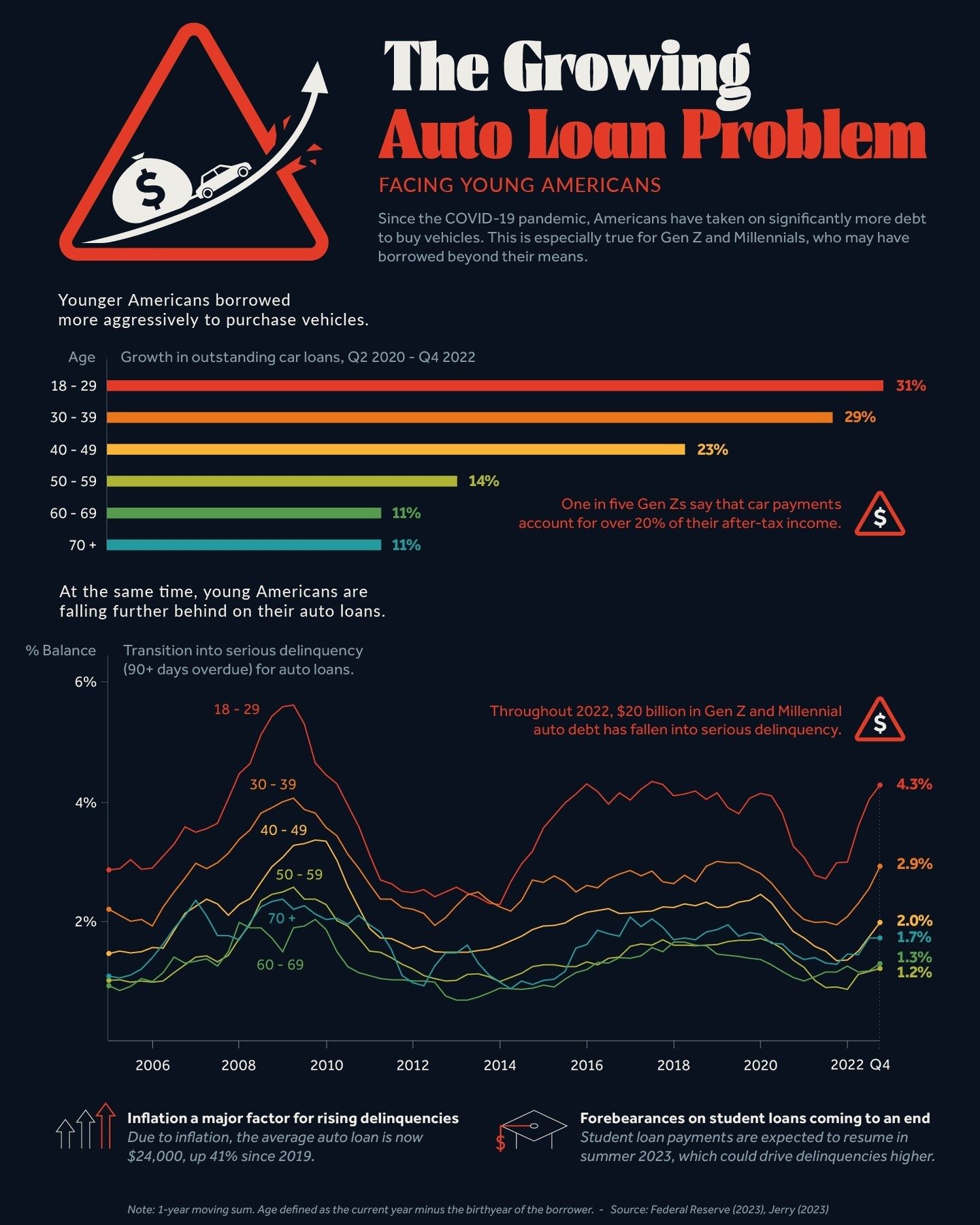
Since the pandemic, Americans have increasingly relied on auto loans to purchase vehicles, a trend particularly pronounced among Gen Z and Millennials. The Federal Reserve has expressed concern that these younger generations may have taken on more debt than they can manage, leading to a growing financial challenge.
Why This Matters
Understanding the trends and implications of auto loan debt is crucial for several reasons. Firstly, it affects the financial health of a significant portion of the population, particularly younger adults who are just establishing their financial footing. Secondly, rising delinquencies and default rates can have broader economic repercussions, impacting financial markets and the overall economy. Finally, the interplay between auto loans, inflation, and student loan payments highlights the complex web of financial pressures facing many Americans today.
The Growing Problem of Auto Loans
Rising Debt Levels
The data paints a clear picture: outstanding car loans have surged significantly since the second quarter of 2020. This period coincides with the onset of the COVID-19 pandemic, during which economic uncertainty led many to seek financial relief through loans. The growth in outstanding car loans has been particularly steep, with notable increases in specific quarters. For instance, the growth rates of 31%, 29%, and 23% in successive quarters indicate a rapid acceleration in borrowing.
Income vs. Car Payments
One of the most alarming statistics is that one in five Gen Z individuals report that their car payments account for over 20% of their after-tax income. This high percentage of income dedicated to car payments can leave little room for other essential expenses, savings, or investment. Such a financial strain can quickly become unsustainable, especially for those just starting their careers or facing economic instability.
Delinquencies on the Rise
Delinquencies, or late payments, on auto loans are also on an upward trajectory. The transition into serious delinquency—defined as payments being 90 or more days overdue—has become more common. This trend is concerning as it indicates that a growing number of individuals are struggling to keep up with their auto loan payments. The Federal Reserve's data from 2023 highlights this issue, showing that delinquencies have been increasing steadily over the past few years.
Factors Contributing to the Problem
Inflation
Inflation has been a significant factor contributing to the rising auto loan debt problem. Higher prices for goods and services, including the cost of vehicles and maintenance, have stretched budgets thin. This financial pressure can make it difficult for individuals to manage their loan payments, especially when their incomes have not kept pace with inflation.
Student Loans
The expected resumption of student loan payments in summer 2023 adds another layer of complexity. Many young adults already burdened with auto loan debt will soon face additional financial obligations. This dual pressure could drive delinquencies even higher, as individuals struggle to balance multiple loan payments alongside their other expenses.
Practical Tips for Managing Auto Loan Debt
Budgeting and Financial Planning
Creating a detailed budget can help manage auto loan payments more effectively. Start by tracking all income and expenses to understand where money is being spent. Allocate a specific portion of income to loan payments and prioritize essential expenses. Tools and apps are available to assist in budgeting and tracking financial goals.
Refinancing Options
Explore refinancing options to reduce the interest rate on auto loans. Lower interest rates can significantly decrease monthly payments, making them more manageable. However, it's important to weigh the pros and cons of refinancing, including potential fees and the impact on the loan term.
Improving Credit Score
A higher credit score can lead to better loan terms, including lower interest rates. Paying bills on time, reducing overall debt, and correcting any errors on a credit report can improve a credit score. Improving credit can also make it easier to qualify for better financing options in the future.
Exploring Payment Assistance Programs
Some lenders and financial institutions offer payment assistance programs for those facing financial hardship. These programs can provide temporary relief, such as deferred payments or reduced interest rates, to help manage loan payments during challenging times.
Considering Alternative Transportation
If auto loan payments are becoming unmanageable, consider alternative transportation methods. Public transit, carpooling, or even biking can reduce the financial burden of owning a car. This can provide temporary relief while working on a plan to manage debt more effectively.
Important Takeaways
Awareness and Monitoring
Being aware of the current financial situation and monitoring debt levels is crucial. Stay informed about interest rates, payment schedules, and any changes in loan terms. Regularly reviewing financial statements can help identify potential issues early and take proactive steps to address them.
Seeking Professional Advice
Consulting with a financial advisor can provide valuable insights and personalized strategies for managing auto loan debt. Professionals can offer guidance on budgeting, refinancing, and other financial management tools tailored to individual needs.
Balancing Financial Obligations
Balancing multiple financial obligations, such as auto loans and student loans, requires careful planning. Prioritize essential expenses and seek ways to reduce costs and increase income. This proactive approach can help manage debt more effectively and maintain financial stability.
Conclusion
The rising trend of auto loan debt, particularly among Gen Z and Millennials, presents significant financial challenges. Understanding the underlying factors, such as inflation and the resumption of student loan payments, is essential for addressing this issue. By implementing practical strategies, such as budgeting, refinancing, and exploring alternative transportation, individuals can better manage their auto loan debt and maintain financial stability. Staying informed and seeking professional advice can further support effective debt management and long-term financial health.
Watch the Reel
Related deep dives
Similar reads based on topic and creator.


Recent articles
Fresh deep dives from the latest Reels we unpacked.




Comments
Be the first to comment.