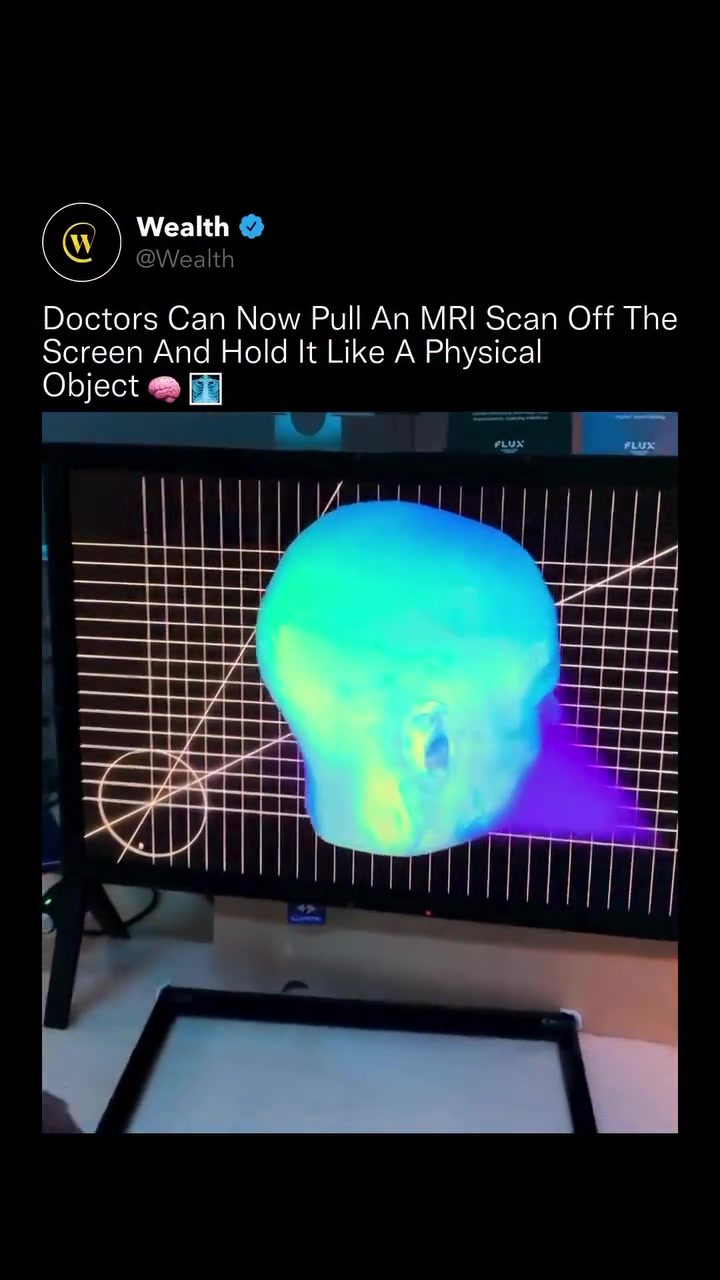
3D MRI Visualization
Advancements in medical technology have brought about innovative ways to visualize and interact with MRI scans. One such innovation is the holographic display of MRI scans, which transforms flat, black-and-white slices into a full 3D volume that can be manipulated in real time. This technology, demonstrated by FLUX, allows doctors to hold and examine a holographic representation of a brain, offering a more intuitive and interactive way to analyze medical imaging data.
Why This Matters
Traditional methods of reviewing MRI scans involve scrolling through numerous flat slices, which can be time-consuming and less intuitive. The ability to interact with a 3D model in open space provides a new level of detail and understanding. Surgeons can rotate the brain from any angle, making it easier to identify and plan for specific areas of interest. Furthermore, this technology can help improve diagnostic accuracy and surgical planning, ultimately enhancing patient outcomes.
Main Discussion
The Technology Behind Holographic MRI
Holographic displays use stereoscopic projection combined with head tracking to create a 3D image. The display sends slightly different images to each eye, mimicking how the brain perceives depth in the real world. This results in a solid object appearing to float in mid-air. Lightweight stereo glasses are used to enhance the depth perception, eliminating the need for bulky VR headsets.
Interactive Features
One of the standout features of this technology is the ability to manipulate the 3D model in real time. A handle allows the user to rotate the brain from any angle, providing a comprehensive view of the entire structure. This interactive capability is crucial for medical professionals who need to examine different perspectives of the brain.
Tissue Density Mapping
The colors used in the holographic display are not merely decorative; each shade maps to a different tissue density. This means that surgeons can easily distinguish between bone, soft tissue, and fluid at a glance. This feature is particularly valuable during preoperative planning, as it allows for a more accurate understanding of the tissue structure before making an incision.
Benefits for Medical Professionals
Doctors can now pull an MRI scan off the screen and hold it like a physical object. This tactile interaction provides a more intuitive way to analyze medical imaging data. The ability to manipulate the 3D model in real-time allows for a more detailed examination, which can lead to better diagnostic accuracy and more effective surgical planning. Additionally, the holographic display can help with the training of medical students and professionals by offering a hands-on learning experience.
Practical Tips
Choosing the Right Technology
When selecting a holographic display system for medical use, consider the following factors:
- Accuracy: Ensure the system provides accurate and detailed 3D representations of MRI scans.
- Ease of Use: The interface should be user-friendly, allowing for quick and easy manipulation of the 3D model.
- Compatibility: Verify that the system is compatible with your existing medical imaging equipment and software.
- Support and Maintenance: Choose a system that comes with reliable technical support and maintenance services.
Integrating Holographic Displays into Practice
Integrating holographic displays into your medical practice can significantly enhance your diagnostic and surgical planning capabilities. Here are some steps to help you get started:
- Assess Your Needs: Determine how a holographic display system can benefit your specific medical practice.
- Research Options: Explore different holographic display systems available in the market. Look for reviews and testimonials from other medical professionals.
- Training: Ensure that all staff members are properly trained to use the new technology effectively.
- Implementation: Gradually integrate the holographic display system into your workflow and monitor its impact on diagnostic accuracy and surgical planning.
- Feedback and Adjustment: Gather feedback from users and make necessary adjustments to optimize the system's performance.
Maintaining the Technology
Regular maintenance and updates are essential to keep the holographic display system functioning optimally. Follow the manufacturer's guidelines for maintenance and stay updated with the latest software updates. Additionally, ensure that the system is regularly calibrated to maintain accuracy and precision.
Important Takeaways
- Enhanced Visualization: Holographic displays transform flat MRI slices into a full 3D volume, providing a more intuitive and detailed view of the brain.
- Interactive Features: The ability to manipulate the 3D model in real time allows for a comprehensive examination from any angle.
- Tissue Density Mapping: Different colors represent varying tissue densities, making it easier to distinguish between bone, soft tissue, and fluid.
- Improved Diagnostic Accuracy: The enhanced visualization and interactive features can lead to better diagnostic accuracy and more effective surgical planning.
Conclusion
The advent of holographic displays for MRI scans represents a significant leap forward in medical technology. By allowing doctors to interact with 3D models of the brain, this technology offers a more intuitive and detailed way to analyze medical imaging data. The ability to rotate the brain from any angle and distinguish between different tissue densities provides valuable insights for diagnostic and surgical planning. As this technology continues to evolve, it has the potential to revolutionize the way medical professionals approach patient care.
Watch the Reel
Questions readers ask
How does holographic MRI technology enhance traditional MRI scans?
Holographic MRI technology converts flat 2D slices into interactive 3D brain models. This enables doctors to view and manipulate medical imaging data in real time, providing a more comprehensive understanding of complex structures.
What are the benefits of using holographic medical imaging for brain scans?
Holographic medical imaging allows for a more intuitive and detailed analysis of MRI brain scans. Doctors can rotate, zoom, and examine the 3D brain MRI from various angles, which can lead to more accurate diagnostics and better surgical planning.
How does the real-time interaction in 3D MRI holograms benefit surgeons?
Real-time interaction with 3D MRI holograms allows surgeons to explore the intricate details of the brain anatomy more efficiently. This hands-on approach helps surgeons to better understand the spatial relationships within the brain, making it easier to plan and execute complex surgeries.
What is the advantage of using a holographic MRI display over traditional MRI scans?
A holographic MRI display provides a 3D representation of the brain, whereas traditional MRI scans offer only 2D slices. This 3D visualization allows doctors to see the whole structure at once, rather than piecing together multiple slices, which can save time and improve diagnostic accuracy.
How does the 3D MRI hologram technology improve the analysis of medical imaging data?
3D MRI hologram technology improves the analysis of medical imaging data by providing a more detailed and interactive experience. This technology enables doctors to examine the brain model from different perspectives, helping them to identify abnormalities and make more informed decisions about patient care.
What are some practical applications of 3D MRI holograms in medical settings?
3D MRI holograms have practical applications in various medical settings, including pre-operative planning, post-operative evaluation, and patient consultations. Surgeons can use holographic scans to prepare for complex surgeries, and doctors can use them to explain conditions and treatment plans to patients more effectively.
How does the holographic MRI technology contribute to the advancement of medical imaging?
Holographic MRI technology represents a significant step forward in medical imaging by making the viewing and interaction with medical imaging data more dynamic and engaging. This technology allows for a deeper insight into the human brain and enhances the ability to detect and diagnose medical conditions more accurately.
Recent articles
Fresh deep dives from the latest Reels we unpacked.




Comments
Be the first to comment.