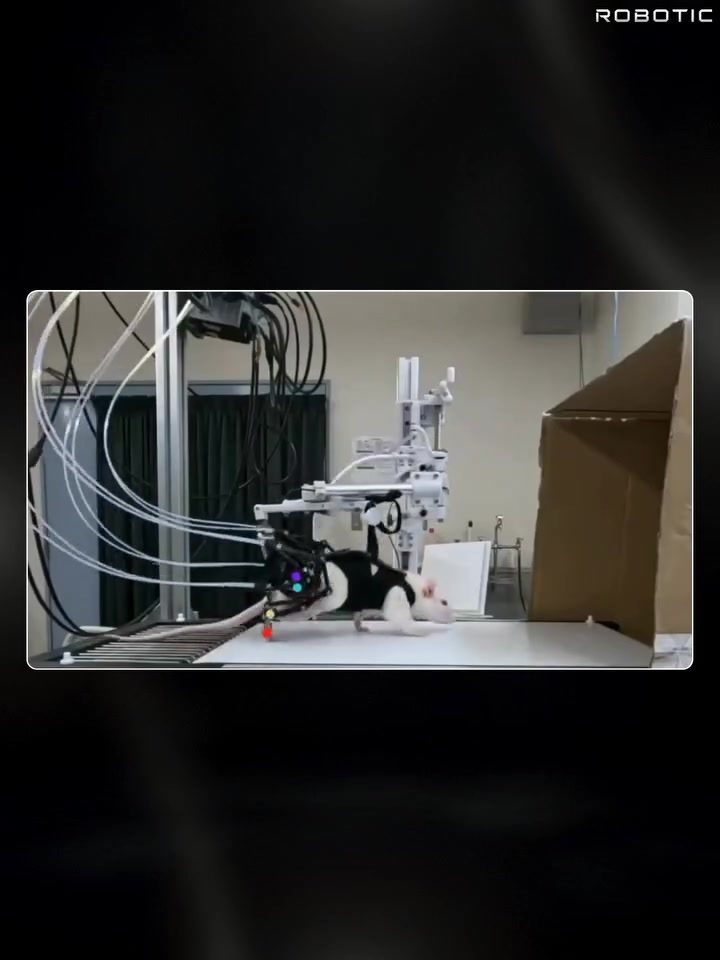
The Revolutionary Robotic Exoskeleton for Rat Hindlimbs
Robotic exoskeletons are opening new avenues for understanding and aiding movement recovery. Researchers from Nagoya University and the University of Tsukuba have developed the world’s first robotic exoskeleton designed specifically for a rat’s entire hindlimb. This innovative device provides a unique platform for studying movement recovery and rehabilitation, with far-reaching implications for human medical technologies.
Context: Why This Matters
The development of this exoskeleton is a significant leap in the fields of robotics and rehabilitation science. By creating a lightweight exoskeleton that assists the hip, knee, and ankle, researchers can now study how robotic assistance can support recovery after spinal cord injuries and neurological disorders. This breakthrough is pivotal for advancing future rehabilitation technologies for humans, offering insights into how robotic assistance can aid in natural movement and recovery.
Main Discussion
The Exoskeleton Design and Function
The exoskeleton developed by Nagoya University and the University of Tsukuba is designed to assist the rat’s entire hindlimb, encompassing the hip, knee, and ankle. This comprehensive support allows the rat to walk naturally, even with the assistance of the robotic device. The lightweight nature of the exoskeleton ensures that it does not hinder the rat’s movement, making it an ideal tool for studying movement recovery.
Applications in Research
The primary application of this exoskeleton is in research focused on movement recovery and rehabilitation. By observing how the rat’s movement is affected by the exoskeleton, scientists can gain valuable insights into how similar devices can be used to help humans recover from injuries and disorders. This research is crucial for developing the next generation of wearable exoskeletons, which could revolutionize medical rehabilitation.
The Role of Interdisciplinary Collaboration
The project combines robotics, biomechanics, and neuroscience to create a comprehensive approach to studying movement recovery. This interdisciplinary collaboration is essential for ensuring that the exoskeleton not only functions mechanically but also integrates seamlessly with the rat’s biological systems. By understanding the complex interactions between the exoskeleton and the rat’s body, researchers can refine the technology for future human applications.
Practical Tips
For Researchers
For researchers interested in replicating or building upon this work, the integration of multiple scientific disciplines is key. Collaboration between roboticists, biomechanics experts, and neuroscientists can provide a well-rounded approach to developing and testing exoskeletons. Additionally, ensuring that the device is lightweight and allows for natural movement is crucial for obtaining meaningful data.
For Developers
For developers looking to create similar exoskeletons, focusing on lightweight materials and precise control mechanisms is essential. The exoskeleton must be designed to assist movement without causing discomfort or hindering natural motion. This requires a deep understanding of biomechanics and the ability to translate that knowledge into functional robotic design.
Important Takeaways
- The exoskeleton developed by Nagoya University and the University of Tsukuba is a groundbreaking tool for studying movement recovery and rehabilitation.
- The device assists the rat’s entire hindlimb, allowing for natural walking and providing valuable data on robotic assistance.
- Interdisciplinary collaboration between robotics, biomechanics, and neuroscience is essential for developing effective exoskeletons.
- The insights gained from this research could shape the future of wearable exoskeletons for human rehabilitation.
- The lightweight design and precise control mechanisms of the exoskeleton are crucial for its effectiveness.
Conclusion
The development of the first robotic exoskeleton for a rat’s entire hindlimb marks a significant advancement in the field of rehabilitation technology. By providing a platform for studying movement recovery, this innovative device offers valuable insights that could shape the future of wearable exoskeletons for humans. The interdisciplinary approach taken by the researchers from Nagoya University and the University of Tsukuba serves as a model for future developments in this field, highlighting the importance of collaboration and innovation in advancing medical rehabilitation technologies.
Watch the Reel
Questions readers ask
How does the rat exoskeleton contribute to medical advancements?
The rat exoskeleton serves as a pioneering tool for studying how robotic assistance can aid in recovery processes. By understanding how this device supports the rat’s hindlimb, researchers can make significant strides in developing similar technologies for human use, particularly in spinal cord injury rehabilitation.
Who developed the robotic exoskeleton for rat rehabilitation?
The robotic exoskeleton was developed by researchers from Nagoya University and the University of Tsukuba. These institutions collaborated to create the first device of its kind, designed specifically for a rat’s entire hindlimb.
What are the key features of this robotic exoskeleton?
The exoskeleton is designed to support the entire hindlimb of a rat, including the hip, knee, and ankle. It is lightweight, making it suitable for the rat to move around while receiving assistance, which aids in studying movement recovery and rehabilitation.
How might this technology benefit human rehabilitation?
By studying the effects of the exoskeleton on rat recovery, researchers can gain insights into developing more advanced human rehabilitation technologies. This could lead to improved robotic devices that support human limbs, enhancing the recovery process for individuals with movement impairments.
What makes this exoskeleton a revolutionary tool for studying movement recovery?
The exoskeleton’s unique design and functionality provide a new way to study how robotic assistance can support movement recovery. By offering precise support to the rat’s hindlimb, it allows researchers to observe and analyze the recovery process in a way that was previously not possible.
How does this exoskeleton aid in the rehabilitation of rats?
The exoskeleton aids in the rehabilitation of rats by providing targeted support to the hindlimb, allowing the rat to move more effectively during the recovery process. This support can help in regaining mobility and strength, making it a valuable tool for studying the rehabilitation process in animal research.
Which institutions are involved in the creation of this new rat rehabilitation tool?
The creation of this new rat rehabilitation tool involves Nagoya University and the University of Tsukuba. These institutions collaborated to develop the exoskeleton, leveraging their expertise in robotics and rehabilitation science to create a groundbreaking device.
Recent articles
Fresh deep dives from the latest Reels we unpacked.




Comments
Be the first to comment.