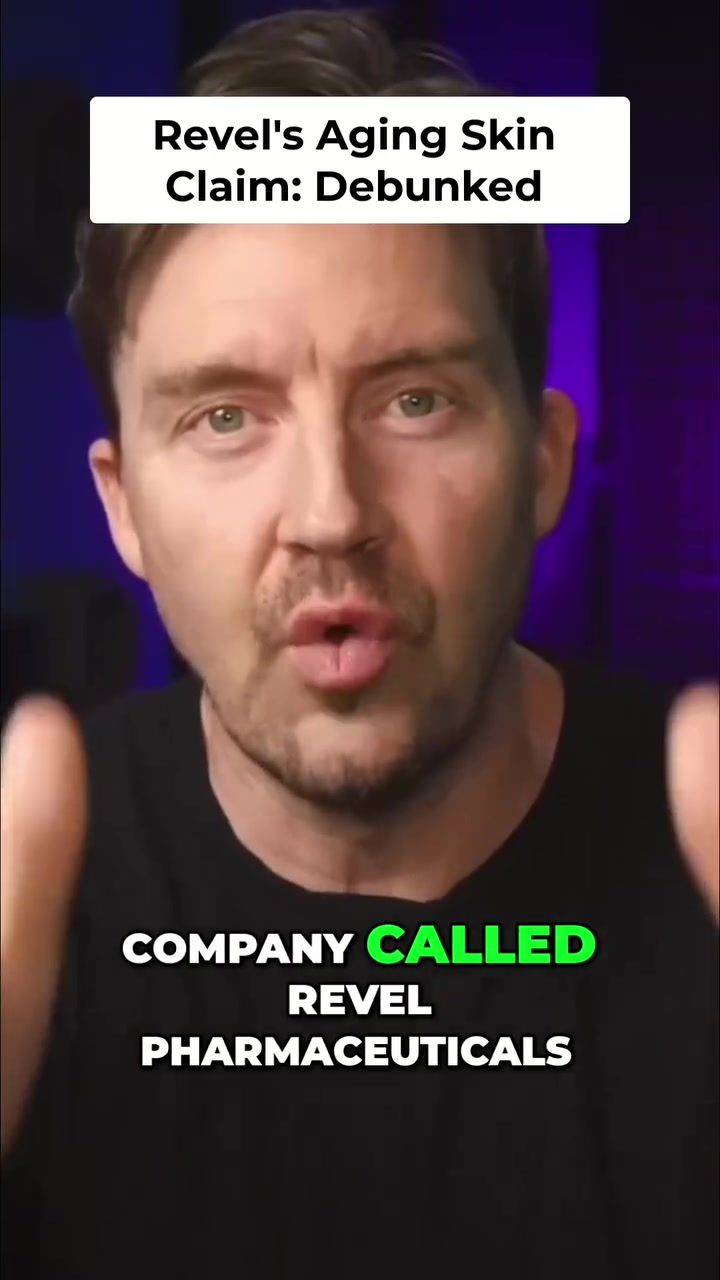
Debunking the Revel Aging Skin Claim: A Critical Look at the Science
The skincare company Revel Pharmaceuticals recently made a bold claim about reversing skin aging. The claim centered around an AI-engineered enzyme that allegedly transformed 75-year-old skin into 30-year-old skin. However, a close examination of the science behind this claim reveals significant discrepancies and oversimplifications.
Why This Matters
The pursuit of longevity and anti-aging solutions is a thriving field, driven by consumer demand for effective anti-aging skincare and cosmetics. However, the claims made by companies must be scrutinized to separate fact from marketing hype. This is particularly important in the context of skincare, where misleading claims can lead to misinformed choices and wasted resources.
The Revel Pharmaceuticals Claim
Revel Pharmaceuticals claimed that their AI-engineered enzyme had the ability to reverse the aging process in skin cells. Specifically, they asserted that this enzyme could transform 75-year-old skin into 30-year-old skin. This claim suggested a breakthrough in skincare technology, promising a way to functionally reverse the effects of aging.
The Reality of the Claim
Upon closer inspection, it becomes clear that the claim made by Revel Pharmaceuticals was not as revolutionary as presented. The process described actually involved treating dead cells in a dish rather than live skin cells. These dead cells had been fixed with formalin and embedded in paraffin, a process that essentially preserves the cells in a stagnant state. This means that any changes observed were not due to the restoration of youthful function in living cells but rather to alterations in dead, preserved tissue.
The Role of AI
Another key point of clarification is the role of AI in the process. Revel Pharmaceuticals emphasized that their enzyme was AI-engineered, suggesting a high level of technological sophistication. However, the actual role of AI was relatively minor. AI was used primarily for selecting the initial enzyme for directed evolution. The heavy lifting, or the significant development and refinement of the enzyme, was done through traditional laboratory methods, not through sophisticated AI algorithms.
The Science Behind Aging and Skin
Biological aging is a complex process that involves various molecular and cellular changes. Understanding the nuances of aging is crucial for evaluating claims about reversing or slowing down the process.
Directed Evolution and Enzymes
Directed evolution is a technique used to engineer enzymes and other proteins to achieve specific functions. It involves iteratively introducing mutations and selecting for desired traits. While this method can result in enzymes with improved properties, it does not necessarily mean that these enzymes can reverse the effects of aging in live skin.
Formalin and Paraffin Embedding
Formalin and paraffin embedding are techniques used in histology to preserve tissue samples for microscopic examination. These methods fix the tissue in a way that stops all biological processes, making it impossible for any functional changes to occur. Therefore, any apparent changes to the tissue are purely superficial and do not reflect a true reversal of aging.
The Expert Perspective
The claim by Revel Pharmaceuticals was met with skepticism from experts in the field of longevity science. Matt Kaberline, a respected longevity scientist, stated that we are not close to solving aging and that biological aging is not reversible. This perspective aligns with the current scientific consensus, which cautions against overstating the potential of current technologies.
Aubrey de Grey and the Myth of Reversibility
Aubrey de Grey, another prominent figure in longevity research, was reportedly present during the announcement of Revel's results. His presence added weight to the skepticism surrounding the claim. De Grey, known for his work on the "Strategies for Engineered Negligible Senescence" (SENS), has long advocated for a nuanced understanding of aging and the need for robust scientific evidence.
Practical Tips for Evaluating Anti-Aging Claims
Given the complexities and potential for misinformation in the field of anti-aging skincare, it's important to approach such claims with a critical eye. Here are some practical tips:
1. Look for Peer-Reviewed Studies
Always seek out peer-reviewed studies to back up any claims made by a company. Peer-reviewed research is subject to rigorous scrutiny by experts in the field, ensuring that the findings are reliable and credible.
2. Consider the Source
Evaluate the credentials and reputation of the researchers and companies making the claims. Look for experts with a proven track record in the field of aging and longevity.
3. Understand the Limitations
Be aware of the limitations of current technologies. While significant progress has been made, there are still many challenges to overcome in the quest to reverse or slow down aging.
4. Ask for Clarification
If a claim seems too good to be true, it often is. Don't hesitate to ask for more information or clarification on the methods and results presented.
5. Consult with Professionals
Consult with dermatologists, longevity experts, and other professionals in the field. They can provide valuable insights and help navigate the complexities of anti-aging claims.
Important Takeaways
The Revel Pharmaceuticals claim about reversing skin aging highlights the need for a careful and critical approach to evaluating scientific claims. Key takeaways include:
- Biological aging is a complex process that requires nuanced understanding and careful study.
- AI and directed evolution are powerful tools, but their role in anti-aging technologies may be overstated.
- Formalin and paraffin embedding preserve tissue in a non-functional state, making it impossible to observe true reversals of aging.
- Expert perspectives are crucial for contextualizing and evaluating claims in the field of longevity science.
- Critical evaluation and peer-reviewed studies are essential for ensuring the credibility and reliability of anti-aging claims.
Conclusion
The claim made by Revel Pharmaceuticals about reversing skin aging serves as a reminder of the importance of critically evaluating scientific claims. By understanding the nuances of the technologies involved and consulting with experts, we can better navigate the complexities of the anti-aging field. While progress is being made, it is essential to approach new claims with a discerning eye and a sound scientific foundation.
Watch the Reel
Questions readers ask
What exactly does Revel Pharmaceuticals claim about their AI-engineered enzyme?
Revel Pharmaceuticals claims that their AI-engineered enzyme can reverse skin aging by transforming the appearance of 75-year-old skin to that of 30-year-old skin. This claim is central to their marketing strategy but has been met with skepticism due to the science behind it.
Why is the treatment of dead, preserved cells a concern in Revel's claim?
The concern lies in the fact that the enzyme was tested on dead, preserved skin cells, not live skin. This is a crucial distinction because treatments on live skin may yield different results, and the skin's natural processes are not fully replicated in preserved cells.
What does the science say about skin aging and enzyme treatments?
Current scientific research indicates that skin aging is a complex process influenced by genetics, lifestyle, and environmental factors. While enzymes can play a role in skin health, there is limited evidence to support the dramatic reversal of skin aging as claimed by Revel Pharmaceuticals.
How does the Revel Pharmaceuticals review the impact of their claims on consumers?
The claims made by Revel Pharmaceuticals can mislead consumers into believing that a simple enzyme treatment can drastically reverse skin aging, leading to misinformed purchasing decisions and unrealistic expectations about skincare products.
What should consumers look for when evaluating anti-aging skincare products?
Consumers should look for products backed by substantial clinical research on live skin, clear and transparent ingredient information, and realistic claims about their effects. It's also important to consider reviews and expert opinions when evaluating the effectiveness of skincare products.
What are the key points to consider in Revel Pharmaceuticals' aging skin research?
The key points to consider are the type of cells used in the research (dead vs. live), the specific mechanisms by which the enzyme is supposed to work, and the extent to which the results can be replicated in real-world conditions. Additionally, independent verification of the claims is crucial.
How does the Revel Pharmaceuticals review the impact of their claims on the broader skin aging research field?
The claims made by Revel Pharmaceuticals can oversimplify the complexities of skin aging and potentially set back progress in the field by directing resources towards unproven methodologies. It underscores the need for rigorous scientific standards and transparent communication in skincare research.
Related deep dives
Similar reads based on topic and creator.

Recent articles
Fresh deep dives from the latest Reels we unpacked.




Comments
Be the first to comment.