Foreign Policy Concerns in the United States
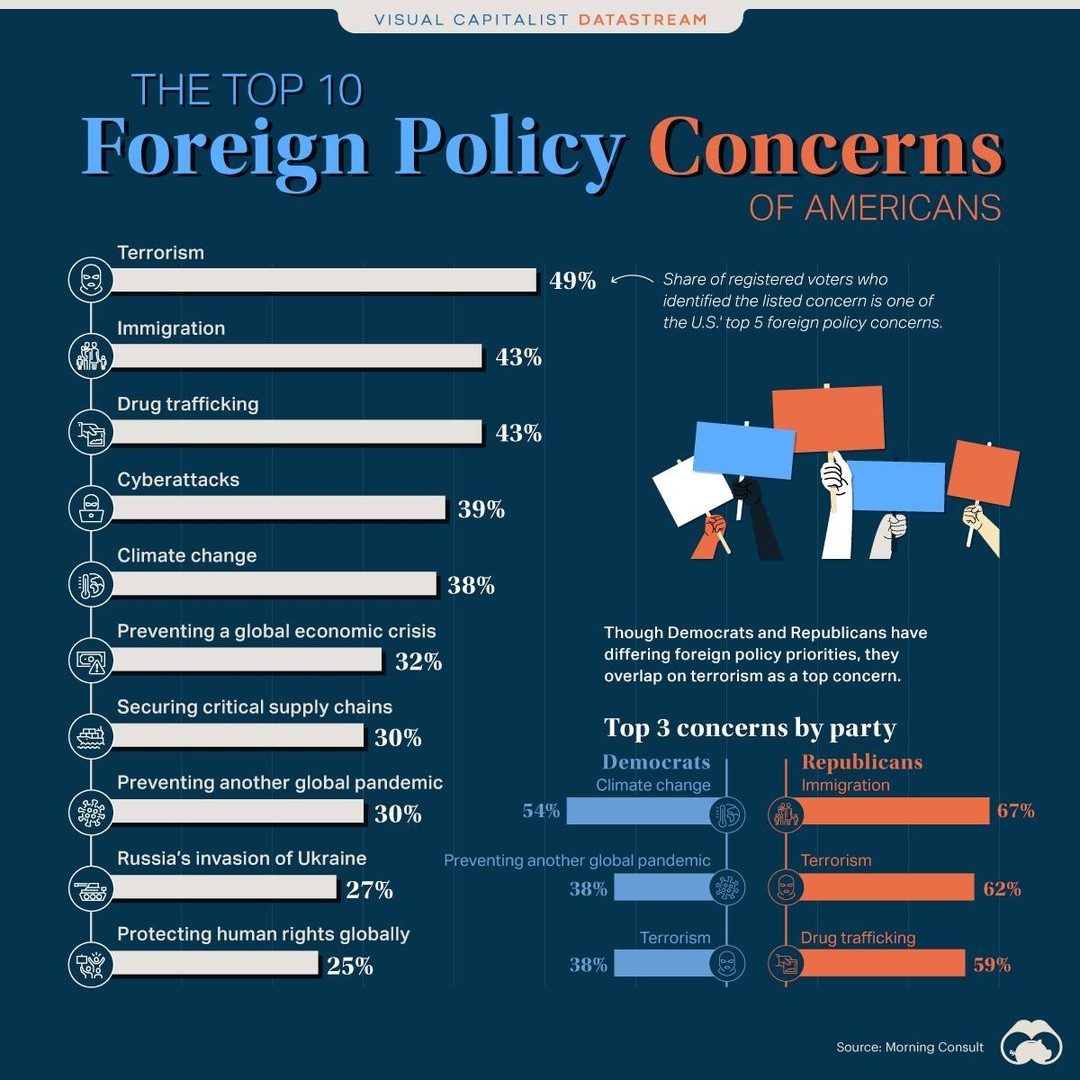
Foreign policy concerns in the United States vary significantly between Democrats and Republicans. According to a recent survey by Morning Consult, specific issues resonate more strongly with one party or the other, although there are some overlaps. Understanding these differences and commonalities is crucial for grasping the broader political landscape and the priorities of American voters.
Why This Matters
Foreign policy shapes a nation's standing in the global community and directly affects the security, economy, and well-being of its citizens. By understanding the top concerns of Americans, we can better comprehend the political dynamics and future directions of U.S. foreign policy. This knowledge is essential for policymakers, voters, and anyone interested in how the U.S. interacts with the world.
Top Foreign Policy Concerns of Americans
Terrorism
Terrorism tops the list of foreign policy concerns for Americans, with 49% of registered voters identifying it as a key issue. This concern is shared by both Democrats and Republicans, making it a bipartisan priority. For Republicans, terrorism is the most pressing concern, with 67% identifying it as a top issue. Democrats, while also concerned, place a stronger emphasis on other issues.
Immigration and Drug Trafficking
Immigration and drug trafficking are closely tied, each worrying 43% of Americans. These issues are particularly salient for Republicans, with 59% identifying drug trafficking as a top concern. For Democrats, these issues are also important, but not to the same extent as terrorism or other global issues.
Cyberattacks and Climate Change
Cyberattacks and climate change are also significant concerns, affecting 39% and 38% of Americans, respectively. These issues highlight the growing importance of digital security and environmental sustainability in foreign policy discussions. Cyberattacks are a relatively new and evolving threat, while climate change represents a long-term global challenge that requires international cooperation.
Preventing a Global Pandemic
Preventing another global pandemic is a top concern for 54% of Americans. This issue has gained prominence in recent years due to the COVID-19 pandemic, which has had far-reaching impacts on health, economies, and social structures worldwide. Democrats are particularly concerned about this issue, with 38% identifying it as a top priority.
Economic Crisis and Supply Chain Security
Preventing a global economic crisis and securing critical supply chains are concerns for 30% of Americans. These issues are interconnected and reflect the economic interdependence of nations. In today's globalized world, disruptions in supply chains can have severe economic consequences, making this a crucial area of focus.
Russia’s Invasion of Ukraine and Human Rights
Russia’s invasion of Ukraine and protecting human rights globally are concerns for 27% and 25% of Americans, respectively. These issues underscore the importance of international law, human rights, and the role of the U.S. in promoting democratic values and stability around the world. While these concerns are important, they are not as pressing as issues like terrorism and pandemics.
Differences and Similarities Between Democrats and Republicans
Overlap on Terrorism
Both Democrats and Republicans share a common concern: terrorism. This overlap indicates a bipartisan agreement on the importance of addressing this global threat. However, the extent to which each party prioritizes this issue varies.
Differing Priorities
While both Democrats and Republicans are concerned about terrorism, their top three concerns differ significantly. Democrats are more concerned about preventing a global pandemic, while Republicans prioritize terrorism and drug trafficking. These differences reflect broader political ideologies and the issues that each party views as most pressing.
Practical Tips for Staying Informed
Staying informed about foreign policy concerns can help you make better decisions as a voter and a citizen. Here are some practical tips for staying up-to-date:
- Follow Reliable News Sources: Trustworthy news outlets and analytics firms like Morning Consult provide valuable insights and up-to-date information on foreign policy issues.
- Engage in Political Discussions: Participate in discussions with people who have different viewpoints. This can help you gain a broader perspective and understand the nuances of various foreign policy issues.
- Monitor Policy Changes: Keep an eye on policy changes and legislative actions related to foreign policy. Understanding the implications of these changes can help you stay informed and engaged.
- Support Transparency: Advocate for transparency in governmental actions and decisions. Transparency ensures that citizens are informed about the decisions that affect their lives and the world around them.
Important Takeaways
- Terrorism is a Bipartisan Concern: Both Democrats and Republicans share a strong concern about terrorism, making it a key area for bipartisan cooperation.
- Economic and Environmental Issues: Concerns about economic stability and environmental sustainability are gaining traction, reflecting the interconnected nature of global issues.
- Pandemic Preparedness: The COVID-19 pandemic has highlighted the importance of preparedness for future health crises, making this a top concern for many Americans.
- Human Rights and Global Stability: Protecting human rights and promoting global stability remain important, but they are not as pressing as issues like terrorism and pandemics.
Conclusion
Understanding the top foreign policy concerns of Americans provides valuable insights into the priorities and values of the political landscape in the United States. Whether it's the shared concern over terrorism or the differing priorities between Democrats and Republicans, these issues shape the future of U.S. foreign policy. Staying informed and engaged is essential for navigating the complexities of global politics and ensuring that our nation's foreign policy reflects the concerns and aspirations of its citizens.
Watch the Reel
Questions readers ask
What are the top US foreign policy concerns for Democratic voters?
Democratic voters prioritize issues such as global drug trafficking prevention and immigration. They also tend to focus on human rights and climate change, which are integral to their foreign policy views. Additionally, Democrats are concerned about terrorism, but often emphasize diplomacy and international cooperation in addressing these issues.
What are the top US foreign policy concerns for Republican voters?
Republican voters often prioritize terrorism and immigration. They frequently advocate for a strong military and assertive foreign policy to combat terrorism. Additionally, they are concerned about border security and the economic impacts of foreign policy decisions.
How do Democrats and Republicans differ in their views on preventing terrorism?
Democrats often advocate for a more diplomatic approach, emphasizing intelligence gathering, partnerships with other nations, and addressing the root causes of terrorism. Republicans, on the other hand, frequently push for a stronger military response, including increased defense spending and more aggressive actions against perceived threats.
Why is understanding US voter foreign policy priorities important?
Understanding the priorities of US voters is essential because foreign policy directly impacts national security, economic stability, and global standing. It helps policymakers craft policies that align with citizens' concerns and shapes the overall direction of the country's international relations.
What role does immigration play in US foreign policy concerns?
Immigration is a key concern for many US voters, influencing their views on border security, economic impacts, and humanitarian considerations. It is a central issue for both Democrats and Republicans, although their approaches and priorities differ significantly. For Democrats, it often involves humanitarian and economic stability, while for Republicans, it frequently focuses on border control and national security.
How do Democrats and Republicans differ in their views on immigration in US foreign policy?
Democrats generally advocate for comprehensive immigration reform, including pathways to citizenship for undocumented immigrants and addressing the root causes of migration. Republicans, however, often prioritize border security and stricter immigration policies to prevent illegal immigration and protect national sovereignty.
What are the overlapping foreign policy concerns between Democrats and Republicans?
While Democrats and Republicans have differing views on many foreign policy issues, there are some areas of overlap. Both parties are concerned about national security, terrorism, and the economic impacts of foreign policy decisions. They also share an interest in maintaining a strong military and ensuring the well-being of American citizens and allies. These common concerns can serve as a basis for bipartisan cooperation in shaping US foreign policy.
Recent articles
Fresh deep dives from the latest Reels we unpacked.




Comments
Be the first to comment.