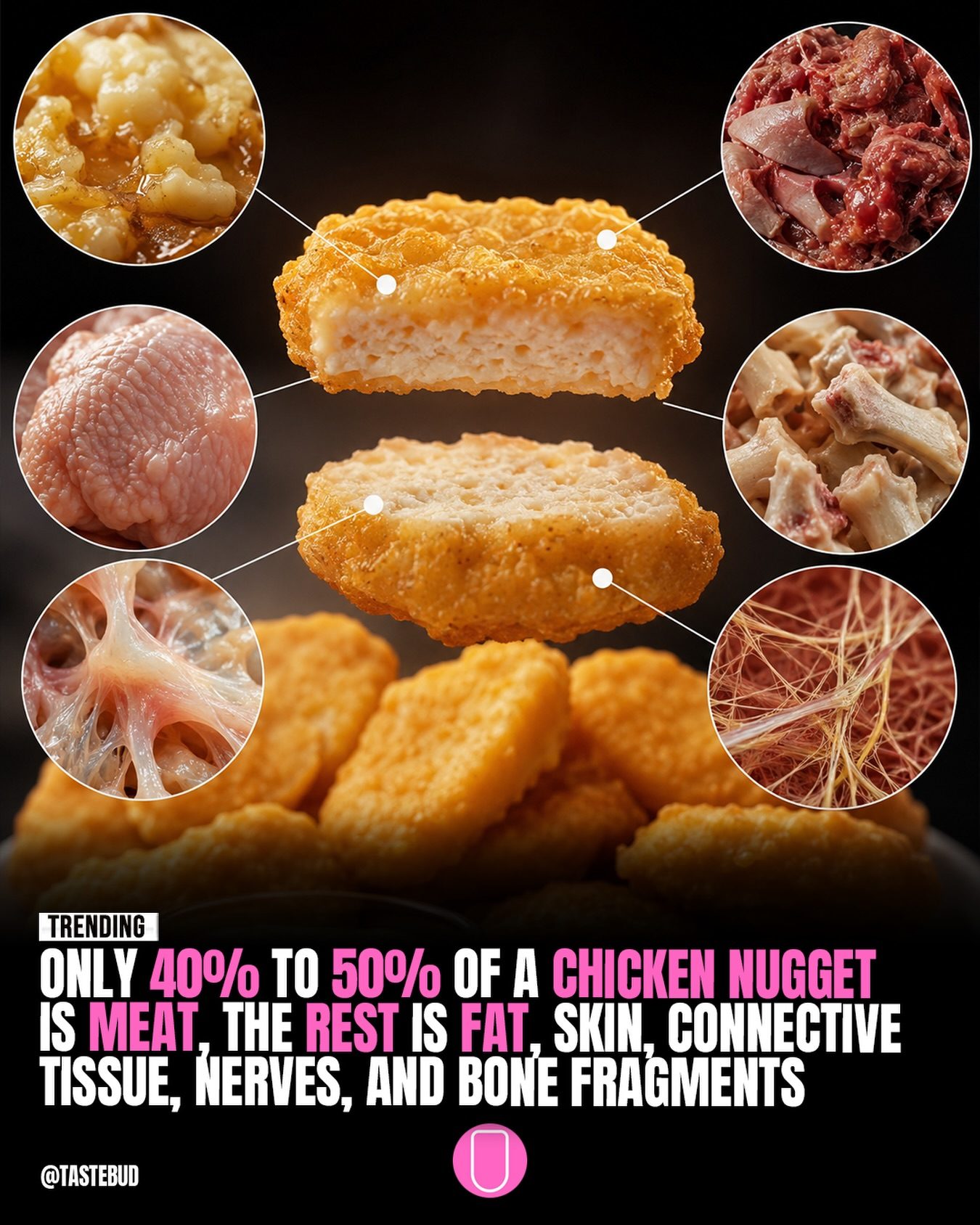
Chicken Nugget Composition
Chicken nuggets, a staple in fast-food menus worldwide, are often enjoyed for their convenience and taste. However, a closer look at their composition reveals a more complex story. A detailed examination found that these delectable morsels may contain less meat than anticipated, sparking a conversation about the components that make up processed foods.
Why This Matters
Understanding the composition of chicken nuggets is crucial for several reasons. Firstly, it helps consumers make informed choices about what they eat. Secondly, it sheds light on the manufacturing processes of processed foods, highlighting the differences between whole cuts and processed products.
Main Discussion
The Anatomy of a Chicken Nugget
A chicken nugget is more than just a bite of breaded, crispy goodness. Upon close inspection, it consists of a blend of various components. Meat makes up only 40-50% of the nugget. The remaining 50-60% consists of other elements, including fat, skin, connective tissue, nerves, and even bone fragments.
Key Components
- Meat: The primary ingredient, making up 40-50% of the nugget, provides the core flavor and texture.
- Fat: Often derived from the chicken or added as filler, fat contributes to the nugget's richness and juiciness.
- Skin: Chicken skin adds crispiness and flavor, especially when breaded and fried.
- Connective Tissue: This fibrous tissue helps bind the nugget together, giving it structure and chew.
- Nerves and Bone Fragments: While not the most appealing components, these are part of the overall composition, contributing to the nugen's taste and texture.
The Process of Making Chicken Nuggets
Chicken nuggets are typically made from a combination of whole muscle cuts and various other tissues of the chicken. The meat is ground and mixed with fat, skin, and connective tissue. This mixture is then shaped, breaded, and frozen. Some manufacturers may add certain ingredients to enhance flavor, texture, or shelf life. The resulting product is a blend of various chicken parts, making it a processed food item.
Practical Tips
Reading Labels
When buying chicken nuggets, it is essential to read the labels carefully. Look for products that specify they contain more meat and fewer additives. Ingredients like fat, skin, and connective tissue are often listed, but bone fragments and nerves may fall under the category of "meat by-products."
Choosing Quality
Opt for brands that offer more transparency in their manufacturing processes. Some brands may provide detailed information about their ingredients and processes, helping consumers make better choices.
Balancing Your Diet
Chicken nuggets can be a part of a balanced diet, but it is crucial to consume them in moderation. Pairing them with healthier sides and whole food options can help balance the nutritional value of your meal.
Important Takeaways
- Chicken nuggets are composed of a mix of meat, fat, skin, connective tissue, nerves, and bone fragments.
- The meat content in chicken nuggets accounts for 40-50% of the total product.
- Fat, skin, and connective tissue contribute to texture, flavor, and structure.
- Reading labels and understanding the manufacturing process can help consumers make informed choices.
- Consuming chicken nuggets in moderation as part of a balanced diet is advisable.
Conclusion
Exploring the composition of chicken nuggets provides valuable insights into the world of processed foods. Understanding the ingredients and components that go into making these popular snacks empowers consumers to make better choices. By being mindful of what we eat and how it is made, we can enjoy our meals while maintaining a balanced and healthy lifestyle.
Watch the Reel
Questions readers ask
What is the average meat content in fast food chicken nuggets?
Fast food chicken nuggets typically contain between 40-50% meat. The rest is made up of fat, skin, connective tissue, and other ingredients. This means that more than half of a chicken nugget can be composed of non-meat parts.
What are the other ingredients in chicken nuggets besides meat?
Besides meat, chicken nuggets contain fat, skin, and connective tissue. These components help maintain the texture and taste of the nuggets. In some cases, bone fragments and other additives may also be present.
Why is it important to know the composition of chicken nuggets?
Knowing the composition of chicken nuggets helps consumers understand what they are eating. It also highlights the differences between whole cuts of meat and processed foods, which can inform personal dietary choices.
Are there any studies that have analyzed the composition of chicken nuggets?
Yes, there have been studies that examined the composition of chicken nuggets. These studies have revealed the varying percentages of meat, fat, and other components, providing insights into the manufacturing processes of processed foods.
Does the fat content in chicken nuggets affect their taste?
The fat content in chicken nuggets can significantly impact their taste and texture. Fat contributes to the crispiness and juiciness of the nuggets, enhancing the overall eating experience. However, it also adds to the caloric content.
Can chicken nuggets contain bone fragments?
Yes, chicken nuggets can sometimes contain bone fragments. These fragments are typically tiny and are often a byproduct of the processing method used to create the nuggets from ground meat.
What role does the skin play in chicken nuggets?
The skin in chicken nuggets contributes to their texture and flavor. It adds a crispy layer when cooked and helps to bind the other ingredients together. The skin content can vary, but it is a notable component in the overall makeup of the nugget.
Related deep dives
Similar reads based on topic and creator.




Recent articles
Fresh deep dives from the latest Reels we unpacked.




Comments
Be the first to comment.