U.S. Retail Investor Trends and Record-Breaking Activity
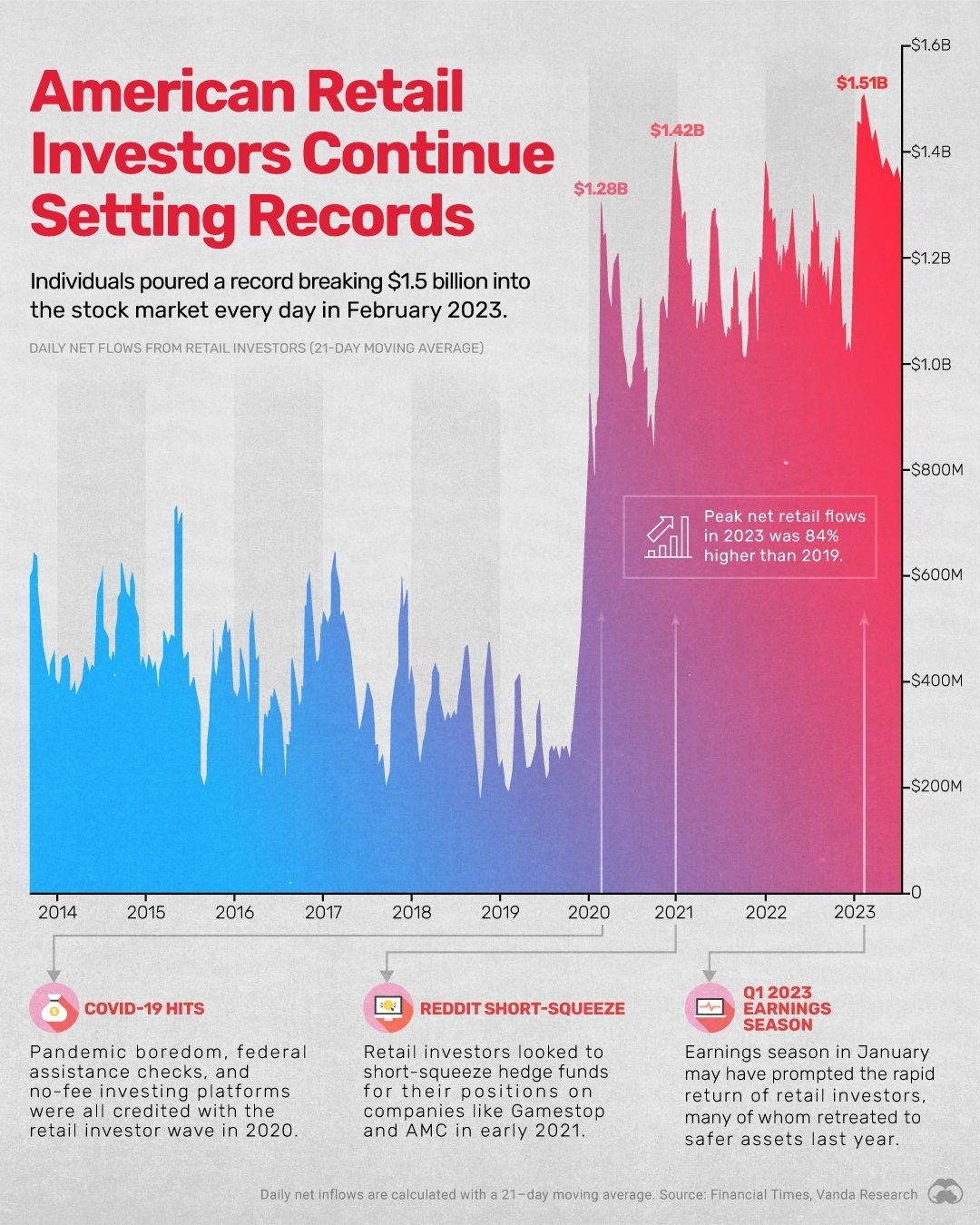
U.S. retail investor sentiment surged to unprecedented heights at the start of 2023, driven largely by the rapid advancements in artificial intelligence (AI) capabilities. This surge is evident in the daily net flows from U.S. retail investors, which have been tracked by Vanda Research since 2014. The data, visualized through a 21-day moving average, reveals significant trends and pivotal moments that have shaped retail investing over the past decade.
Why This Matters
Understanding the trends and factors influencing retail investor behavior is crucial for both individual investors and the broader financial market. Retail investors have become a significant force, capable of driving market movements and influencing stock prices. Analyzing their net flows provides insights into market sentiment, potential trends, and the impact of external events on investing behavior.
Main Discussion
The Surge in 2023
The start of 2023 marked a pivotal moment for retail investors, with daily net flows reaching a record-breaking high. Individuals poured an average of $1.5 billion into the stock market each day in February 2023. This represents an 84% increase in peak net flows compared to 2019. The surge in investing activity can be attributed to several factors, including the rapid progress in AI capabilities, which has sparked excitement and interest in tech stocks and innovative companies.
Historical Context and Key Events
Looking back at the data from 2014 to 2023, several key events stand out as catalysts for retail investor activity:
-
2020: The Pandemic Effect: The onset of the COVID-19 pandemic in early 2020 led to a significant increase in retail investing. Factors contributing to this wave included pandemic boredom, federal assistance checks, and the rise of no-fee investing platforms. These elements combined to create an environment where more individuals felt empowered and motivated to enter the stock market.
-
2021: The Short Squeeze Phenomenon: Early 2021 saw retail investors targeting companies like Gamestop and AMC, driven by discussions on platforms like Reddit. This period is marked by the "Reddit short-squeeze," where coordinated buying of heavily shorted stocks led to dramatic price increases and significant market volatility.
Factors Influencing Retail Investor Behavior
Several factors have influenced retail investor behavior over the years, leading to the record-breaking activity seen in 2023:
-
Technological Advancements: The progress in AI and other technologies has sparked interest in innovative companies, driving investments in sectors like tech and renewable energy.
-
Economic Conditions: Economic conditions, including federal assistance programs and low-interest rates, have provided retail investors with more disposable income and lower borrowing costs, encouraging them to enter the market.
-
Investing Platforms: The rise of no-fee investing platforms and user-friendly apps has democratized investing, making it more accessible to a broader range of individuals. These platforms have lowered the barriers to entry, allowing more people to participate in the stock market.
Practical Tips for Retail Investors
Given the trends and factors influencing retail investor behavior, here are some practical tips for those looking to navigate the market:
-
Stay Informed: Keep up-to-date with the latest developments in AI and other technologies that are driving market trends. Understanding the broader economic and technological landscape can help you make informed investment decisions.
-
Diversify Your Portfolio: Diversification is key to managing risk. Consider spreading your investments across different sectors and asset classes to protect your portfolio from market volatility.
-
Use Reliable Platforms: Choose investing platforms that offer low fees, user-friendly interfaces, and robust research tools. Reliable platforms can provide the support and resources you need to make informed investment decisions.
-
Stay Cautious with Short Squeezes: While short squeezes can offer lucrative opportunities, they are also highly risky. Be cautious and do thorough research before participating in such events.
Important Takeaways
- Retail investor activity has reached record highs in 2023, driven by advancements in AI and other technological innovations.
- Historical events, such as the COVID-19 pandemic and the Reddit short-squeeze, have significantly impacted retail investor behavior.
- Factors like economic conditions, technological advancements, and the rise of no-fee investing platforms continue to influence retail investing trends.
- Diversifying your portfolio, staying informed, and using reliable investing platforms are essential for navigating the market successfully.
Conclusion
The trends in U.S. retail investor activity highlight the dynamic nature of the market and the influence of external factors on investor behavior. Understanding these trends can help individual investors make informed decisions and capitalize on market opportunities. As we move forward, staying informed, diversifying portfolios, and utilizing reliable investing platforms will be crucial for navigating the ever-changing landscape of retail investing.
Watch the Reel
Questions readers ask
What is the significance of the $1.5 billion daily investment by retail investors?
The $1.5 billion daily investment by retail investors indicates a substantial shift in market dynamics, with individual investors playing a more prominent role. This trend highlights the increasing influence of retail investors on market movements and stock prices, particularly in sectors like AI and tech.
Which sectors are driving the surge in retail investing?
The surge in retail investing is primarily driven by advancements in artificial intelligence (AI) and tech stocks. These sectors have seen significant interest and investment from retail investors, contributing to the overall increase in market activity.
How does Vanda Research track retail investor activity?
Vanda Research tracks retail investor activity by analyzing daily net flows from U.S. retail investors. This data is visualized using a 21-day moving average to identify trends and pivotal moments in retail investing behavior over time.
What are the pivotal moments in retail investing over the past decade?
Pivotal moments in retail investing over the past decade include surges in investment during periods of tech innovation and economic recovery. These moments are characterized by significant shifts in market sentiment and increased retail investor participation, which can be identified through data analysis.
How do retail investors influence the broader financial market?
Retail investors influence the broader financial market by driving market movements and stock prices, especially in sectors with high investor interest. As their investment activity increases, so does their capacity to shape market trends and overall sentiment.
Related deep dives
Similar reads based on topic and creator.


Recent articles
Fresh deep dives from the latest Reels we unpacked.




Comments
Be the first to comment.