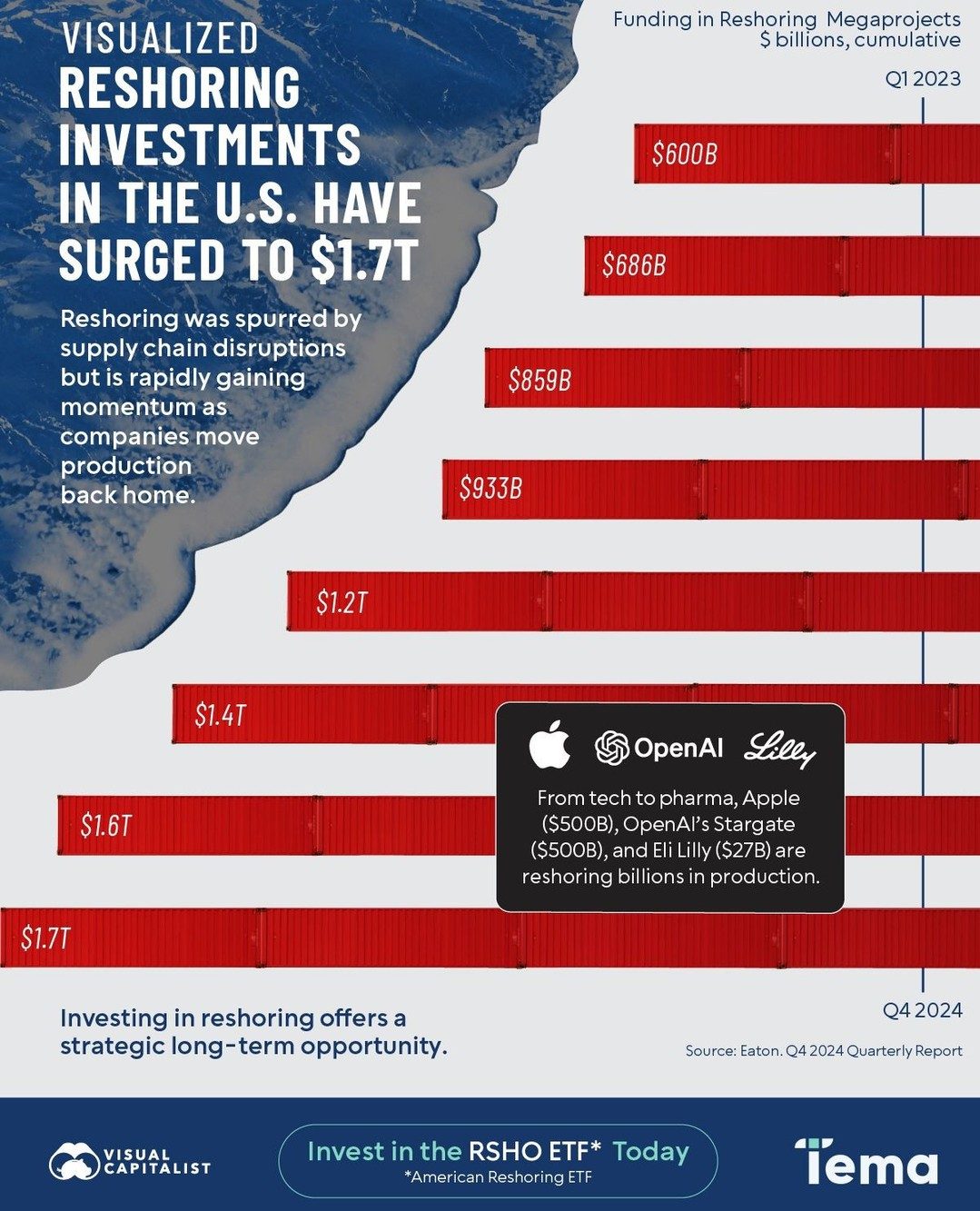
Reshoring Investments in the U.S.
Reshoring investments in the United States have reached an unprecedented $1.7 trillion as companies increasingly move their production back home. This trend, initially accelerated by the pandemic and Trump-era protectionist policies, is now becoming a long-term economic strategy. The surge in reshoring is evident across various sectors, including tech and pharmaceuticals, with major companies like Apple, OpenAI, and Eli Lilly leading the way.
Why this Matters
Understanding the reshoring trend is crucial for several reasons. It signifies a shift in global manufacturing strategies, driven by the need for greater supply chain resilience. As companies move production back to the U.S., they aim to reduce dependence on foreign suppliers, mitigate risks associated with global disruptions, and potentially create more jobs domestically. This trend also highlights the strategic importance of investing in domestic manufacturing capabilities, which can offer long-term economic benefits.
The Rise of Reshoring Projects
Over the past two years, the number of reshoring projects in the U.S. has seen a significant increase. According to data from Eaton's Q4 2024 Quarterly Report, the cumulative investments in reshoring have surged from $600 billion to $1.7 trillion. This rapid growth indicates a strong commitment from companies to reinvest in domestic production facilities.
Key Companies Leading the Way
Several high-profile companies have announced substantial investments in reshoring. Apple, for instance, is reshoring $500 billion in production, while OpenAI’s Stargate project also involves a $500 billion investment. In the pharmaceutical sector, Eli Lilly is reshoring $27 billion in production. These investments are part of a broader trend where companies are re-evaluating their global supply chains and opting for more localized production.
Sector-Specific Reshoring Trends
The reshoring trend is not limited to a single sector. Tech and pharmaceutical companies are at the forefront, but other industries are also making significant moves. For example, the automotive sector has seen several reshoring initiatives, driven by the need for closer integration with research and development (R&D) facilities. Similarly, the aerospace industry is reshoring critical components to ensure supply chain security.
Investing in Reshoring
Investing in reshoring presents a strategic long-term opportunity. The American Reshoring ETF (RSHO ETF) is specifically designed to capitalize on this trend. By investing in companies that are actively reshoring their production, the RSHO ETF offers a way for investors to benefit from the growing demand for domestic manufacturing.
Economic and Strategic Benefits
Reshoring provides several economic and strategic benefits. Companies can reduce transportation costs and delivery times by producing closer to their markets. Additionally, reshoring can enhance product quality and innovation, as companies can more easily monitor and control their production processes. For the U.S. economy, reshoring can create new job opportunities and stimulate economic growth.
Practical Tips for Companies Consider Reshoring
For companies considering reshoring, several practical steps can help ensure a successful transition.
Conduct a Thorough Cost-Benefit Analysis
Before moving production back to the U.S., companies should conduct a thorough cost-benefit analysis. This analysis should consider not just the immediate costs of relocation but also the long-term benefits, such as reduced operational risks, improved supply chain resilience, and potential for innovation.
Develop a Comprehensive Reshoring Plan
Reshoring is a complex process that requires careful planning. Companies should develop a comprehensive plan that outlines the key steps, timelines, and resource requirements. This plan should also include contingency plans to address potential challenges and disruptions.
Engage with Local Stakeholders
Engaging with local stakeholders, including government agencies, labor unions, and community organizations, can help smooth the reshoring process. Collaboration with these stakeholders can provide valuable insights and support, ensuring that the transition is as seamless as possible.
Important Takeaways
Reshoring investments in the U.S. are on the rise, driven by a combination of economic and strategic factors. Companies across various sectors are moving production back home, creating new economic opportunities and enhancing supply chain resilience. Investing in reshoring not only benefits companies but also supports the broader U.S. economy by creating jobs and stimulating growth.
The Role of Policy and Incentives
Government policies and incentives play a critical role in promoting reshoring. Policies aimed at reducing regulatory burdens, offering tax incentives, and providing grants can encourage companies to invest in domestic manufacturing. Similarly, trade policies that favor domestic production can also drive reshoring initiatives.
The Future of Reshoring
As the trend continues, reshoring is poised to become a more integral part of the U.S. manufacturing landscape. The long-term implications of this shift are significant, with potential impacts on global trade dynamics, job creation, and economic growth. Companies and investors should stay informed about the latest developments in reshoring and consider how they can benefit from this emerging trend.
Conclusion
Reshoring investments in the U.S. represent a strategic shift in global manufacturing, driven by the need for greater supply chain resilience and economic benefits. With $1.7 trillion in investments, companies across various sectors are moving production back home, creating new opportunities for growth and innovation. As reshoring continues to gain momentum, it will play an increasingly important role in shaping the U.S. economy and global trade dynamics.
Watch the Reel
Questions readers ask
What are the primary drivers behind the recent surge in reshoring investments in the U.S.?
The recent surge in reshoring investments is primarily driven by two key factors: the COVID-19 pandemic and policy changes. The pandemic highlighted the vulnerabilities in global supply chains, pushing companies to seek greater resiliency and self-reliance by bringing production home. Additionally, policy changes, including protectionist measures, have encouraged this shift.
Which sectors are leading the reshoring trend in the U.S.?
The reshoring trend is particularly prominent in the tech and pharmaceutical sectors. Companies like Apple, OpenAI, and Eli Lilly are among the notable investors in reshoring initiatives. This trend is driven by the need to ensure a stable supply of critical components and products, as well as to mitigate risks associated with global supply chain disruptions.
What are the benefits of reshoring for the U.S. economy?
Reshoring offers several benefits to the U.S. economy, including enhanced supply chain resilience and the creation of domestic jobs. By bringing production home, companies can reduce their dependence on foreign suppliers, ensuring a more stable and predictable supply of goods. This shift also supports local economies by generating employment opportunities and fostering innovation within the U.S.
How does reshoring compare to offshoring in terms of long-term strategy?
Reshoring represents a shift away from the traditional offshoring model, which focused on cost reduction by moving production to lower-wage countries. In contrast, reshoring is part of a long-term strategy that prioritizes supply chain resilience, risk mitigation, and domestic job creation. While offshoring may offer initial cost savings, reshoring aims to build a more sustainable and secure manufacturing base within the U.S.
What specific examples are there of companies investing in reshoring in the U.S.?
Several major companies have announced significant investments in reshoring. For example, Apple is planning to invest heavily in bringing production back to the U.S. by 2024. Similarly, Eaton is investing in expanding its domestic manufacturing capabilities. These investments highlight the growing trend of companies prioritizing domestic production to enhance supply chain resilience and support local economies.
What role do exchange-traded funds (ETFs) play in the reshoring trend?
Reshoring ETFs are investment vehicles that focus on companies involved in bringing production back to the U.S. These ETFs allow investors to support and benefit from the reshoring trend by allocating capital to businesses that are actively engaged in domestic manufacturing. By investing in reshoring ETFs, investors can contribute to the growth of the U.S. manufacturing sector and potentially realize financial gains as these companies expand their domestic operations.
Recent articles
Fresh deep dives from the latest Reels we unpacked.




Comments
Be the first to comment.