Rental Affordability by State
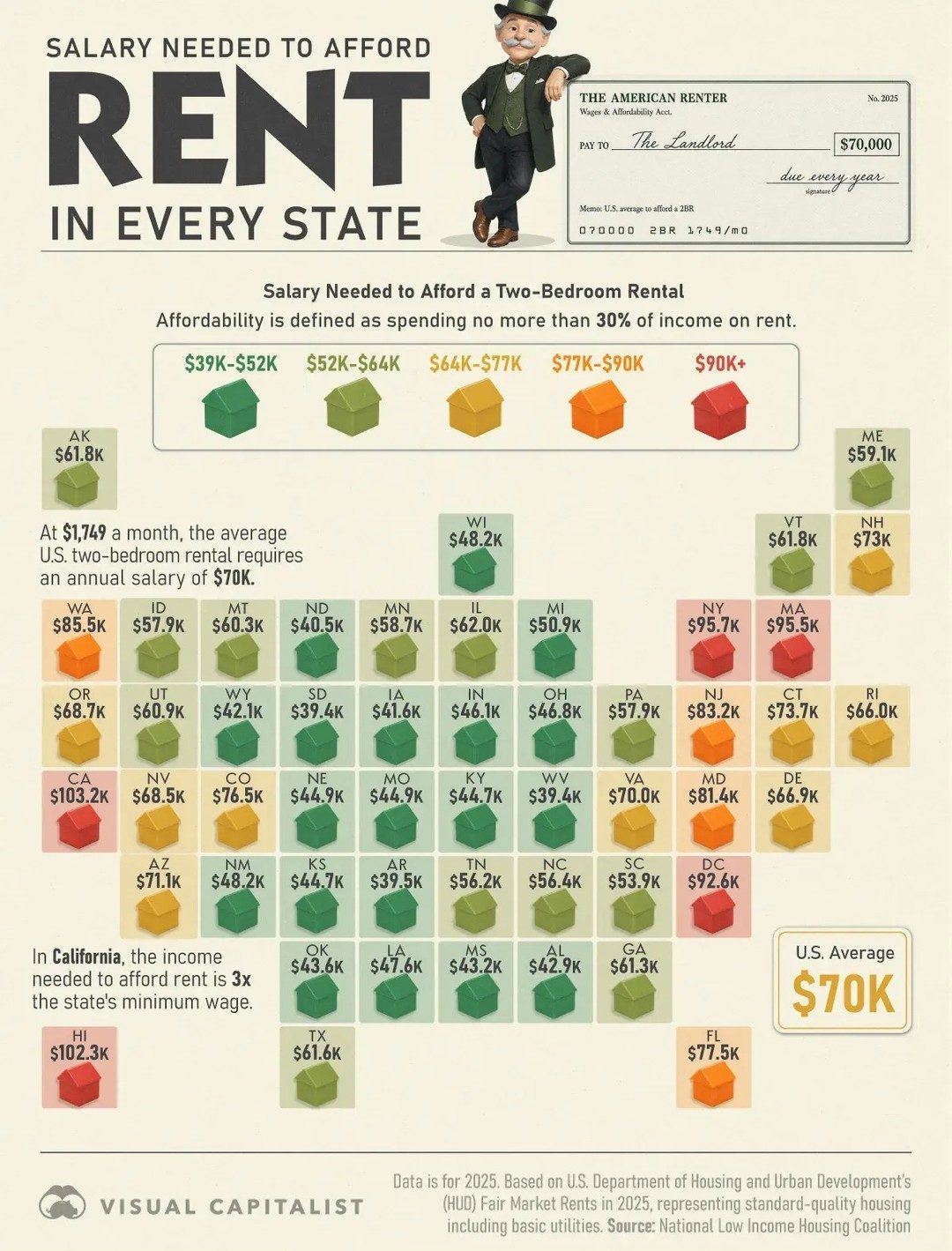
Rental affordability in the United States has reached a critical point, with the average renter now needing nearly $70,000 a year to comfortably afford a modest two-bedroom rental. This affordability benchmark varies significantly by state, with California and Hawaii requiring more than $100,000 annually. Let's dive into the data to understand the salary needed to afford a two-bedroom rental in every U.S. state.
Why This Matters
Understanding rental affordability is crucial for both renters and policymakers. It helps renters gauge their financial needs and plan accordingly, while policymakers can use this information to develop housing policies that promote economic stability. The data highlights the growing disparity in rental costs across different regions, emphasizing the need for targeted solutions to address housing affordability.
Main Discussion
The National Average
The U.S. average salary needed to afford a two-bedroom rental is approximately $70,000 annually. This figure is based on the guideline that renters should spend no more than 30% of their income on housing to maintain financial stability. At $1,749 per month, the average two-bedroom rental requires an annual income of around $61,800 to meet this affordability benchmark. However, this average masks significant variations across different states.
State-by-State Breakdown
High-Cost States
Certain states stand out for their exceptionally high rental costs. California, for instance, requires an annual salary of $103,200 to afford a two-bedroom rental, making it one of the most expensive states in the nation. Hawaii is similarly costly, with renters needing over $100,000 annually. Other high-cost states include:
- New York: $95,700
- Massachusetts: $95,500
- New Jersey: $83,200
- District of Columbia: $92,600
These states are known for their high cost of living, but the rental prices exacerbate the financial burden on renters.
Mid-Range States
Several states fall into a mid-range category, where the required salary is higher than the national average but not as prohibitive as in the high-cost states. These include:
- Washington: $85,500
- Oregon: $68,700
- Nevada: $68,500
- Illinois: $62,000
Renters in these states still face significant financial challenges but may have more options for affordable housing compared to the high-cost states.
Low-Cost States
On the other end of the spectrum, some states offer more affordable rental options. Renters in these states can typically afford a two-bedroom rental with a lower income. Notable examples include:
- Wyoming: $42,100
- North Dakota: $39,400
- Arkansas: $39,500
- South Dakota: $39,400
These states provide a more manageable cost of living, making them attractive options for renters looking to stretch their budgets further.
Defining Affordability
Affordability is defined as spending no more than 30% of one's income on rent. This benchmark ensures that renters have enough financial resources to cover other essential expenses. However, the reality is that many renters, especially in high-cost areas, exceed this threshold, leading to financial strain and economic instability.
Practical Tips
For Renters
- Research Local Market: Before moving to a new state or city, research the local rental market to understand the cost of living and rent prices.
- Budget Planning: Create a detailed budget that accounts for all expenses, including rent, utilities, groceries, and savings.
- Consider Alternatives: Explore alternative housing options, such as roommates or more affordable neighborhoods, to reduce rental costs.
- Financial Planning: Save for a security deposit and emergency fund to cover unexpected expenses and ensure financial stability.
For Policymakers
- Incentivize Affordable Housing: Implement policies that encourage the development of affordable housing units, such as tax incentives and zoning regulations.
- Rent Control: Consider rent control measures to limit excessive rent increases and protect tenants from financial hardship.
- Income-Based Rent Programs: Develop programs that tie rent payments to a percentage of the renter's income, ensuring affordability for low- and middle-income households.
- Economic Development: Foster economic development in areas with lower rental costs, creating job opportunities and improving living standards.
Important Takeaways
- The average U.S. renter needs nearly $70,000 a year to afford a two-bedroom rental.
- Rental costs vary significantly by state, with California and Hawaii requiring over $100,000 annually.
- Affordability is defined as spending no more than 30% of income on rent.
- Renters should research local markets, plan their budgets, and consider alternative housing options.
- Policymakers can promote affordable housing through incentives, rent control, and income-based rent programs.
Conclusion
Rental affordability is a pressing issue in the United States, with significant variations across different states. Understanding the salary needed to afford a two-bedroom rental in each state provides valuable insights for renters and policymakers. By taking practical steps and implementing effective policies, we can work towards a more affordable and stable housing market for all.
Watch the Reel
Questions readers ask
What is the average annual salary needed to comfortably rent a two-bedroom apartment in the U.S.?
The average annual salary required to comfortably afford a two-bedroom apartment in the U.S. is nearly $70,000. However, this amount can vary significantly depending on the state and local housing market conditions.
Which states require the highest annual salary to rent a two-bedroom apartment?
California and Hawaii are among the states where you need to earn more than $100,000 per year to comfortably afford a two-bedroom rental. These states have some of the highest housing costs in the nation.
How can understanding rental affordability help renters?
Understanding rental affordability helps renters evaluate their financial capabilities and plan their budget accordingly. This ensures that they can make informed decisions about where to live and what they can afford.
How can policymakers use data on rental affordability?
Policymakers can utilize rental affordability data to develop sustainable housing policies that address economic stability. This information can guide initiatives aimed at making housing more accessible and affordable for a broader range of residents.
What is the variation in rental income requirements across different states?
The variation in rental income requirements across states is substantial. For instance, while some states may require an annual salary close to the national average of $70,000, others like California and Hawaii demand much higher salaries, often exceeding $100,000.
Where can I find a detailed rental affordability map for the U.S.?
A detailed rental affordability map can be found in various sources, including government housing reports, real estate websites, and economic research publications. These maps provide a visual representation of how rental costs vary across different regions and states in the U.S.
Why is it important to consider the salary requirements for a two-bedroom apartment?
Considering the salary requirements for a two-bedroom apartment is essential because it provides a benchmark for understanding the financial burden of renting. This helps both individuals and families budget effectively and make informed decisions about their living arrangements.
Recent articles
Fresh deep dives from the latest Reels we unpacked.




Comments
Be the first to comment.