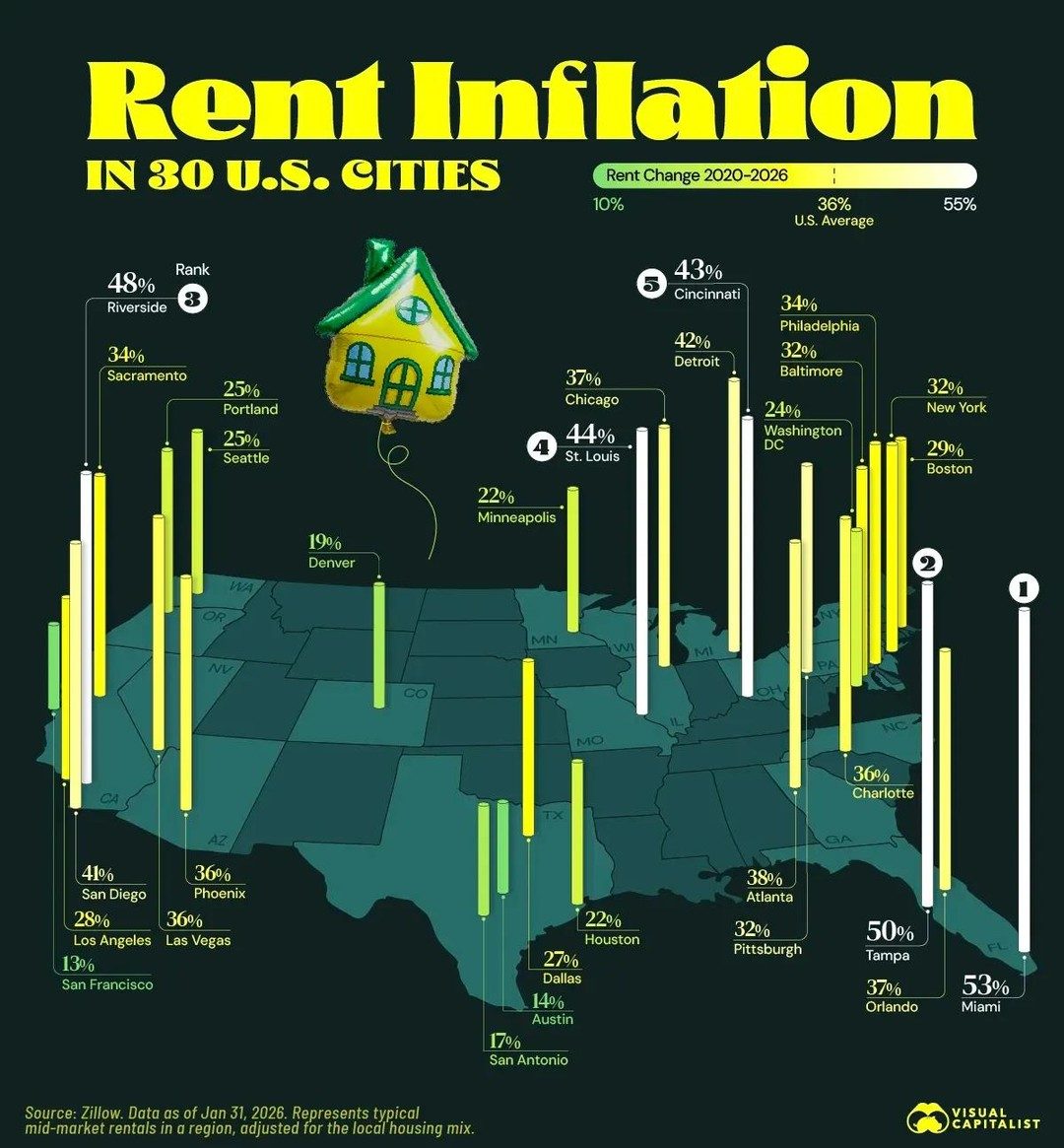
Rent Inflation in Major U.S. Cities
Rent inflation has significantly impacted major cities across the United States, with some areas experiencing dramatic increases while others have seen more moderate growth. The data from this analysis, sourced from Zillow, highlight the trends from 2020 to January 2026, providing a comprehensive look at how rent prices have evolved in 30 major cities. This data is crucial for understanding the current state of housing affordability and market dynamics.
Context / Why this Matters
Understanding rent inflation is essential for tenants, landlords, and policymakers alike. For tenants, it affects budgeting and living costs. Landlords need to assess property values and rental yields. Policymakers must address issues of housing affordability and urban development. The data shows that rent inflation varies significantly across different regions, indicating diverse local economic conditions and housing market trends.
Main Discussion
Notable Increases in Rent
Miami Leads the Way
Miami tops the list with an astonishing 53% increase in rent since 2020, reaching a staggering average of $2,645. This dramatic rise underscores Miami's attractiveness as a destination for both residents and investors. The city's vibrant culture, warm climate, and economic opportunities have driven demand for housing, pushing prices upwards.
Sun Belt Dominates
Sun Belt cities such as Tampa and Atlanta have also experienced substantial rent increases. Tampa saw a 50% increase, while Atlanta reported a 38% rise. These cities are popular for their lower cost of living compared to coastal metropolises, making them attractive to young professionals and retirees alike. The influx of new residents has led to a surge in demand for housing, driving up rental prices.
Moderate Increases in Traditional Hotspots
San Francisco and Austin
In contrast, traditionally high-demand cities like San Francisco and Austin have seen more modest rent increases. San Francisco's rent rose by 17%, while Austin's increased by 27%. These cities, known for their tech and entrepreneurial ecosystems, have historically had high rental costs. However, recent data suggests that other cities are catching up in terms of growth, potentially shifting the dynamics of the housing market.
Average Rent Inflation
The overall U.S. average rent inflation stands at 36%. This figure provides a benchmark for comparing individual city performance. Cities with rent increases above this average have seen significant growth in demand and property values, while those below the average may be experiencing slower economic growth or changes in local housing policies.
Practical Tips
For Tenants
- Budget Accordingly: Anticipate higher costs, particularly if you're moving to high-growth areas like Miami or Tampa. Research the current rental market trends to set realistic expectations.
- Consider Alternatives: Explore nearby cities or suburbs that may offer lower rents but still provide access to job opportunities and urban amenities.
- Negotiate Leases: In competitive markets, landlords may be more willing to negotiate terms. Be prepared to discuss lease terms and potentially sign a longer lease in exchange for a lower rate.
For Landlords
- Evaluate Market Trends: Stay informed about local market conditions to set competitive rates. In high-growth areas, you can justify higher rents, but be cautious in slower markets.
- Improve Property Value: Invest in upgrades and maintenance to attract tenants and justify higher rents. Properties in good condition tend to command premium prices.
- Diversify Investments: Consider investing in multiple cities to hedge against local market fluctuations. This strategy can help stabilize your overall rental income.
For Policymakers
- Housing Affordability: Develop policies that address the root causes of housing unaffordability, such as zoning laws, affordable housing initiatives, and rent control measures.
- Infrastructure Development: Invest in infrastructure projects that support urban growth and improve the quality of life, making cities more attractive for residents and investors.
- Economic Incentives: Offer tax incentives and grants to developers who build affordable housing units, encouraging the creation of more housing options for low- and middle-income residents.
Important Takeaways
- Regional Disparities: Rent inflation varies significantly across different U.S. cities, indicating diverse local economic conditions and housing market dynamics.
- Growth Potential: Cities with high rent inflation, such as Miami and Tampa, offer significant investment opportunities but come with higher living costs.
- Market Trends: Understand local market trends to make informed decisions, whether you're a tenant, landlord, or policymaker.
Conclusion
Rent inflation is a multifaceted issue that affects various stakeholders, from tenants and landlords to policymakers. The data from 2020 to 2026 highlights significant regional disparities, with Sun Belt cities experiencing the highest growth. Understanding these trends is crucial for navigating the housing market and making informed decisions. Whether you're looking to rent a new home, invest in property, or shape urban policies, staying informed about rent inflation will help you stay ahead in an ever-changing market.
Watch the Reel
Recent articles
Fresh deep dives from the latest Reels we unpacked.




Comments
Be the first to comment.