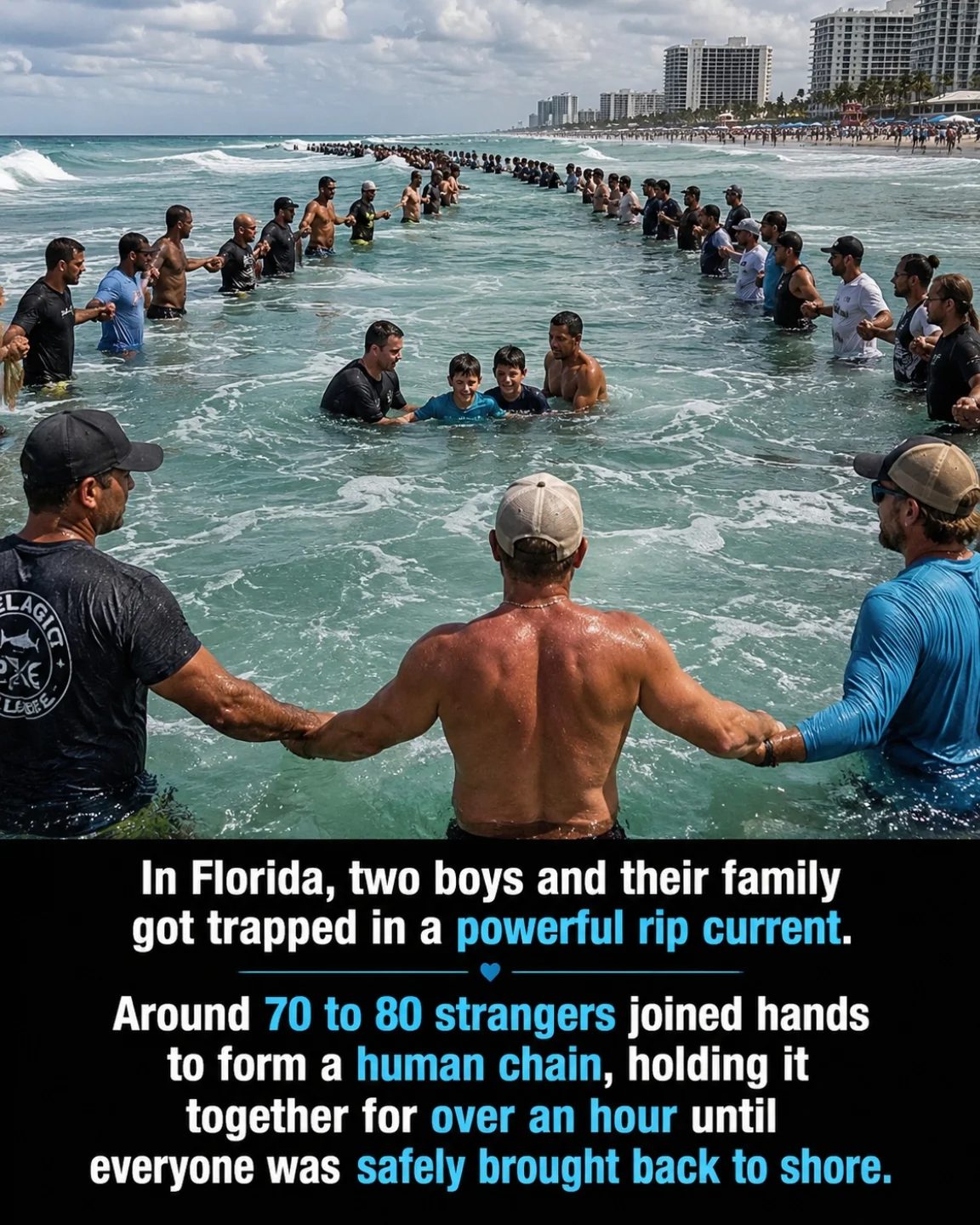
Human Chain Rescue
A powerful rip current in Florida trapped two boys and their family, but the swift action of a group of strangers turned a dangerous situation into a remarkable story of collective effort and community spirit. Around 70 to 80 strangers joined hands to form a human chain, holding it together for over an hour to bring everyone to safety.
Why This Matters
Understanding the dynamics of rip currents and the importance of community response is crucial for anyone who enjoys water activities. Rip currents are powerful, narrow channels of fast-moving water that can pull even the strongest swimmers out to sea. Knowing how to recognize and respond to these currents can save lives. The human chain rescue in Florida highlights the significance of collective action and preparedness in emergency situations.
Rip Currents and Safety
What Are Rip Currents?
Rip currents are strong, localized currents of water that move away from the shore. They can form in any large body of water with breaking waves, including oceans, lakes, and even large rivers. These currents can move at speeds of up to eight feet per second—faster than even the strongest Olympic swimmers. They are often mistaken for undertows, which pull swimmers down, but rip currents pull swimmers outward.
Recognizing Rip Currents
Recognizing the signs of a rip current is the first step in avoiding danger. Here are some key indicators:
- A narrow, fast-moving channel of water: Rip currents often appear as a break in the waves, where the water is calmer and moving away from the shore.
- Differing water color: The water within a rip current may appear darker or murkier than the surrounding water.
- Debris or foam: Rip currents can carry debris, such as seaweed, foam, or sand, away from the shore.
- A break in the wave pattern: Look for areas where the waves are not breaking or are breaking differently than the surrounding waves.
The Human Chain Rescue
The Event
On a sunny day in Florida, a family of four found themselves in a perilous situation. Two boys and their parents were swept out to sea by a powerful rip current. The family struggled against the strong current, unable to make progress back to shore. Witnesses on the beach quickly realized the danger and sprang into action.
Forming the Human Chain
Strangers on the beach formed a human chain, linking hands to extend their reach into the ocean. This living bridge provided a stable path for the trapped family and others caught in the rip current. The human chain held strong for over an hour, with people taking turns to rest and ensure the chain remained unbroken.
The Outcome
The collective effort resulted in a successful rescue. Two boys and their family, along with several other individuals, were safely brought back to shore. The human chain rescue serves as a testament to the power of community and the importance of collective action in emergency situations.
Practical Tips for Rip Current Safety
Stay Calm and Assess
If you find yourself caught in a rip current, stay calm and assess your situation. Panic can exhaust your energy and put you in more danger. Rip currents are powerful, but they are also narrow, and they often move at a speed that allows you to swim parallel to the shore.
Swim Parallel to the Shore
Swim parallel to the shore, not against the current. This tactic can help you escape the rip current and reach calmer water. Once you are out of the current, you can swim back to the shore at an angle.
Signal for Help
If you are unable to swim out of the current, stay calm and signal for help. Wave your arms, call out, and try to attract the attention of lifeguards or bystanders. Many beaches have lifeguards on duty who are trained to handle rip currents and other water emergencies.
Learn to Recognize Rip Currents
Educate yourself and your family about the signs of rip currents. Teaching children to recognize the dangers can help them avoid being caught in a rip current.
Use Flotation Devices
If you are at the beach and notice a rip current, use flotation devices such as life jackets or boogie boards. These devices can help you stay afloat and provide additional support if you are caught in a rip current.
Always Swim with a Buddy
Swimming with a buddy can add an extra layer of safety. If one person gets into trouble, the other can signal for help or provide assistance.
Important Takeaways
The human chain rescue in Florida underscores the importance of community effort and preparedness in emergency situations. Rip currents are powerful and dangerous, but with the right knowledge and response, they can be managed. Understanding the dynamics of rip currents and knowing how to recognize and respond to them is crucial for water safety.
Conclusion
The human chain rescue in Florida is a powerful example of community spirit and collective action. It serves as a reminder that when faced with danger, people can come together to support and save each other. By understanding the nature of rip currents and taking practical steps to ensure safety, we can all contribute to a safer water environment. Whether you are a seasoned swimmer or a casual beachgoer, knowing how to recognize and respond to rip currents is an essential skill that can save lives.
Watch the Reel
Questions readers ask
What is a rip current and why are they dangerous?
A rip current is a strong, narrow current that flows away from the shore. They are dangerous because they can quickly pull swimmers far from the shore, even if the swimmer is strong. They can be difficult to recognize, which adds to their risk.
What should I do if I am caught in a rip current?
If you are caught in a rip current, the best thing to do is stay calm. Do not try to swim directly back to shore. Instead, swim parallel to the shore to escape the current, then swim back to the shore at an angle.
How can I recognize a rip current?
Rip currents can be recognized by a channel of churning, choppy water, a difference in water color, or a line of foam or debris moving steadily out to sea. Often, the water may look deceptively calm.
What should bystanders do if they see someone caught in a rip current?
If you see someone in trouble, alert a lifeguard or call local emergency services immediately. If no help is available, consider forming a human chain like the one in the Florida rescue. This can be done by having a group of people hold hands and wade into the water to reach the person.
How can I be better prepared to handle a rip current if I am a swimmer?
You can be better prepared by learning about rip currents and understanding how to identify and escape them. Always swim in areas with lifeguards and follow beach safety guidelines. Knowing CPR and basic water rescue techniques can also be helpful.
Related deep dives
Similar reads based on topic and creator.



Recent articles
Fresh deep dives from the latest Reels we unpacked.




Comments
Be the first to comment.