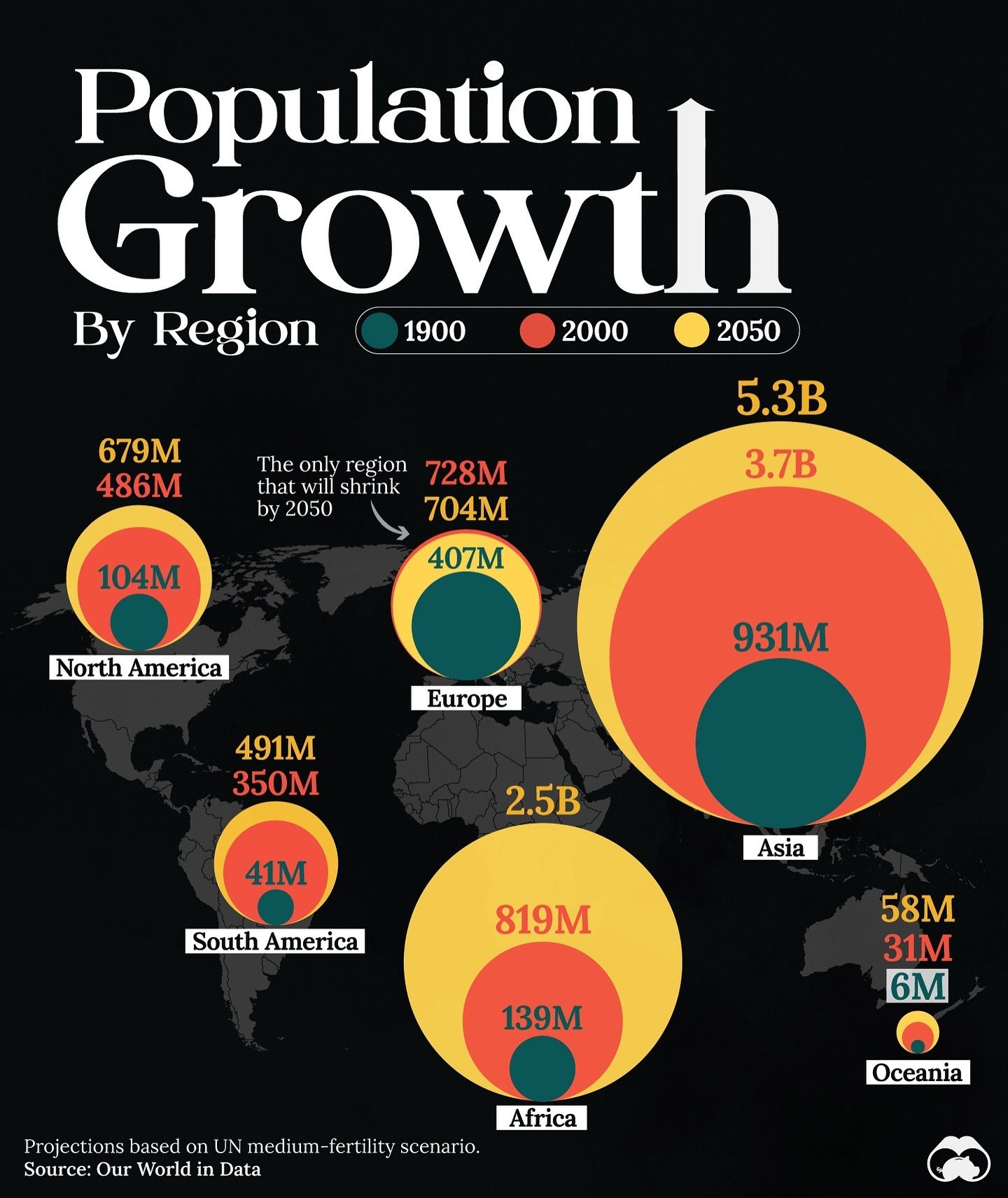
Population Growth Projections: A Regional Analysis from 1900 to 2050
The world's population has seen remarkable growth over the past century, doubling from 4 to 8 billion in fewer than 50 years. This dramatic increase has been driven by various factors, with different regions contributing to this growth in unique ways. By examining population data from 1900, 2000, and projected figures for 2050, we can gain insights into how different regions have evolved and are expected to change.
Why This Matters
Understanding population growth projections is crucial for planning and policy-making in areas such as infrastructure development, resource allocation, and environmental sustainability. By analyzing the trends, we can better prepare for the challenges and opportunities that lie ahead. The projections are based on the United Nations medium-fertility scenario, providing a reliable framework for examining future population dynamics.
Population Trends by Region
Asia: The Largest Contributor to Global Growth
Asia has been the biggest driver of global population growth over the 20th century. From 1900 to 2000, the continent's population grew by an astonishing 2.8 billion people. By 2000, Asia's population reached approximately 4.1 billion, and it is projected to continue its upward trajectory, reaching around 5.3 billion by 2050. This makes Asia the most populous region in the world, with significant implications for global demographics and economics.
Africa: Rapid Growth and Future Potential
Africa, while not growing at the same rate as Asia, has still seen significant population growth. From 1900 to 2000, Africa's population increased by 680 million. By 2000, the continent's population was around 819 million, and it is expected to reach nearly 2.5 billion by 2050. This rapid growth presents both opportunities and challenges, including the need for infrastructure development and resource management to support the growing population.
North America: Steady but Modest Growth
North America has seen a steady increase in population over the past century. In 1900, the population was around 679 million, growing to 931 million by 2000. By 2050, the population is projected to reach approximately 1.39 billion. This modest growth rate reflects a more stable demographic trend compared to the rapid increases seen in Asia and Africa.
Europe: Stable Population with Projected Decline
Europe's population growth has been relatively stable over the past century. In 1900, the population was around 486 million, growing to 729 million by 2000. However, Europe is the only region expected to see a population decline by 2050, with projections indicating a decrease to around 670 million. This decline can be attributed to factors such as low fertility rates and an aging population.
Oceania: Slow but Steady Growth
Oceania has seen a slow but steady increase in population. In 1900, the population was around 6 million, growing to 35 million by 2000. By 2050, the population is projected to reach approximately 62 million. This region's growth is influenced by factors such as immigration and natural population increase.
South America: Moderate Growth
South America has experienced moderate population growth over the past century. In 1900, the population was around 41 million, growing to 584 million by 2000. By 2050, the population is projected to reach approximately 742 million. This growth reflects the region's demographic trends, influenced by factors such as urbanization and economic development.
Practical Tips for Understanding Population Growth
Analyze Historical Data
When examining population growth, it is essential to look at historical data to understand the trends and patterns that have shaped a region's demographic landscape. This information can provide valuable insights into future projections and help identify key factors influencing population growth.
Consider Fertility Rates
Fertility rates play a crucial role in population growth. By analyzing fertility rates, policymakers can better understand the potential for future population increases and make informed decisions about resource allocation and infrastructure development.
Evaluate Economic and Social Factors
Economic and social factors, such as urbanization, immigration, and economic development, significantly impact population growth. By considering these factors, policymakers can develop strategies to address the challenges and opportunities presented by population growth.
Important Takeaways
Asia's Dominance
Asia's significant population growth over the past century and its projected dominance by 2050 highlight the continent's role as a global demographic powerhouse. This growth will have far-reaching implications for the world, influencing economic, social, and environmental dynamics.
Africa's Rapid Growth
Africa's rapid population growth presents both opportunities and challenges. The continent's projected population increase from 819 million to 2.5 billion by 2050 underscores the need for sustainable development and resource management to support its growing population.
Europe's Decline
Europe's projected population decline by 2050 is a notable trend that will impact the region's economic and social dynamics. Policymakers will need to address the challenges posed by an aging population and low fertility rates to ensure sustainable development.
North America and Oceania
North America and Oceania are expected to experience modest but steady population growth. These regions will face unique challenges and opportunities as they adapt to their growing populations. The steady growth rates reflect a more stable demographic trend compared to the rapid increases in Asia and Africa.
South America
South America's moderate population growth reflects the region's demographic trends, influenced by factors such as urbanization and economic development. Policymakers will need to develop strategies to support this growth and address the challenges it presents.
Conclusion
The world's population growth from 1900 to 2050 is a complex and multifaceted phenomenon, with each region contributing uniquely to the global demographic landscape. By examining historical data, fertility rates, and economic and social factors, we can gain a deeper understanding of the trends and projections shaping our world. As the population continues to grow, it is crucial to develop sustainable strategies to address the challenges and opportunities presented by this demographic shift.
Watch the Reel
Questions readers ask
What were the key population growth trends from 1900 to 2000?
From 1900 to 2000, the world's population grew from 1.6 billion to 6.1 billion. Asia saw significant growth, driven by improvements in healthcare and agriculture. Europe's population increased at a slower pace due to lower fertility rates and the impact of two World Wars.
Which region is expected to drive global population growth from 2000 to 2050?
Africa is anticipated to be the dominant driver of global population growth from 2000 to 2050. With high fertility rates and a young population, Africa's population is projected to more than double, reaching over 2.5 billion by 2050. This growth is significant for global population figures.
How have fertility rates influenced regional population trends?
Ferility rates have varied significantly by region, greatly influencing population trends. Asia and Africa have experienced the highest fertility rates, leading to rapid population growth, while North America and Europe have seen lower fertility rates, resulting in slower growth rates.
What are the projected global population figures for 2050?
The world population is expected to reach approximately 9.7 billion by 2050. This projection is based on current trends and assumes that fertility rates will continue to decline in many regions, while Africa's population will continue to grow rapidly.
Why is understanding regional population data important for sustainable development planning?
Understanding regional population data is essential for effective planning and sustainable development. It helps policymakers anticipate future needs in areas like urbanization, resource management, and infrastructure. This data is vital for addressing regional challenges, such as ensuring adequate food and water supplies, and for making informed decisions about resource allocation.
How have North America's population trends differed from those in Asia and Africa?
North America's population growth has been more gradual compared to Asia and Africa. This is due to lower birth rates and stricter immigration policies. In contrast, Asia and Africa have experienced rapid population expansion driven by higher fertility rates and improved living conditions.
What factors have contributed to the remarkable global population growth from 1900 to 2023?
Several factors have contributed to global population growth, including advancements in medicine, which have reduced mortality rates, improved agricultural practices that have enhanced food security, and socio-economic developments that have increased overall living standards. Additionally, increased urbanization and migration have played significant roles in shaping population distribution.
Recent articles
Fresh deep dives from the latest Reels we unpacked.




Comments
Be the first to comment.