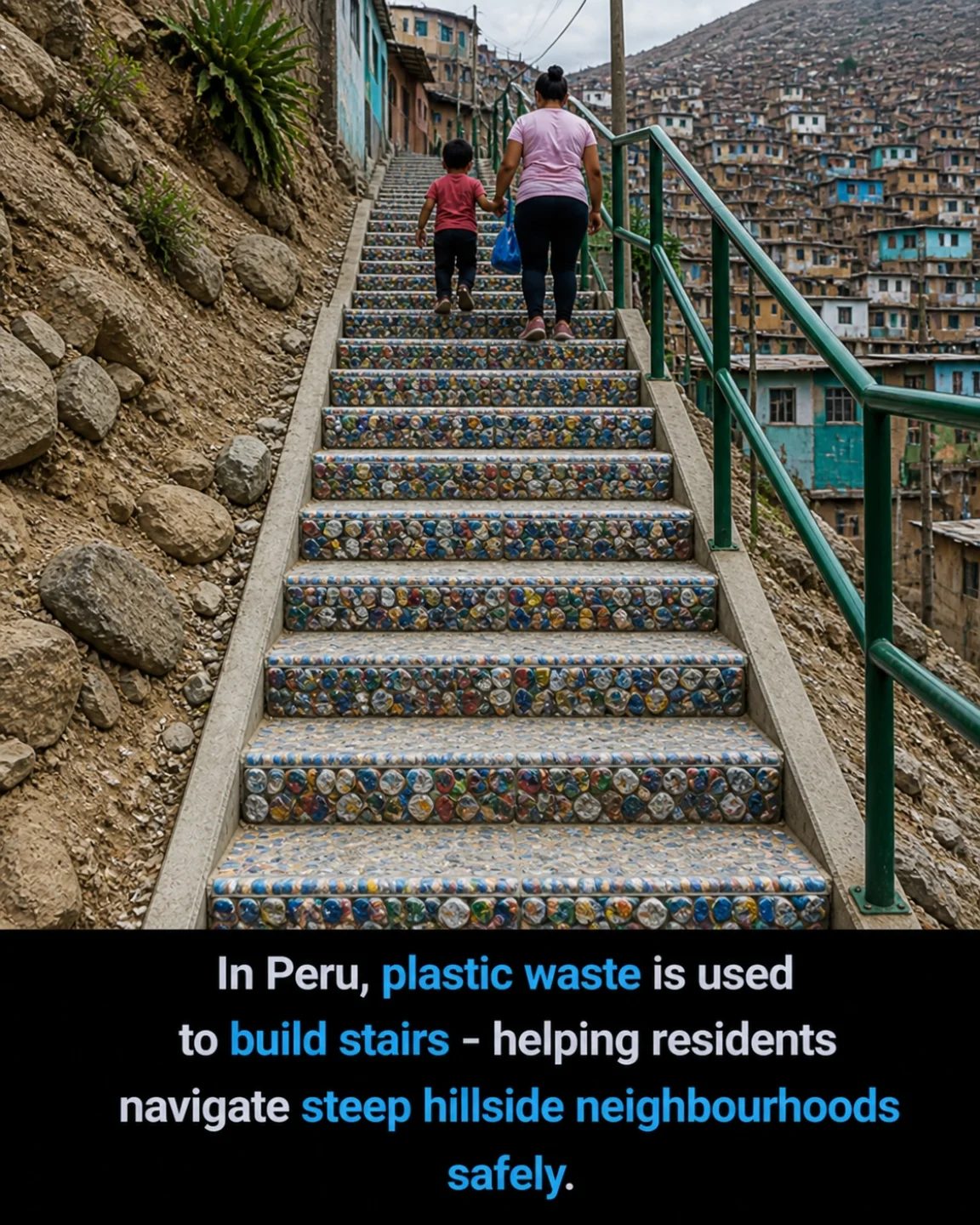
Community Staircase Project
In the heart of Peru, an innovative project is transforming steep hillside neighborhoods into safer, more accessible communities. By repurposing plastic waste into sturdy, vibrant staircases, residents are now able to navigate their surroundings with greater ease and safety. This initiative not only addresses environmental concerns but also significantly enhances the quality of life for locals.
Why This Matters
Peru's hillside neighborhoods present unique challenges. Steep terrain can make daily activities like commuting, shopping, and visiting neighbors difficult and sometimes dangerous. The Community Staircase Project tackles these issues head-on by providing a practical solution that improves both mobility and safety. Moreover, the project sets a global example of how waste management and community development can go hand in hand.
Main Discussion
The Innovation
The Community Staircase Project in Peru is a brilliant example of turning a problem into a solution. Plastic waste, which is a growing environmental concern, is repurposed to build durable, aesthetically pleasing stairs. This dual-purpose approach not only helps to manage waste but also provides a functional infrastructure that benefits the community.
The Process
Constructing these staircases involves several steps. First, plastic waste is collected and sorted. The plastic is then melted and molded into sturdy, interlocking steps. These steps are designed to be both robust and lightweight, making them easy to install and maintain. The final touch involves decorating the stairs with colorful mosaics, adding a splash of color and creativity to the otherwise utilitarian structures.
The Impact
The impact of these staircases extends far beyond their practical use. They serve as symbols of hope and community spirit, showcasing how collective effort and innovation can transform lives. Residents, especially the elderly and those with mobility issues, find it much easier to traverse the steep hills. Children, like the one seen in the visual summary, can now enjoy a safer path to school and play areas.
Practical Tips
If you're inspired by the Community Staircase Project and want to initiate something similar in your community, here are some practical steps to get you started:
Community Engagement
Engage with your local community to gather support and involvement. This could involve holding meetings, creating social media groups, or partnering with local organizations. The more people you have on board, the easier it will be to implement and sustain the project.
Waste Management
Assess the types and amounts of plastic waste in your area. Establish a system for collection and sorting. Collaborate with local waste management services or recyclers to ensure a steady supply of materials.
Design and Construction
Work with architects and engineers to design staircases that are both functional and safe. Consider the unique needs and challenges of your community's terrain and environment. Ensure that the design includes features that will make the stairs durable and easy to maintain.
Aesthetic Enhancements
Involve local artists in the project to add aesthetic elements to the staircases. This can include mosaics, murals, or other creative designs that reflect the community's culture and identity. These elements not only make the staircases visually appealing but also foster a sense of pride and ownership among residents.
Important Takeaways
The Community Staircase Project in Peru serves as a powerful reminder that innovative solutions can come from the most unexpected places. By repurposing waste and addressing community needs, this initiative demonstrates how sustainability and communal well-being can be interconnected.
Conclusion
The Community Staircase Project in Peru is a testament to human ingenuity and community spirit. Through the creative use of plastic waste, the project has transformed steep hillside neighborhoods into safer, more navigable areas. The vibrant, mosaic-covered staircases not only serve a practical purpose but also add a touch of beauty and pride to the community. If you're inspired by this project, remember that with the right approach and community involvement, innovative solutions can transform any challenge into an opportunity.
Watch the Reel
Questions readers ask
How do recycled plastic stairs improve accessibility in Peru's hillside neighborhoods?
Recycled plastic stairs in Peru's hillside neighborhoods provide a durable and safe solution for navigating steep terrain. These stairs make daily activities such as commuting, shopping, and visiting neighbors easier and less dangerous, significantly enhancing mobility for residents.
What are the environmental benefits of the Community Staircase Project?
The Community Staircase Project addresses environmental concerns by repurposing plastic waste into functional infrastructure. This initiative reduces the amount of plastic waste in landfills and decreases the need for new raw materials, promoting a more sustainable approach to waste management.
How are the recycled plastic stairs made?
The stairs are crafted from recycled plastic, which is transformed into a sturdy, long-lasting material. This process involves collecting plastic waste, cleaning it, and then melting and molding it into the shapes needed for the staircases, ensuring both durability and vibrant aesthetics.
What makes the recycled plastic stairs a sustainable solution for Peru's hillside neighborhoods?
The recycled plastic stairs offer a sustainable solution by addressing both accessibility and environmental issues. They are durable, require minimal maintenance, and reduce plastic waste, making them a long-term, eco-friendly option for improving hillside communities.
How do the vibrant colors of the recycled plastic stairs benefit the community?
The vibrant colors of the recycled plastic stairs not only add visual appeal to the neighborhoods but also serve as a beacon of innovation. They enhance the community's aesthetic and boost morale, making the environment more inviting and instilling a sense of pride among residents.
Are the recycled plastic stairs suitable for all types of terrain?
While these stairs are particularly effective in hillside neighborhoods, their suitability depends on the specific terrain and conditions. The durable nature of the recycled plastic makes them a viable option for many challenging landscapes, but a site assessment is recommended for optimal installation.
What role do local communities play in the maintenance of the recycled plastic stairs?
Local communities play a crucial role in the maintenance of the recycled plastic stairs. By taking ownership of the infrastructure, residents can help ensure its longevity and functionality. Regular inspections and minor repairs can be managed by the community, fostering a sense of responsibility and collective pride.
Recent articles
Fresh deep dives from the latest Reels we unpacked.




Comments
Be the first to comment.