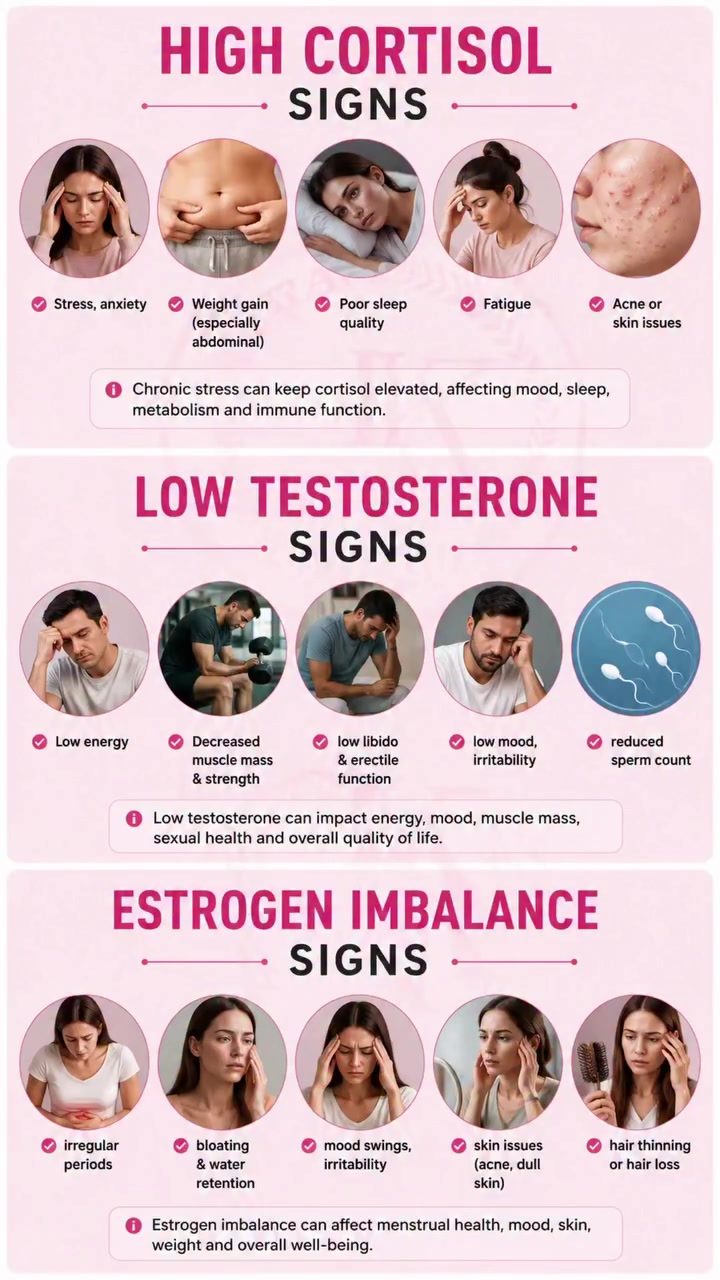
Hormone Imbalance: Signals to Watch For
Hormones are critical to the body's overall health, and imbalances can manifest in various ways. Understanding the signs of high cortisol, low testosterone, and estrogen imbalance is essential for taking proactive steps towards better health. Let's dive into these hormonal imbalances, their symptoms, and why recognizing them matters.
Why This Matters
Hormones regulate many of the body's processes, including metabolism, mood, and growth. An imbalance can disrupt these processes, leading to a range of health issues. Recognizing the signs of imbalance is the first step towards seeking appropriate medical help and improving overall well-being. By understanding these symptoms, individuals can take control of their health and consult healthcare professionals for proper testing and treatment.
Main Discussion
High Cortisol
Cortisol, known as the "stress hormone," helps the body respond to stress. However, chronic stress can keep cortisol levels elevated, leading to various health issues. High cortisol levels can manifest in several ways, including:
-
Stress and Anxiety: Persistent stress and anxiety are common signs of high cortisol. Chronic stress can keep cortisol elevated, affecting mood, sleep, metabolism, and immune function.
-
Weight Gain: High cortisol levels can lead to weight gain, particularly around the abdomen. This type of weight gain is linked to an increased risk of heart disease, diabetes, and other metabolic disorders.
-
Poor Sleep: Elevated cortisol levels can disrupt sleep patterns, leading to insomnia and restless sleep. Poor sleep can further exacerbate stress and anxiety, creating a vicious cycle.
-
Fatigue: Despite the restlessness, high cortisol levels can also cause persistent fatigue. This fatigue can be both physical and mental, impacting daily activities and overall quality of life.
-
Skin Issues: Acne and other skin issues can be a sign of high cortisol levels. Stress can exacerbate skin conditions, making it essential to address the underlying hormonal imbalance.
Low Testosterone
Testosterone is a crucial hormone for both men and women, although it is more commonly associated with male health. Low testosterone levels can have significant effects on various aspects of health, including:
-
Low Energy: Low testosterone levels can lead to persistent fatigue and low energy, impacting daily activities and productivity.
-
Muscle Weakness: Testosterone plays a key role in muscle development and maintenance. Low levels can result in decreased muscle mass and strength, making it difficult to engage in physical activities.
-
Erectile Dysfunction: For men, low testosterone levels can lead to erectile dysfunction, impacting sexual health and overall well-being.
-
Low Libido: Both men and women may experience a decrease in sexual desire, which can affect relationships and emotional health.
-
Mood Changes: Low testosterone can also lead to mood swings, irritability, and depression. These emotional changes can further impact overall well-being and daily functioning.
Estrogen Imbalance
Estrogen is a vital hormone for both men and women, playing a significant role in reproductive health, bone health, and overall well-being. An imbalance in estrogen levels can lead to a range of symptoms, including:
-
Irregular Periods: For women, estrogen imbalance can cause irregular menstrual cycles, making it challenging to predict and manage periods.
-
Bloating and Water Retention: Estrogen imbalance can lead to bloating and water retention, causing discomfort and affecting mobility.
-
Mood Swings: Fluctuations in estrogen levels can result in mood swings, irritability, and depression. These emotional changes can impact relationships and daily functioning.
-
Skin Issues: Acne, dull skin, and other skin issues can be signs of estrogen imbalance. Addressing the underlying hormonal imbalance can help improve skin health.
-
Hair Thinning: Estrogen imbalance can lead to hair thinning or hair loss, affecting self-esteem and overall well-being.
Practical Tips
Recognizing the signs of hormone imbalance is the first step. Here are some practical tips to take control of your hormonal health:
-
Consult a Healthcare Professional: If you experience persistent symptoms, it's essential to consult a healthcare professional for proper testing and treatment. Self-diagnosing can be misleading and may delay appropriate care.
-
Maintain a Balanced Diet: A balanced diet rich in fruits, vegetables, lean proteins, and whole grains can support hormonal health. Avoid processed foods, excessive sugar, and unhealthy fats.
-
Engage in Regular Exercise: Regular physical activity can help regulate hormone levels, reduce stress, and improve overall well-being. Aim for a mix of aerobic exercise, strength training, and flexibility exercises.
-
Prioritize Sleep: Getting adequate sleep is crucial for hormonal balance. Aim for 7-9 hours of quality sleep per night and establish a consistent sleep routine.
-
Manage Stress: Chronic stress can disrupt hormonal balance. Practice stress-reduction techniques such as meditation, deep breathing, yoga, or mindfulness to manage stress effectively.
Important Takeaways
-
Hormonal imbalances can manifest in various ways, affecting physical, emotional, and mental health.
-
High cortisol levels can lead to stress, anxiety, weight gain, poor sleep, fatigue, and skin issues.
-
Low testosterone levels can result in low energy, muscle weakness, erectile dysfunction, low libido, and mood changes.
-
Estrogen imbalance can cause irregular periods, bloating, mood swings, skin issues, and hair thinning.
-
Recognizing the signs of hormonal imbalance is the first step towards seeking appropriate medical help and improving overall well-being.
Conclusion
Hormones play a crucial role in the body's overall functioning, and imbalances can lead to a range of health issues. Recognizing the signs of high cortisol, low testosterone, and estrogen imbalance is essential for taking proactive steps towards better health. By understanding these symptoms and consulting healthcare professionals, individuals can address hormonal imbalances and improve their overall well-being.
Watch the Reel
Questions readers ask
What are some common symptoms of high cortisol levels?
High cortisol levels can manifest in several ways, including increased fatigue, weight gain, particularly around the midsection, sleep disturbances, and frequent headaches. Some individuals may also experience mood swings, irritability, and a weakened immune system. If you notice these symptoms, it's important to consult a healthcare professional for a comprehensive evaluation.
How does low testosterone affect the body?
Low testosterone can lead to a variety of symptoms, including decreased muscle mass, increased body fat, fatigue, and reduced sex drive. Additionally, men may experience mood changes, such as irritability or depression, and have problems with concentration and memory. Women with low testosterone may also experience a decrease in sex drive and fatigue.
What are the signs of an estrogen imbalance in women?
An estrogen imbalance can cause several issues, such as irregular periods, mood swings, and sleep disturbances. Many women also experience weight gain, changes in skin health, and fatigue. Additionally, estrogen imbalances can lead to changes in menstrual flow, including heavier or lighter periods, and may contribute to conditions like endometriosis or fibroids. If you experience these symptoms, it's important to seek medical advice.
How do hormones affect weight and metabolism?
Hormones play a significant role in weight management and metabolism. For instance, imbalances in cortisol, the stress hormone, can lead to weight gain, particularly around the midsection. Thyroid hormones regulate metabolism, and an imbalance can result in weight fluctuations. Additionally, sex hormones like testosterone and estrogen influence body composition, with low levels of these hormones potentially leading to increased body fat and muscle loss.
Can hormone imbalances cause skin problems?
Yes, hormone imbalances can manifest in various skin issues. For example, excess androgens can lead to acne, particularly in women. Estrogen imbalances can cause dryness, thinning, or changes in skin elasticity. Cortisol imbalances can contribute to conditions like eczema, psoriasis, and rosacea. If you notice persistent skin problems, it's a good idea to consult a healthcare professional to explore potential hormonal causes.
Why do hormone imbalances often cause fatigue?
Fatigue is a common symptom of hormone imbalances because hormones regulate many bodily functions, including energy production and metabolism. For instance, thyroid hormones directly influence metabolic rate, while cortisol helps regulate the body's response to stress. Imbalances in these hormones can disrupt the body's energy balance, leading to persistent fatigue. Furthermore, hormone-related sleep disturbances can exacerbate feelings of tiredness and exhaustion.
How do hormones influence sleep and mood swings?
Hormones play a crucial role in regulating sleep patterns and mood. For example, cortisol levels naturally fluctuate throughout the day, peaking in the morning and decreasing at night to promote sleep. Imbalances can disrupt this cycle, leading to insomnia or daytime fatigue. Additionally, hormones like serotonin and estrogen influence mood regulation, and imbalances can contribute to mood swings, irritability, and even depression. Addressing hormone imbalances can, therefore, improve both sleep quality and emotional stability.
Recent articles
Fresh deep dives from the latest Reels we unpacked.




Comments
Be the first to comment.