Vitamin Deficiency Warning Signs
Your body often provides early warning signs when it's not getting enough essential vitamins. Recognizing these symptoms can help you take action before they become more serious. Understanding the signs of vitamin deficiencies is crucial for maintaining overall health and wellness.
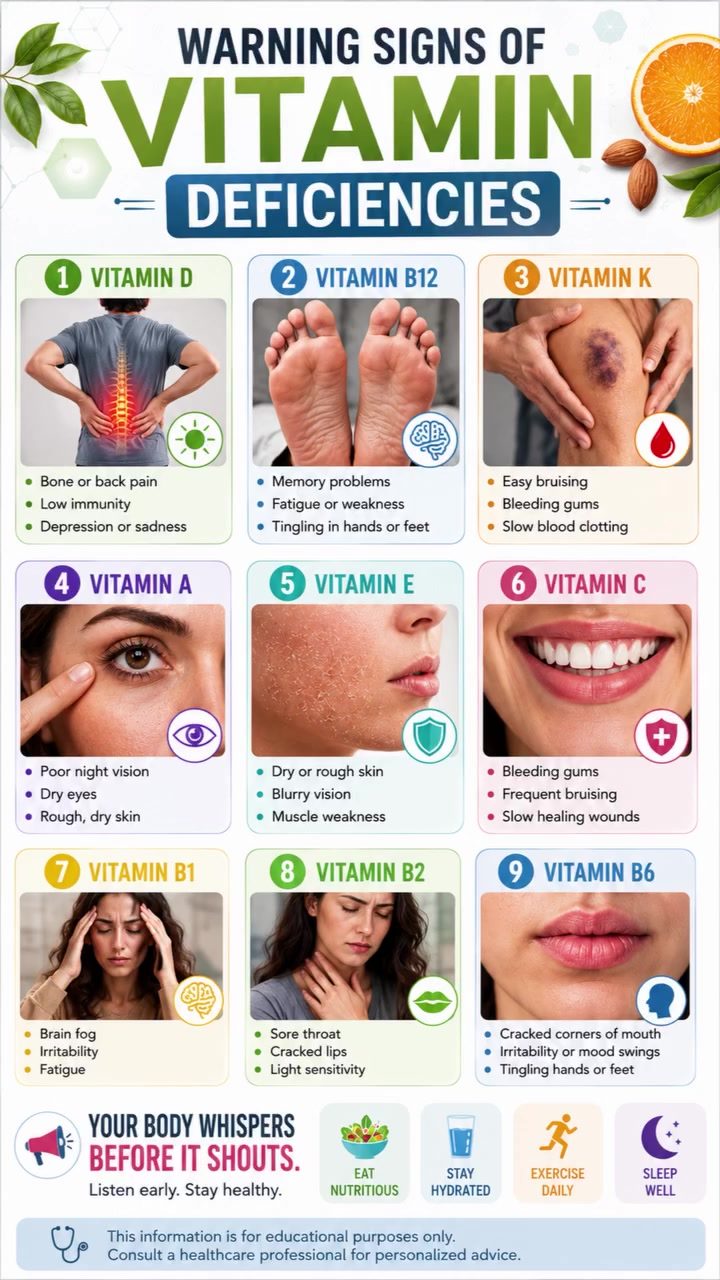
Your body whispers before it shouts, and these subtle signals can be easily overlooked. But paying attention to these signs can help you address potential vitamin deficiencies early on, which is especially important given how common these issues are. Here are the key vitamins and their associated symptoms:
Vitamin D
Vitamin D is essential for bone health, immunity, and even mood regulation. A deficiency in this vitamin can manifest in several ways, including:
- Bone or back pain
- Low immunity
- Depression
Vitamin D is often referred to as the "sunshine vitamin" because the body produces it in response to sunlight. It's also found in certain foods and can be taken as a supplement. Regular exposure to sunlight, a balanced diet, and appropriate supplementation can help maintain healthy vitamin D levels.
Vitamin B12
The neurological and cardiovascular systems rely heavily on vitamin B12. Symptoms of a B12 deficiency can be alarming and include:
- Fatigue
- Memory problems
- Tingling in the hands or feet
Vitamin B12 is crucial for the production of red blood cells and the proper functioning of the nervous system. It's found in animal products like meat, fish, eggs, and dairy. For those who follow a plant-based diet, fortified foods and supplements are recommended. Regular blood tests can help detect a B12 deficiency early.
Vitamin C
Vitamin C is a powerful antioxidant that supports immune function and collagen production. Its deficiency can lead to:
- Bleeding gums
- Frequent bruising
- Slow wound healing
Vitamin C is found in a variety of fruits and vegetables, particularly citrus fruits, berries, and leafy greens. A diet rich in these foods can help maintain adequate vitamin C levels, but supplementation may be necessary for those with specific dietary restrictions or health conditions.
Vitamin A
Vitamin A plays a critical role in vision, immune function, and skin health. Its deficiency can cause:
- Poor night vision
- Dry eyes
- Rough or dry skin
Vitamin A is found in foods like carrots, sweet potatoes, and leafy greens. It's also available in animal products such as liver and eggs. Regular consumption of these foods can help prevent deficiency, but overconsumption of vitamin A from supplements can be harmful.
Vitamin E
Vitamin E is known for its antioxidant properties, which help protect cells from damage. A deficiency in vitamin E can result in:
- Dry or rough skin
- Muscle weakness
- Blurred vision
Vitamin E is found in nuts, seeds, and vegetable oils. Regular consumption of these foods can help maintain adequate vitamin E levels. However, vitamin E deficiency is relatively rare and often associated with conditions that affect fat absorption.
Vitamin B1 (Thiamine)
Vitamin B1, also known as thiamine, is essential for energy metabolism and nerve function. Its deficiency can lead to:
- Fatigue
- Irritability
- Difficulty concentrating
Thiamine is found in whole grains, meats, and fortified cereals. A balanced diet rich in these foods can help prevent deficiency, but alcoholism and certain medical conditions can increase the risk.
Vitamin B2 (Riboflavin)
Vitamin B2, or riboflavin, is important for energy production and the maintenance of healthy skin, eyes, and nerves. Its deficiency can cause:
- Cracked lips
- Sore throat
- Sensitivity to light
Riboflavin is found in dairy products, eggs, and leafy greens. Including these foods in your diet can help maintain adequate levels of vitamin B2.
Vitamin B6
Vitamin B6 plays a role in brain development, immune function, and the production of red blood cells. Its deficiency can result in:
- Cracked corners of the mouth
- Mood changes
- Tingling in the hands or feet
Vitamin B6 is found in poultry, fish, potatoes, and non-citrus fruits. A balanced diet that includes these foods can help prevent deficiency.
Vitamin K
Vitamin K is essential for blood clotting and bone health. Its deficiency can lead to:
- Easy bruising
- Bleeding gums
- Slow blood clotting
Vitamin K is found in leafy greens, Brussels sprouts, and fermented foods. Regular consumption of these foods can help maintain adequate levels of vitamin K.
Why This Matters
Vitamin deficiencies can have significant impacts on your health, affecting everything from your energy levels to your cognitive function. Recognizing the early warning signs and taking proactive steps can help you address deficiencies before they become more serious. A balanced diet, along with appropriate medical evaluation and testing when needed, are the best ways to identify and treat deficiencies.
Practical Tips
Maintaining a balanced diet is the first step in preventing vitamin deficiencies. However, certain lifestyle habits can further support your nutritional needs. Here are some practical tips to keep in mind:
Eat Nutritious Foods
A balanced diet that includes a variety of fruits, vegetables, lean proteins, and whole grains can help ensure you're getting the vitamins and minerals you need. Focus on nutrient-dense foods to optimize your intake.
Stay Hydrated
Proper hydration is essential for overall health and can help your body absorb nutrients more efficiently. Aim for at least eight glasses of water a day, and more if you're physically active or live in a hot climate.
Exercise Daily
Regular physical activity supports your body's systems and can help with nutrient absorption. Incorporate a mix of cardio, strength training, and flexibility exercises into your routine.
Sleep Well
Adequate sleep is crucial for overall health and can help your body repair and regenerate. Aim for 7-9 hours of sleep per night, and prioritize a consistent sleep schedule.
Seek Professional Advice
If you experience persistent symptoms or have concerns about your nutritional status, consult a healthcare professional. They can provide personalized advice and recommendations, including blood tests and supplementation if necessary.
Important Takeaways
- Recognizing the early warning signs of vitamin deficiencies can help you address potential issues before they become more serious.
- A balanced diet rich in nutrient-dense foods is essential for maintaining adequate vitamin levels.
- Lifestyle habits such as staying hydrated, exercising regularly, and getting enough sleep can support overall health and nutrient absorption.
- Seek professional advice if you experience persistent symptoms or have concerns about your nutritional status.
Conclusion
Your body provides early warning signs when it's not getting enough essential vitamins. Recognizing these symptoms and taking proactive steps can help you maintain optimal health. A balanced diet, regular exercise, adequate sleep, and staying hydrated are key to supporting your body's nutritional needs. If you experience persistent symptoms, consult a healthcare professional for personalized advice and recommendations. Listen to your body and take action to ensure you're getting the vitamins and minerals you need for a healthy, vibrant life.
Watch the Reel
Questions readers ask
What are the early signs of vitamin D deficiency?
Early signs of vitamin D deficiency can include bone pain, fatigue, and even mood changes. These symptoms often come on slowly. If you experience these symptoms, it's a good idea to talk to a healthcare professional.
How does vitamin B12 deficiency manifest in the body?
Vitamin B12 deficiency can cause fatigue, weakness, and tingling in the hands and feet. In more severe cases, it may lead to neurological problems. If you notice these symptoms, it's important to consult with a healthcare provider.
What are the early warning signs of vitamin C deficiency?
Early signs of vitamin C deficiency include bleeding gums, dry skin, and fatigue. These symptoms can indicate that your body is not getting enough vitamin C. Addressing these signs early can help prevent more serious issues like scurvy.
Can low vitamin levels cause fatigue?
Yes, fatigue is a common symptom of various vitamin deficiencies, including vitamin B12, vitamin D, and vitamin C. If you're experiencing persistent fatigue, it might be a sign that your body needs more of these essential vitamins.
What should I do if I notice symptoms of vitamin deficiency?
If you notice symptoms that could indicate a vitamin deficiency, contact a healthcare provider. They can perform tests to determine if you have low vitamin levels. Professional advice is crucial for addressing deficiencies safely and effectively.
How can recognizing early vitamin deficiency symptoms help me?
Recognizing early vitamin deficiency symptoms can help you take proactive steps to maintain your health. By addressing deficiencies early, you can prevent more serious health issues and support your overall wellness.
What are some common symptoms of vitamin deficiency?
Common symptoms of vitamin deficiency can include fatigue, dry skin, and tingling in the hands and feet. These symptoms can vary depending on the specific vitamin that is lacking. Paying attention to these signs can help you address potential deficiencies early on.
Related deep dives
Similar reads based on topic and creator.


Recent articles
Fresh deep dives from the latest Reels we unpacked.




Comments
Be the first to comment.