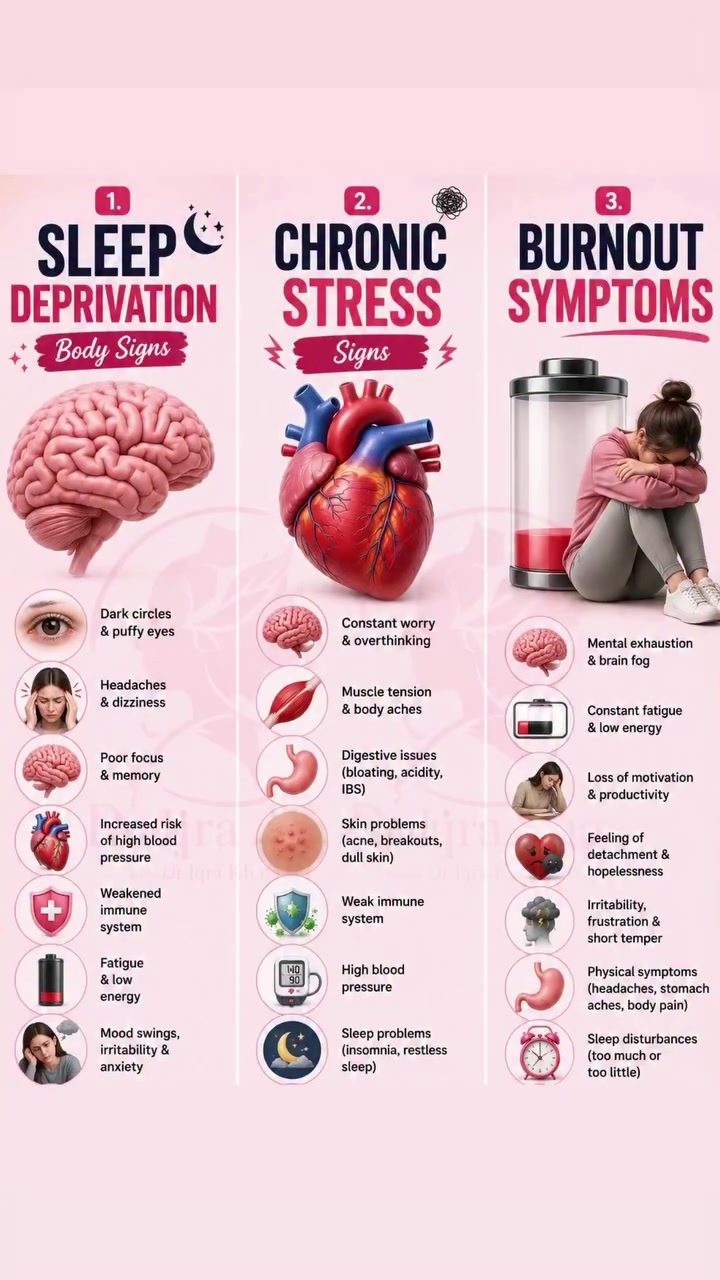
Sleep Deprivation, Chronic Stress, and Burnout
Sleep deprivation, chronic stress, and burnout are increasingly common issues that affect both physical and mental health. Recognizing the early symptoms of these conditions is crucial for maintaining overall well-being and preventing more severe health problems.
Why This Matters
Understanding the signs of sleep deprivation, chronic stress, and burnout can help you take proactive steps to protect your health. By identifying these symptoms early, you can intervene and make lifestyle changes that promote better sleep, reduce stress, and prevent burnout.
Main Discussion
Sleep Deprivation
Sleep deprivation is characterized by a lack of sufficient sleep, which can have significant impacts on both physical and mental health. Some of the most common signs include:
- Dark circles and puffy eyes: A common visual indicator of sleep deprivation, often caused by poor circulation and fluid retention.
- Fatigue and low energy: Feeling tired and lacking the energy to perform daily tasks.
- Poor concentration and memory: Difficulty focusing and remembering things, which can affect work and personal life.
Additional symptoms include headaches, mood swings, and increased cravings that can lead to weight gain. Sleep deprivation can also increase the risk of high blood pressure and weaken the immune system, making you more susceptible to illnesses.
Chronic Stress
Chronic stress is a persistent feeling of being overwhelmed and under pressure. It can manifest in various physical and mental symptoms, such as:
- Constant worry and overthinking: Persistent anxious thoughts and a sense of dread.
- Muscle tension and body aches: Physical discomfort, often in the neck, shoulders, and back.
- Digestive issues: Problems like bloating, acidity, and irritable bowel syndrome (IBS) can be exacerbated by stress.
- High blood pressure and frequent illnesses: Chronic stress can weaken the immune system, leading to more frequent infections and health issues.
- Sleep problems: Difficulty falling asleep, staying asleep, or waking up feeling unrested.
Chronic stress can also affect the skin, leading to issues like acne, breakouts, and dull skin. These symptoms highlight the interconnected nature of mental and physical health.
Burnout
Burnout is a state of emotional, physical, and mental exhaustion caused by prolonged exposure to stress, often in a work or caregiving environment. Symptoms of burnout include:
- Mental exhaustion and brain fog: Difficulty thinking clearly, making decisions, or focusing on tasks.
- Constant fatigue and low energy: Feeling physically and mentally drained, even after rest.
- Feeling detached from work or daily life: A sense of disconnection from activities, responsibilities, and relationships.
- Irritability, frustration, and short temper: Increased sensitivity to stress, leading to outbursts and conflicts.
Physical symptoms of burnout can include headaches, stomach aches, and body pain, often exacerbated by a lack of self-care and chronic stress. Sleep disturbances, such as sleeping too much or too little, are also common.
Practical Tips
Protecting your health involves a combination of lifestyle changes and proactive measures. Here are some practical tips to help you manage sleep deprivation, chronic stress, and burnout:
- Aim for 7–9 hours of sleep each night: Prioritize getting enough sleep by maintaining a consistent sleep schedule and creating a relaxing bedtime routine.
- Eat a balanced diet: Consume a variety of nutritious foods, including fruits, vegetables, lean proteins, and whole grains. Limit processed foods and sugars.
- Stay physically active: Engage in regular physical activity, such as walking, running, or yoga, to improve mood, energy levels, and overall health.
- Practice stress-management techniques: Incorporate mindfulness practices, meditation, or deep-breathing exercises to help manage stress and anxiety.
- Take regular breaks from screens: Limit your exposure to electronic devices, especially before bedtime, to improve sleep quality and reduce eye strain.
- Seek professional help if symptoms persist or interfere with daily life: Consult a healthcare provider for personalized advice and support.
Important Takeaways
- Body Signs: Pay close attention to physical symptoms, as they can be early indicators of underlying issues.
- Mental Health: Recognize the mental symptoms, such as mood swings, irritability, and constant worry, as they can significantly impact your overall well-being.
- Proactive Measures: Take proactive steps to manage stress, prioritize sleep, and maintain a healthy lifestyle to prevent burnout.
Conclusion
Sleep deprivation, chronic stress, and burnout are serious health issues that can significantly impact your physical and mental well-being. By recognizing the early signs and taking proactive measures, you can protect your health and improve your quality of life. Prioritize self-care, seek professional help when needed, and stay aware of the subtle signals your body and mind send you.
Watch the Reel
Questions readers ask
What are the early signs of sleep deprivation that I should look out for?
Early signs of sleep deprivation include constant fatigue, difficulty concentrating, irritability, and increased appetite. If you find yourself struggling to stay awake during the day, taking longer than 30 minutes to fall asleep, or needing caffeine to keep you awake, these could be indications of sleep deprivation.
How can I distinguish between normal stress and chronic stress?
Chronic stress is characterized by persistent physical symptoms such as high blood pressure, muscle tension, and frequent headaches, as well as mental health symptoms like irritability, anxiety, and depression. If you experience these symptoms for an extended period without relief, it may be chronic stress.
What are the first signs of burnout that I might notice?
Early signs of burnout often include a sense of exhaustion, both physical and mental, as well as feelings of cynicism and detachment from your work or responsibilities. You might also experience reduced productivity and a lack of motivation, even for tasks you previously enjoyed. Recognizing these signs can help you take steps to address burnout before it becomes severe.
How does poor sleep affect my stress levels?
Poor sleep and stress are closely linked; lack of sleep can exacerbate feelings of stress, and high stress levels can make it difficult to fall and stay asleep. This cycle can lead to increased irritability, fatigue, and other symptoms of both sleep deprivation and chronic stress, making it essential to address both issues simultaneously.
Can sleep deprivation cause mental health issues?
Yes, prolonged sleep deprivation can lead to mental health issues, including anxiety and depression. It can also exacerbate existing mental health conditions. This is because sleep is crucial for emotional regulation and cognitive function, and a lack of sleep can make it difficult to manage stress and maintain mental well-being.
Recent articles
Fresh deep dives from the latest Reels we unpacked.


Comments
Be the first to comment.