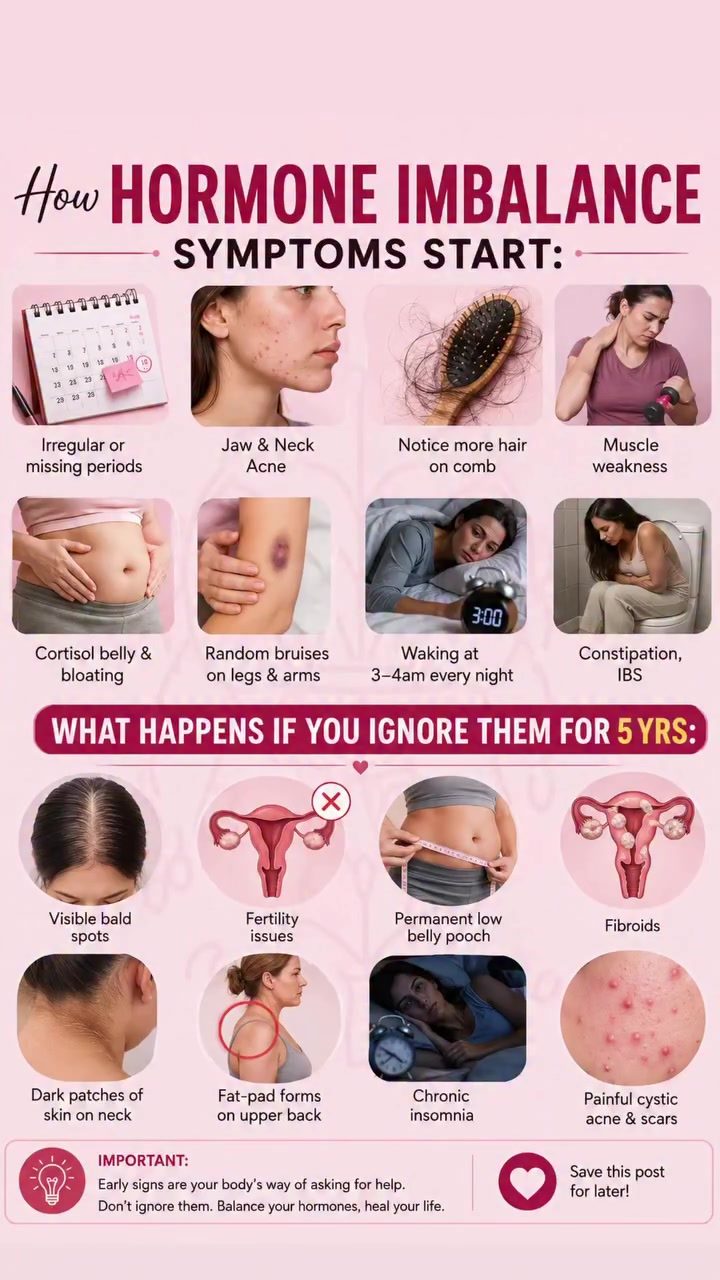
Hormone Imbalance Symptoms
Hormone imbalances can impact various aspects of health, including skin condition, metabolism, energy levels, sleep patterns, and reproductive health. Recognizing the early signs of hormone imbalance is crucial for maintaining overall well-being. Hormone imbalances can manifest in numerous ways, and the symptoms can vary widely.
Why This Matters
Hormones play a pivotal role in regulating many bodily functions. When they are out of balance, it can lead to a wide range of issues that affect daily life. Early detection and management of these symptoms can prevent more severe health complications down the line. Ignoring the symptoms for an extended period, such as five years, can result in significant health problems, including fertility issues, fibroids, and chronic health conditions.
Main Discussion
Recognizing Early Symptoms
Early symptoms of hormone imbalance serve as important signals from the body. They include:
- Irregular or missing periods: This is one of the most common signs, particularly in women.
- Acne: Hormonal acne often appears on the jawline and neck.
- Hair loss: Excessive hair loss or noticing more hair on your comb can be a sign.
- Muscle weakness: Unexplained muscle weakness or fatigue.
- Cortisol belly and bloating: Increased abdominal fat and bloating can indicate elevated cortisol levels.
- Easy bruising: Random bruises on legs and arms.
- Sleep disturbances: Waking up at the same time every night, often around 3-4 am.
- Digestive problems: Issues like constipation and irritable bowel syndrome (IBS).
Long-Term Consequences
If left unaddressed, these early symptoms can develop into more serious issues over time. Some of the potential long-term effects include:
- Fertility issues: Difficulty conceiving or maintaining a pregnancy.
- Visible bald spots: More pronounced hair loss.
- Permanent low belly pooch: Stubborn abdominal fat that is hard to lose.
- Fibroids: Benign tumors in the uterus.
- Dark patches of skin on the neck: A condition known as acanthosis nigricans, which can indicate insulin resistance.
- Fat-pad forms on the upper back: Excess fat deposited in the upper back area.
- Chronic insomnia: Persistent sleep problems.
- Painful cystic acne and scars: Severe acne that can lead to scarring.
Balancing Hormones for Overall Health
Balancing hormones is essential for maintaining overall health. The body’s hormones work in a delicate balance, and any disruption can have cascading effects. Healthy habits can support hormonal balance, such as:
- Regular exercise: Physical activity helps regulate hormones and improve overall health.
- Balanced diet: A diet rich in whole foods, lean proteins, and healthy fats supports hormone balance.
- Quality sleep: Adequate and quality sleep is crucial for hormonal regulation.
- Stress management: Chronic stress can disrupt hormonal balance, so techniques like meditation, yoga, or therapy can be beneficial.
- Medical care: Regular check-ups and appropriate medical interventions can help manage hormonal imbalances.
Practical Tips
- Track Your Symptoms: Keep a journal of your symptoms to discuss with a healthcare professional. Note any patterns or triggers that may be contributing to your symptoms.
- Consult a Professional: If you are experiencing persistent symptoms, consult a healthcare provider for proper testing and diagnosis. Self-diagnosis can be misleading, as symptoms can have various underlying causes.
- Adopt Healthy Habits: Incorporate a balanced diet, regular exercise, and stress management techniques into your daily routine to support hormonal health.
- Regular Check-Ups: Regular medical check-ups can help detect and manage hormonal imbalances early.
- Stay Informed: Stay up-to-date with the latest medical research and recommendations related to hormone health.
Important Takeaways
- Early signs of hormone imbalance are important signals from your body.
- Ignoring these symptoms can lead to serious health issues over time.
- Balancing hormones is crucial for overall health and well-being.
- Regular exercise, a balanced diet, quality sleep, and stress management can support hormonal balance.
Conclusion
Hormone imbalance can affect various aspects of health, and recognizing the early signs is essential for maintaining overall well-being. By adopting healthy habits and seeking appropriate medical care, you can support hormonal balance and prevent more severe health issues. Pay attention to the signals your body is sending, and take proactive steps to address any hormonal imbalances.
Watch the Reel
Questions readers ask
What are some common early signs of hormone imbalance that I should look out for?
Early signs of hormone imbalance can include irregular periods, persistent acne, and unexplained fatigue. Other indicators might be changes in skin condition, such as excessive dryness or oiliness, as well as hair loss or thinning. Additionally, sudden weight changes, bloating, and muscle weakness could signal a hormone imbalance. If you notice any of these symptoms, it's essential to consult with a healthcare provider.
How does hormone imbalance affect sleep patterns?
Hormone imbalances can significantly disrupt sleep patterns. Fluctuations in hormones like cortisol and melatonin can lead to insomnia or other sleep disturbances. If you're experiencing persistent sleep problems, it could be a sign of an underlying hormone issue. To identify the problem, keep a sleep diary and discuss any changes with your doctor.
Can hormone imbalance cause changes in my skin and hair?
Yes, hormone imbalance can manifest in various skin and hair issues. For instance, an increase in the hormone androgens can lead to acne breakouts, while a decrease in estrogen can result in dry skin and hair loss or thinning. If you notice unusual changes in your skin or hair, it might be worth investigating potential hormone imbalances with a medical professional.
What should I do if I suspect I have a hormone imbalance?
If you suspect a hormone imbalance, it's important to schedule an appointment with your healthcare provider. They can perform tests to identify specific hormone issues and recommend appropriate treatments. Early detection is key to managing symptoms and preventing more severe health problems in the future.
How do irregular menstrual cycles relate to hormone imbalance?
Irregular periods are often a key indicator of hormone imbalance, particularly in women. Changes in the levels of hormones like estrogen and progesterone can lead to variations in menstrual cycle length and flow. If you experience irregular periods, it's crucial to discuss this with your healthcare provider to determine the underlying cause.
Can hormone imbalance cause fatigue and muscle weakness?
Yes, hormone imbalances can lead to fatigue and muscle weakness. Thyroid hormones, for example, play a crucial role in regulating metabolism and energy levels. An imbalance can result in feelings of fatigue and weakness. If you're experiencing persistent fatigue and weakness, it could be a sign of a hormonal issue that needs to be addressed.
What can happen if hormone imbalance symptoms are ignored for an extended period?
Ignoring the symptoms of hormone imbalance for a prolonged period, such as five years, can lead to significant health issues. These may include fertility problems, fibroids, and other more severe health complications. Addressing these symptoms early can help prevent future health problems and improve overall well-being.
Recent articles
Fresh deep dives from the latest Reels we unpacked.




Comments
Be the first to comment.