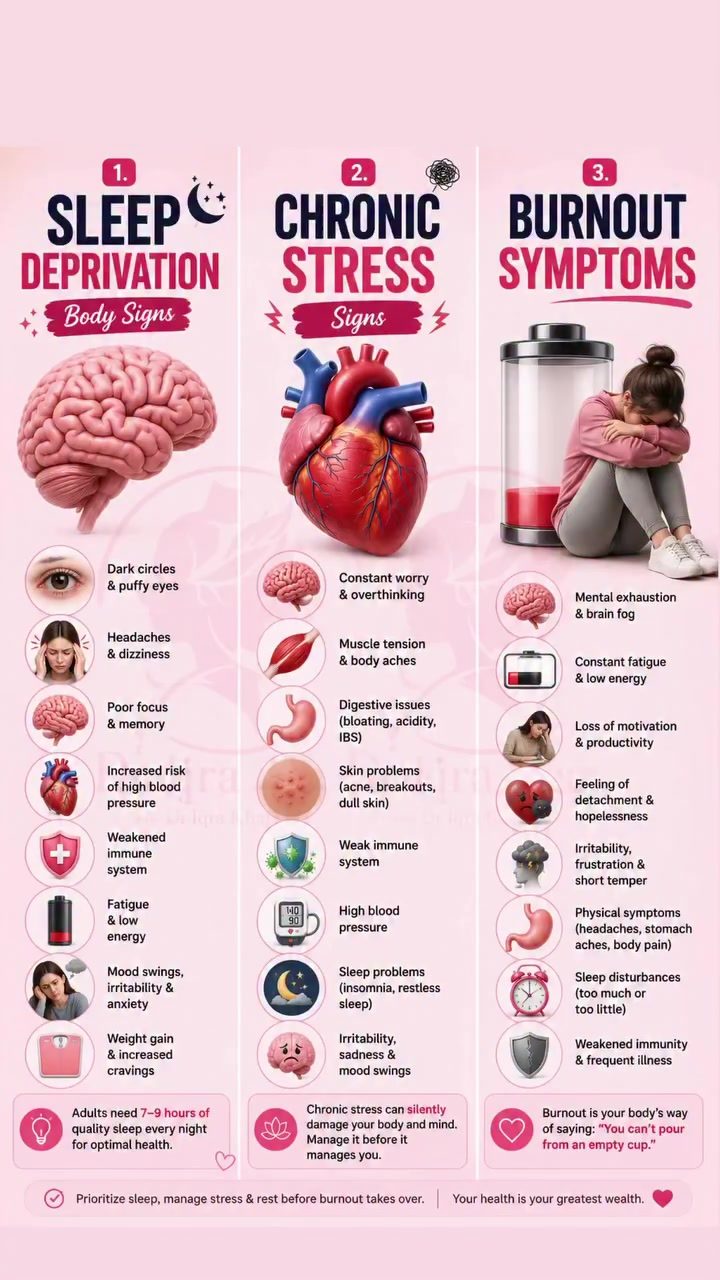
Sleep Deprivation, Chronic Stress, and Burnout
The body and mind signal distress long before reaching a breaking point. Recognizing these signs early can fortify both physical and mental health. Let's dive into the interconnected issues of sleep deprivation, chronic stress, and burnout, and explore how to manage and mitigate them.
Context / Why this matters
Sleep deprivation, chronic stress, and burnout are interconnected and can significantly impact overall well-being. Understanding the signs and symptoms of each can help in managing them effectively. These issues are prevalent in modern society, where long working hours, constant connectivity, and high-stress environments are common.
Sleep Deprivation
Sleep deprivation is a widespread issue characterized by various physical and mental symptoms.
Physical Symptoms
Sleep deprivation can manifest in several physical ways:
- Headaches and dizziness: Lack of sleep can lead to tension headaches and a feeling of lightheadedness.
- Dark circles and puffy eyes: Insufficient sleep often results in visible signs around the eyes.
- Fatigue and low energy: Feeling constantly tired and lacking the energy to perform daily tasks.
- Weight gain and increased cravings: Sleep deprivation can alter hormones that regulate appetite, leading to overeating and weight gain.
- Weakened immune system: Lack of sleep can compromise the immune system, making you more susceptible to illnesses.
- High blood pressure: Chronic sleep deprivation has been linked to an increased risk of high blood pressure and other cardiovascular issues.
Mental Symptoms
Mental health can also be severely impacted by sleep deprivation:
- Mood swings, irritability, and anxiety: Lack of sleep can make you more irritable, anxious, and prone to mood swings.
- Poor concentration and memory: Cognitive functions such as concentration, memory, and decision-making can be significantly impaired.
Consequences of Sleep Deprivation
Chronic sleep deprivation can have long-term consequences, including:
- Increased risk of chronic diseases: Such as diabetes, heart disease, and obesity.
- Diminished quality of life: Reduced productivity, strained relationships, and overall dissatisfaction.
- Mental health issues: Conditions like depression and anxiety can be exacerbated or even triggered by chronic sleep deprivation.
Chronic Stress
Chronic stress is another critical issue that can have profound effects on both physical and mental health.
Physical Symptoms
Chronic stress often manifests physically:
- Muscle tension and body aches: Persistent stress can lead to muscle tension, headaches, and general body aches.
- Digestive issues: Conditions like bloating, acidity, and irritable bowel syndrome (IBS) can be exacerbated by stress.
- Skin problems: Stress can worsen skin conditions like acne, breakouts, and dullness.
- Frequent illnesses: A weakened immune system due to stress can lead to more frequent colds and infections.
- High blood pressure: Chronic stress can contribute to high blood pressure and other cardiovascular issues.
Mental Symptoms
Chronic stress can also take a toll on mental health:
- Constant worry and overthinking: Persistent stress can lead to excessive worrying and overthinking.
- Mental exhaustion and brain fog: Chronic stress can cause mental fatigue, making it difficult to focus and think clearly.
- Sleep problems: Stress can disrupt sleep patterns, leading to insomnia and restless sleep.
Burnout
Burnout is a state of emotional, physical, and mental exhaustion caused by excessive and prolonged stress.
Physical Symptoms
Physical symptoms of burnout include:
- Chronic fatigue and low energy: Feeling constantly exhausted and lacking the energy to perform daily tasks.
- Physical aches and pains: Persistent physical discomfort, including headaches, muscle tension, and general body aches.
- Digestive issues: Similar to chronic stress, burnout can exacerbate digestive problems.
Mental Symptoms
Burnout can severely impact mental health:
- Emotional and mental exhaustion: Feeling emotionally drained and unable to cope with daily demands.
- Brain fog: Difficulty concentrating and making decisions.
- Irritability and mood swings: Increased irritability, sadness, and mood swings.
- Loss of motivation and productivity: Feeling detached from work or daily life and a significant drop in productivity.
- Detachment from work or daily life: Feeling disconnected from daily activities and responsibilities.
Consequences of Burnout
Burnout can lead to serious long-term consequences, including:
- Decreased job satisfaction: A significant reduction in job satisfaction and overall life satisfaction.
- Increased risk of mental health issues: Conditions like depression and anxiety can be triggered or exacerbated by burnout.
- Physical health issues: Chronic fatigue, weakened immune system, and various physical ailments.
Recognizing the Warning Signs
Recognizing the warning signs of sleep deprivation, chronic stress, and burnout is crucial for taking proactive steps to manage these conditions.
- Sleep Deprivation: Pay attention to physical symptoms like headaches, dark circles, and fatigue, as well as mental symptoms like mood swings and poor concentration.
- Chronic Stress: Look out for physical symptoms like muscle tension, digestive issues, and skin problems, as well as mental symptoms like constant worry and mental exhaustion.
- Burnout: Watch for signs of emotional and mental exhaustion, loss of motivation, brain fog, and irritability.
Practical Tips
- Prioritize Sleep: Aim for 7-9 hours of quality sleep each night. Establish a consistent sleep routine and create a relaxing bedtime environment.
- Eat a Balanced Diet: Consume a diet rich in fruits, vegetables, lean proteins, and whole grains. Avoid excessive caffeine and sugar, especially close to bedtime.
- Stay Physically Active: Regular exercise can help reduce stress and improve sleep quality. Aim for at least 30 minutes of moderate physical activity most days of the week.
- Practice Stress-Management Techniques: Techniques such as meditation, deep breathing, and yoga can help manage stress and improve overall well-being.
- Take Regular Breaks from Screens: Limit screen time, especially before bed, to improve sleep quality and reduce stress.
- Seek Professional Help: If symptoms persist or interfere with daily life, consider seeking help from a healthcare professional or mental health expert.
Important Takeaways
- Prevention is Key: Recognizing the early signs and symptoms of sleep deprivation, chronic stress, and burnout can help prevent these conditions from escalating.
- Self-Care is Essential: Prioritizing sleep, managing stress, and engaging in self-care activities are crucial for maintaining overall health and well-being.
- Seek Support: Do not hesitate to seek professional help if symptoms persist or interfere with daily life.
Conclusion
Addressing sleep deprivation, chronic stress, and burnout requires a multifaceted approach that includes recognizing the warning signs, prioritizing self-care, and seeking professional help when needed. By taking proactive steps, you can protect your physical and mental health, improve your quality of life, and prevent these conditions from taking a toll on your well-being.
Watch the Reel
Questions readers ask
What are the early physical signs of sleep deprivation?
Early physical signs of sleep deprivation include constant fatigue, low energy levels, and changes in appetite or weight. Additionally, you might experience frequent yawning, irritability, and difficulty concentrating. These signs often manifest before more severe symptoms like high blood pressure and weakened immune function.
How does chronic stress affect the body?
Chronic stress can lead to various physical health issues, including high blood pressure, digestive problems, and a weakened immune system. It also affects mental health, causing irritability, anxiety, and even depression. Recognizing these signs early can help you take proactive measures to manage stress effectively.
What are the early warning signs of burnout?
Early warning signs of burnout include constant exhaustion, both physical and mental, increased cynicism, and a sense of detachment from work or personal life. You might also experience a decline in productivity, irritability, and a lack of motivation, indicating a need for immediate intervention and self care.
How are sleep deprivation and chronic stress connected?
Sleep deprivation and chronic stress are closely linked, as chronic stress can cause sleep disturbances, and lack of sleep can exacerbate stress levels. This vicious cycle can lead to a continuous state of fatigue, irritability, and decreased overall health, making it crucial to address both issues simultaneously.
What are the effects of sleep deprivation on mental health?
Sleep deprivation can significantly impact mental health, causing mood swings, irritability, and increased susceptibility to mental health issues like depression and anxiety. It can also impair cognitive function, making it difficult to focus, remember, or make decisions, highlighting the importance of adequate sleep for overall well-being.
How can I manage and mitigate chronic stress and burnout?
To manage and mitigate chronic stress and burnout, prioritize self-care, set boundaries, and engage in stress-reducing activities such as exercise, mindfulness, and hobbies. It's also important to seek support from friends, family, or professionals when needed, and to address the root causes of stress and burnout in your life.
Can sleep deprivation cause or worsen chronic stress and burnout?
Yes, sleep deprivation can both cause and worsen chronic stress and burnout. Without adequate sleep, the body and mind struggle to cope with stress, leading to increased irritability, impaired cognitive function, and decreased resilience to stress. This can contribute to a cycle of burnout and decreased overall health.
Recent articles
Fresh deep dives from the latest Reels we unpacked.




Comments
Be the first to comment.