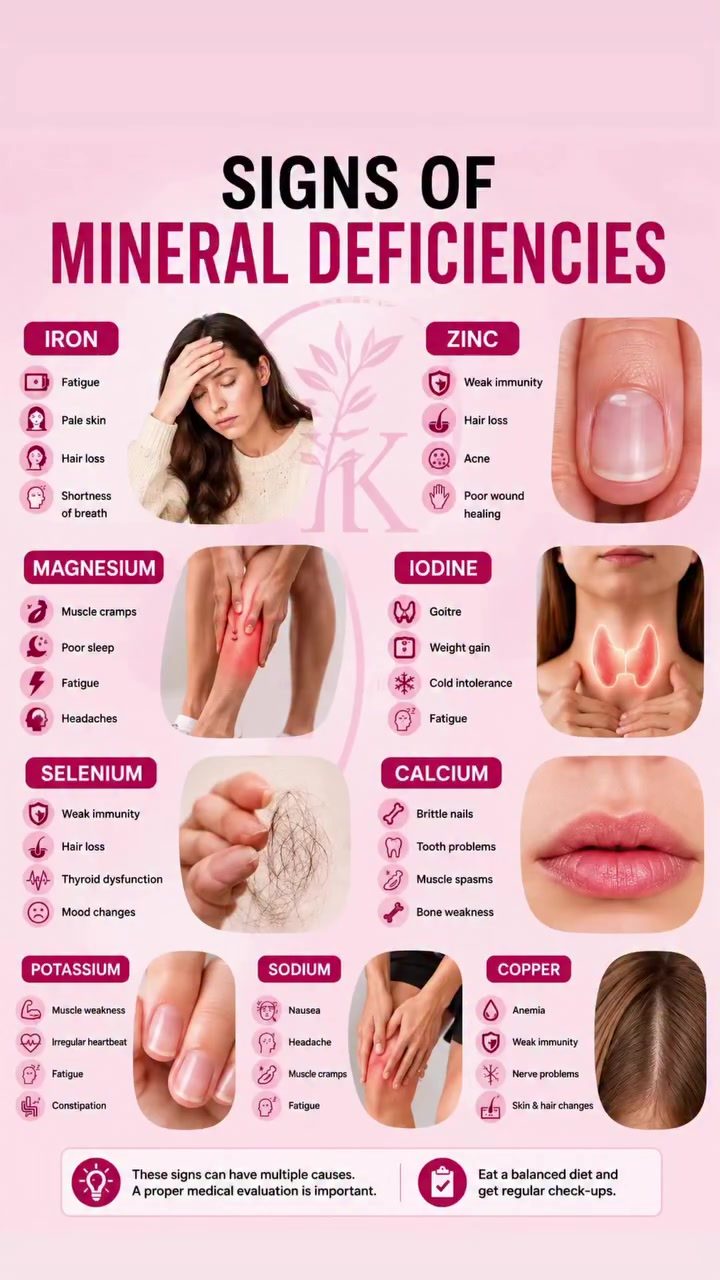
Signs of Mineral Deficiencies
Minerals play a vital role in maintaining healthy muscles, nerves, bones, skin, and immune function. Understanding the signs of mineral deficiencies can help in identifying potential health issues early. However, it's important to note that these signs are not specific and can have many different causes.
Why This Matters
Mineral deficiencies can significantly impact overall health and well-being. Early recognition of these deficiencies can lead to timely intervention, preventing more serious health complications. While the signs mentioned below can indicate a deficiency, they are not conclusive. A thorough medical evaluation, including a review of medical history, physical examination, and laboratory tests, is essential for an accurate diagnosis. Always consult a healthcare professional for personalized advice.
Main Discussion
Iron Deficiency
Iron is crucial for the production of hemoglobin, which carries oxygen in the blood. Deficiency in iron can lead to:
- Fatigue: One of the most common symptoms of iron deficiency is persistent fatigue. This is often due to the body's inability to produce enough red blood cells to carry oxygen to muscles and tissues.
- Pale Skin: Iron deficiency can cause pale or yellowish skin, especially in the palms and nails.
- Hair Loss: Iron plays a role in hair growth and maintenance. A deficiency can lead to hair loss or thinning.
- Shortness of Breath: Iron deficiency anemia can cause shortness of breath, even during mild exertion.
Zinc Deficiency
Zinc is essential for immune function, wound healing, and skin health. A zinc deficiency may result in:
- Weak Immunity: Zinc is crucial for immune function. A deficiency can make you more susceptible to infections.
- Hair Loss: Similar to iron, zinc is important for hair health. A deficiency can lead to hair loss or thinning.
- Acne: Zinc plays a role in regulating oil production in the skin. A deficiency can lead to increased breakouts and acne.
- Poor Wound Healing: Zinc aids in the healing process. A deficiency can slow down the healing of wounds.
Magnesium Deficiency
Magnesium is involved in numerous biochemical reactions in the body, including muscle and nerve function. Deficiency in magnesium can cause:
- Muscle Cramps: Magnesium is essential for muscle relaxation. A deficiency can lead to muscle cramps and spasms.
- Fatigue: Magnesium is crucial for energy production. A deficiency can result in persistent fatigue.
- Headaches: Magnesium plays a role in brain function. A deficiency can lead to recurrent headaches.
Potassium Deficiency
Potassium is vital for heart function, muscle contraction, and nerve function. Deficiency in potassium can lead to:
- Muscle Weakness: Potassium is essential for muscle function. A deficiency can cause muscle weakness and fatigue.
- Fatigue: Potassium is crucial for energy production. A deficiency can result in persistent fatigue.
- Constipation: Potassium helps regulate bowel movements. A deficiency can lead to constipation and other digestive issues.
Sodium Deficiency
Sodium is essential for maintaining fluid balance, nerve function, and muscle contraction. A sodium deficiency may lead to:
- Nausea: Severe sodium deficiency can cause nausea and vomiting.
- Headache: Sodium is crucial for brain function. A deficiency can lead to recurrent headaches.
- Muscle Cramps: Sodium is essential for muscle function. A deficiency can cause muscle cramps and spasms.
- Fatigue: Sodium plays a role in energy production. A deficiency can result in persistent fatigue.
Selenium Deficiency
Selenium is a powerful antioxidant that supports immune function and thyroid health. A deficiency in selenium may result in:
- Weak Immunity: Selenium is crucial for immune function. A deficiency can make you more susceptible to infections.
- Hair Loss: Selenium is important for hair health. A deficiency can lead to hair loss or thinning.
- Thyroid Dysfunction: Selenium supports thyroid function. A deficiency can lead to thyroid dysfunction and related symptoms.
- Mood Changes: Selenium plays a role in brain function. A deficiency can lead to mood changes and depression.
Iodine Deficiency
Iodine is essential for thyroid function, which regulates metabolism, growth, and development. Deficiency in iodine can lead to:
- Goitre: Iodine deficiency can cause an enlargement of the thyroid gland, leading to a goitre.
- Poor Sleep: Iodine supports healthy sleep patterns. A deficiency can lead to poor sleep quality.
- Weight Gain: Iodine is crucial for metabolism. A deficiency can lead to weight gain and difficulty losing weight.
- Cold Intolerance: Iodine plays a role in regulating body temperature. A deficiency can cause cold intolerance.
- Fatigue: Iodine supports energy production. A deficiency can result in persistent fatigue.
Calcium Deficiency
Calcium is essential for bone health, muscle contraction, and nerve function. A deficiency in calcium can result in:
- Brittle Nails: Calcium is crucial for nail health. A deficiency can lead to brittle nails.
- Tooth Problems: Calcium is essential for tooth health. A deficiency can lead to tooth decay and other dental problems.
- Muscle Spasms: Calcium is crucial for muscle function. A deficiency can cause muscle spasms and cramps.
- Bone Weakness: Calcium is essential for bone health. A deficiency can lead to weak, brittle bones and an increased risk of fractures.
Copper Deficiency
Copper is essential for the production of red blood cells, energy production, and immune function. A deficiency in copper can lead to:
- Anemia: Copper is crucial for the production of red blood cells. A deficiency can lead to anemia.
- Nerve Problems: Copper is essential for nerve function. A deficiency can cause nerve problems and neurological symptoms.
- Skin & Hair Changes: Copper is important for skin and hair health. A deficiency can lead to changes in skin and hair, such as hair loss or thinning and dry, scaly skin.
Practical Tips
- Consume a Balanced Diet: The best way to ensure you are getting enough minerals is to consume a balanced diet rich in whole foods. Include a variety of fruits, vegetables, lean proteins, and whole grains.
- Avoid Self-Medication: Do not take supplements unless advised by a healthcare professional. Supplements can interact with medications and may cause harm if not taken correctly.
- Regular Check-Ups: Regular medical check-ups and laboratory tests can help identify mineral deficiencies early, allowing for timely intervention.
- Consult a Professional: If you suspect a mineral deficiency, consult a healthcare professional for personalized advice and treatment.
Important Takeaways
- Symptoms are Not Conclusive: The symptoms listed above are not specific to mineral deficiencies and can have many different causes.
- Medical Evaluation is Crucial: A thorough medical evaluation, including a review of medical history, physical examination, and laboratory tests, is essential for an accurate diagnosis.
- Balanced Diet is Key: A balanced diet rich in whole foods is the best approach to preventing mineral deficiencies.
- Seek Professional Advice: Always consult a healthcare professional for personalized advice and treatment.
Conclusion
Mineral deficiencies can have a significant impact on overall health and well-being. Recognizing the signs and symptoms of mineral deficiencies is the first step in addressing potential health issues. However, it is essential to remember that these symptoms are not specific and can have many different causes. Always consult a healthcare professional for personalized advice and treatment. By maintaining a balanced diet and undergoing regular medical check-ups, you can ensure you are getting the minerals you need to stay healthy.
Watch the Reel
Questions readers ask
What are some early signs of iron deficiency?
Early signs of iron deficiency can include fatigue, pale skin, and hair loss. These symptoms may indicate that your body is not getting enough iron to produce red blood cells, which are essential for carrying oxygen to your tissues.
How does zinc deficiency manifest?
Zinc deficiency can present with symptoms like poor immunity, acne, and hair loss. These signs may suggest that your body's zinc levels are low, which can impact immune function and skin health.
What role do minerals play in muscle health?
Minerals like magnesium and potassium are crucial for muscle function. Deficiencies in these minerals can lead to symptoms such as muscle cramps and weakness, indicating that your muscles are not receiving the necessary nutrients for proper contraction and relaxation.
Can mineral deficiencies cause skin issues?
Yes, mineral deficiencies can manifest as skin problems. For instance, zinc deficiency can cause acne, while other mineral deficiencies may lead to dry skin, rashes, or poor wound healing.
How can iodine and selenium deficiencies impact health?
Iodine deficiency can lead to symptoms such as goiter (enlarged thyroid gland), fatigue, and weight gain, while selenium deficiency may result in fatigue, muscle weakness, and a weakened immune system. Both minerals are essential for thyroid function and overall health.
What are the signs of calcium deficiency?
Calcium deficiency can manifest as muscle cramps, spasms, and even severe conditions like osteoporosis over time. It is essential for maintaining strong bones and teeth, as well as supporting muscle and nerve function.
What should I do if I suspect a mineral deficiency?
If you suspect a mineral deficiency, it is important to consult a healthcare professional. They can conduct a thorough evaluation, including reviewing your medical history and performing laboratory tests, to determine the cause of your symptoms and recommend appropriate treatment.
Recent articles
Fresh deep dives from the latest Reels we unpacked.




Comments
Be the first to comment.