Global Interest Rates
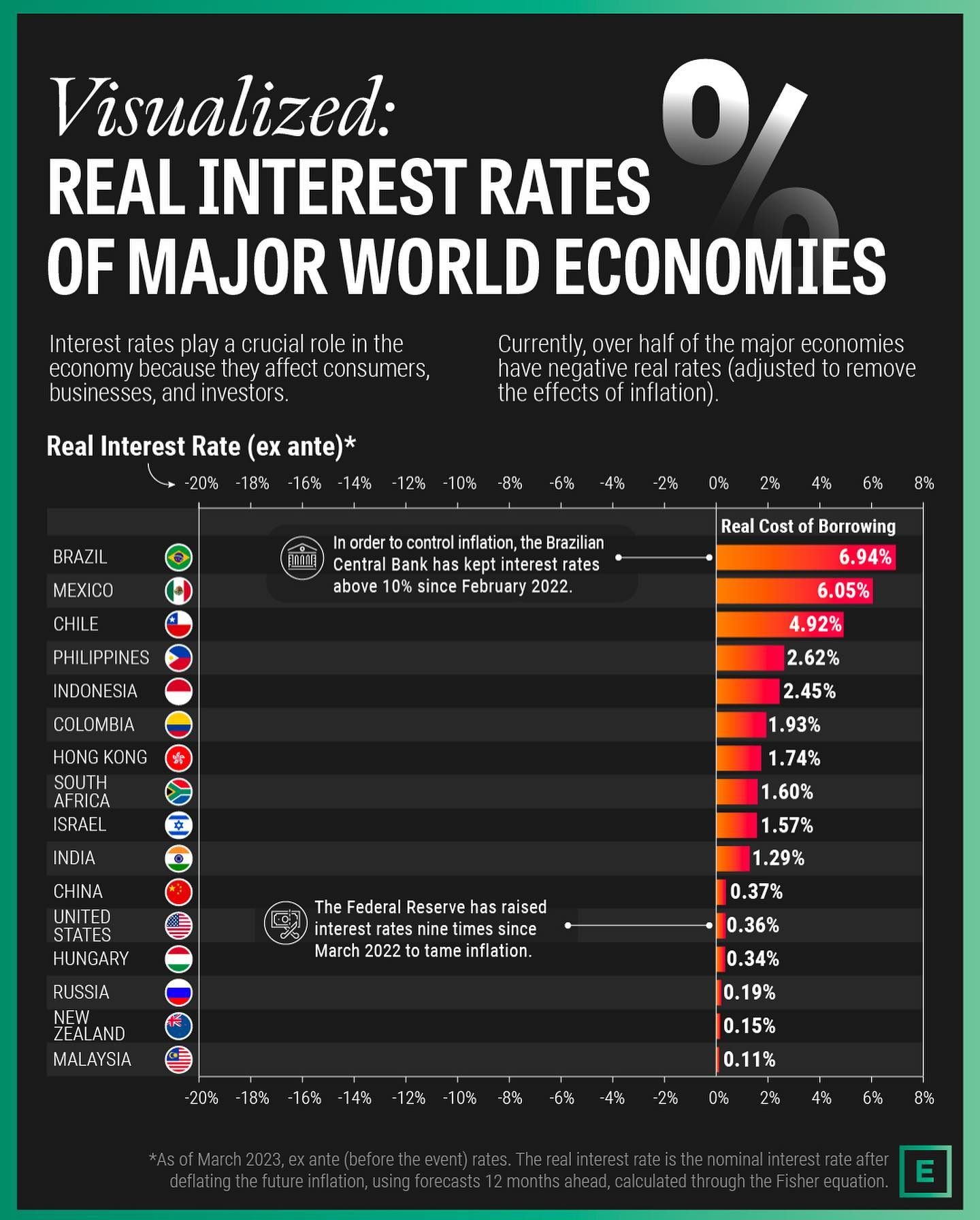
Interest rates are a critical component of the global economy, influencing consumer spending, business decisions, and investment strategies. By examining the real interest rates of 40 major world economies, we can gain insights into the economic health and monetary policies of these nations. The real interest rate, or the rate adjusted for inflation, provides a more accurate picture of the actual cost of borrowing and saving.
Context / Why This Matters
Understanding global interest rates is essential for individuals and businesses alike. For consumers, interest rates affect mortgage payments, savings accounts, and loan costs. For businesses, they impact borrowing costs, investment returns, and overall economic stability. Investors rely on interest rates to make informed decisions about where to allocate their capital. By visualizing real interest rates, we can observe how different economies are faring and predict potential shifts in financial markets.
Main Discussion
What is the Real Interest Rate?
The real interest rate is the nominal interest rate adjusted for inflation. It represents the actual return on investment or the true cost of borrowing. To calculate the real interest rate (ex ante), we subtract the projected inflation rate over the next 12 months from the current nominal interest rate. This method, known as the Fisher equation, provides a forward-looking measure of the real interest rate.
Global Comparison of Real Interest Rates
By analyzing the real interest rates of 40 major world economies, we can identify trends and disparities. For instance, countries like Brazil, Mexico, and the Philippines often have higher real interest rates compared to more stable economies like Japan and Germany. This discrepancy reflects the varying levels of inflation and monetary policies across these nations.
High Real Interest Rates
Countries with high real interest rates, such as Brazil and Mexico, typically face higher inflation and may be implementing tighter monetary policies to control it. These high rates can deter investment and slow economic growth but can also attract foreign capital seeking higher returns.
Low Real Interest Rates
Economies with low real interest rates, like Japan and Germany, often have stable inflation rates and robust economic policies. These low rates can stimulate borrowing and spending, encouraging economic growth. However, they may also pose risks, such as asset bubbles and reduced savings incentives.
Negative Real Interest Rates
Some countries, particularly those in Europe, may have negative real interest rates. This occurs when the nominal interest rate is lower than the inflation rate, effectively making the cost of borrowing negative. This scenario can encourage spending and investment but may also lead to financial instability if not managed carefully.
Methodology and Calculation
To calculate the real interest rates, Infinity Asset Management used the Fisher equation, which involves subtracting the projected inflation rate from the nominal interest rate. This approach provides a more accurate reflection of the real cost of borrowing and the return on savings. By comparing these rates across different economies, we can gain a comprehensive understanding of the global financial landscape.
Impact of Central Bank Policies
Central banks play a pivotal role in shaping interest rates. For example, the Federal Reserve has raised interest rates nine times since March 2022 to combat inflation. This action demonstrates the proactive measures central banks take to stabilize the economy. In contrast, some central banks in Europe have maintained lower rates to support economic recovery.
Practical Tips
For Consumers
- Monitor Interest Rates: Keeping an eye on real interest rates can help consumers make better financial decisions. For instance, when rates are high, it may be wise to lock in fixed-rate loans to avoid future increases.
- Adjust Spending Habits: During periods of low real interest rates, consumers may consider investing in assets that yield higher returns, such as stocks or real estate, rather than holding cash.
- Plan for Inflation: Understanding the projected inflation rate can help consumers plan their budgets more effectively, ensuring they account for the reduced purchasing power of their savings.
For Businesses
- Optimize Borrowing: Businesses should evaluate their borrowing costs in light of real interest rates. When rates are low, it may be an opportune time to take on debt for expansion or investment.
- Invest Wisely: During periods of low real interest rates, businesses may need to explore higher-risk, higher-return investments to achieve their financial goals.
- Manage Cash Flows: Proactively managing cash flows can help businesses navigate fluctuating interest rates, ensuring they have enough liquidity to meet their financial obligations.
For Investors
- Diversify Your Portfolio: Investing in a mix of assets, including stocks, bonds, and real estate, can help mitigate the risks associated with fluctuating interest rates.
- Consider International Investments: Diversifying across different economies can provide stability and potentially higher returns, especially in periods of low interest rates in one's home country.
- Stay Informed: Keeping abreast of global economic trends and central bank policies can help investors make more informed decisions about their portfolios.
Important Takeaways
- Real Interest Rates Matter: They provide a clearer picture of the economic landscape by accounting for inflation, making them a more reliable indicator of economic health and monetary policy effectiveness.
- Global Disparities: Different economies experience varying levels of real interest rates, reflecting their unique economic conditions and policies.
- Central Bank Policies: Monetary policies, such as those implemented by the Federal Reserve, play a crucial role in shaping interest rates and influencing economic stability.
Conclusion
Real interest rates are a vital metric for understanding the economic health and monetary policies of major world economies. By visualizing these rates and comparing them across different nations, we gain valuable insights into global financial trends. Whether you are a consumer, business owner, or investor, staying informed about real interest rates can help you make better financial decisions and navigate the complexities of the global economy.
Watch the Reel
Questions readers ask
What are real interest rates and why are they important for consumers and businesses?
Real interest rates are interest rates adjusted for inflation, providing a clearer view of actual borrowing and saving costs. They are vital for consumers in understanding loan repayments and savings growth. For businesses, they influence borrowing costs, investment returns, and overall financial strategy.
Which countries have the highest and lowest real interest rates among the 40 major world economies?
To find the exact countries, you would need to consult the most recent data on real interest rates. Generally, countries with high inflation may have lower real interest rates, while those with stable economies and controlled inflation tend to have higher real interest rates.
How do global interest rates impact monetary policies?
Global interest rates serve as key indicators of economic health and monetary policies. Central banks use interest rates to control inflation, encourage spending, or stabilize currencies. Lower real interest rates may indicate easy monetary policy, while higher rates suggest a more restrictive approach.
What are the differences between nominal and real interest rates?
Nominal interest rates are the stated rates on loans or savings without adjustment for inflation. Real interest rates, on the other hand, are adjusted for inflation, offering a more precise view of the true cost of borrowing and the actual return on savings.
How do real interest rates affect global borrowing costs?
Real interest rates influence the cost of borrowing across borders. Countries with high real interest rates may attract foreign investment due to higher returns, while those with low rates might see increased outflows as investors seek better opportunities elsewhere.
Why is comparing real interest rates worldwide beneficial for investors?
Comparing real interest rates worldwide helps investors identify the best opportunities for returns and manage risks. By understanding the real interest rates of different countries, investors can make informed decisions about where to allocate their capital for maximum benefit.
How do interest rates influence world economic stability?
Interest rates play a pivotal role in maintaining world economic stability by influencing inflation, currency values, and investment flows. High real interest rates can attract capital and stabilize currencies, while low rates may stimulate spending and investment, though they can also lead to inflation if not managed properly.
Recent articles
Fresh deep dives from the latest Reels we unpacked.




Comments
Be the first to comment.