Real Estate Market Analysis
Lower interest rates have historically supported stronger real estate returns and improved valuations. With the Federal Reserve expected to cut rates into mid-2026, investors are keenly interested in how this will impact the real estate market.
Why This Matters
Understanding the relationship between interest rates and real estate investment trusts (REITs) is crucial for investors. REITs are companies that own, operate, or finance income-generating real estate. They provide a way for individual investors to gain exposure to the real estate market without having to buy physical properties. The performance of REITs can significantly impact the overall real estate market, making this analysis pertinent for both seasoned and novice investors.
The Federal Reserve's interest rate decisions can have a profound effect on the real estate market. Historically, when interest rates fall, REIT performance tends to improve. This is because lower interest rates make borrowing cheaper, which can stimulate real estate investment and drive up property values. Conversely, higher interest rates can increase borrowing costs, potentially slowing down investment and reducing property values.
Main Discussion
Historical Performance: 2016-2025
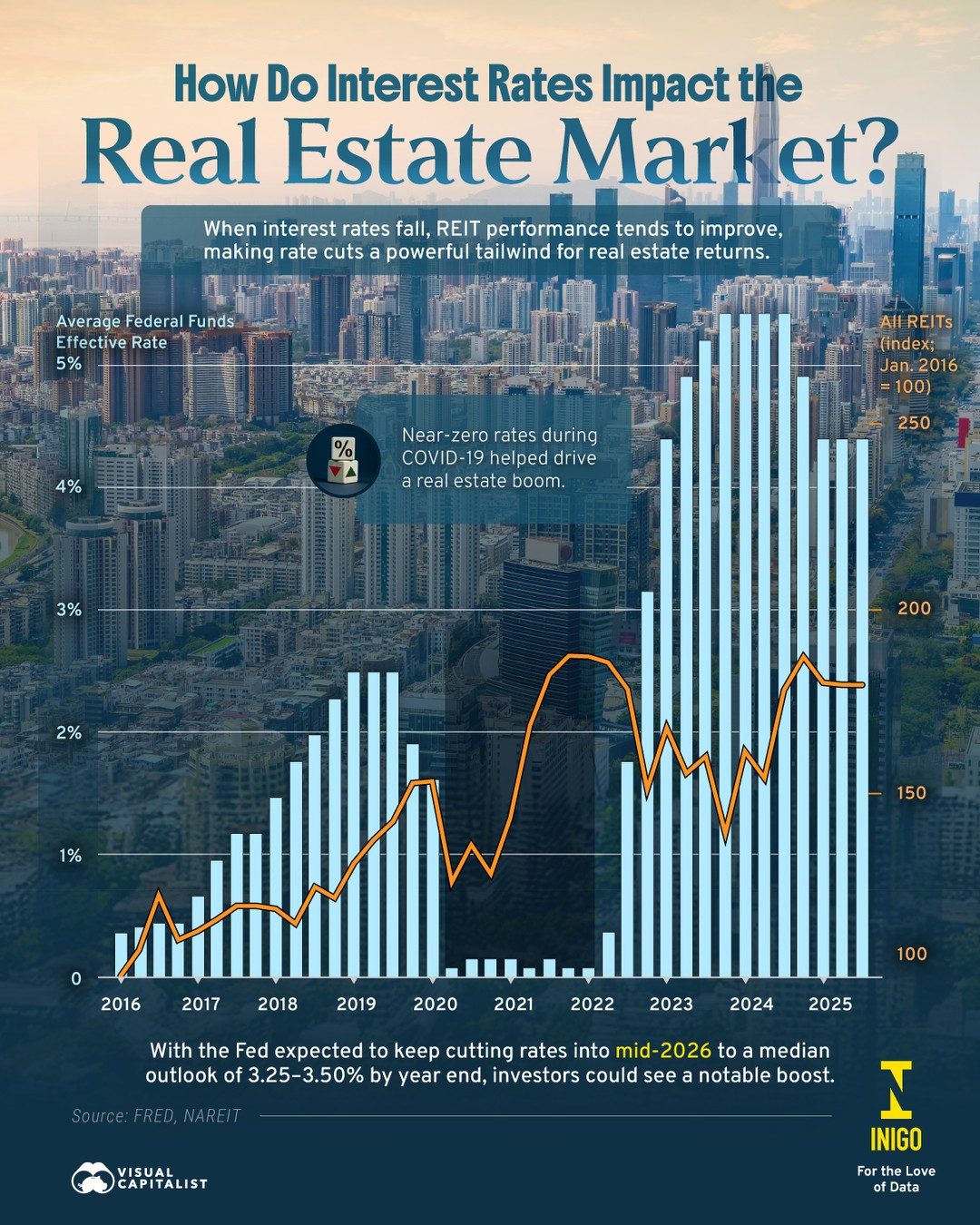
The analysis shows a clear relationship between the average federal funds effective rate and the performance of REITs from 2016 to 2025. During this period, the real estate market experienced significant fluctuations, particularly during the COVID-19 pandemic.
Impact of Near-Zero Rates
Near-zero interest rates during the COVID-19 pandemic helped drive a real estate boom. The Federal Reserve cut rates to near-zero in response to the economic downturn, making borrowing extremely cheap. This environment fueled a surge in real estate investment, as investors sought higher-yielding assets in a low-interest-rate environment. The graph highlights this period, showing a notable improvement in REIT performance.
Predictions for 2026
Looking ahead, the Federal Reserve is expected to continue cutting rates into mid-2026, with a median outlook of 3.25-3.50% by the end of the year. This prediction suggests that investors could see a notable boost, potentially supporting stronger real estate returns and improved valuations. The anticipated rate cuts are expected to provide a powerful tailwind for real estate returns, similar to the conditions seen during the pandemic.
Federal Reserve's Role
The Federal Reserve's decisions on interest rates are a key driver of market conditions. Understanding the Federal Reserve's outlook helps investors make informed decisions. The Federal Reserve's median outlook for 2026 indicates that policymakers are focused on fostering economic growth and supporting the real estate market through lower interest rates.
The Federal Reserve's actions are influenced by various economic indicators, including inflation, unemployment, and economic growth. Policymakers carefully monitor these indicators to determine the appropriate level of interest rates. When the economy is strong, the Federal Reserve may raise interest rates to control inflation. Conversely, during economic downturns, the Federal Reserve may lower interest rates to stimulate growth.
Practical Tips
Monitoring Interest Rate Changes
Keep an eye on Federal Reserve announcements and economic indicators. Changes in interest rates can have a significant impact on the real estate market, and staying informed can help you make better investment decisions. Familiarize yourself with key economic indicators, such as inflation, unemployment, and GDP growth, to anticipate potential interest rate changes.
Diversifying Your Portfolio
Diversifying your investment portfolio can help mitigate the risks associated with interest rate changes. Consider allocating a portion of your portfolio to REITs, as they can provide a stable income stream and potential for capital appreciation. However, it's important to balance this with other asset classes, such as bonds and stocks, to manage risk effectively.
Consulting Financial Advisors
Consulting with a financial advisor can provide valuable insights and personalized guidance. A financial advisor can help you understand the implications of interest rate changes on your specific investment portfolio and provide tailored advice to help you achieve your financial goals. They can also help you navigate the complexities of the real estate market and make informed investment decisions.
Important Takeaways
- Historical Trends: Lower interest rates have historically supported stronger real estate returns and improved valuations.
- Federal Reserve Outlook: The Federal Reserve's expected rate cuts into mid-2026 could provide a notable boost for investors.
- REIT Performance: REITs tend to perform better when interest rates fall, making rate cuts a powerful tailwind for real estate returns.
- Investment Strategy: Staying informed about Federal Reserve announcements, diversifying your portfolio, and consulting with financial advisors can help you navigate the real estate market.
Conclusion
The relationship between interest rates and the real estate market is complex but crucial for investors to understand. With the Federal Reserve expected to cut rates into mid-2026, investors may see a notable boost in real estate returns. By staying informed, diversifying your portfolio, and consulting with financial advisors, you can make informed investment decisions and capitalize on potential opportunities in the real estate market.
Watch the Reel
Questions readers ask
How do interest rate cuts typically affect real estate investment trusts (REITs)?
Interest rate cuts generally boost REIT performance by lowering the cost of borrowing, which allows REITs to finance new projects more affordably. Additionally, lower interest rates can make dividend yields from REITs more attractive compared to other fixed-income investments, potentially increasing demand for REIT shares.
What is the expected impact of the Federal Reserve's rate cuts on property values?
The Federal Reserve's planned rate cuts until 2026 are likely to drive up property values. Lower interest rates reduce the cost of mortgages, making home purchases more affordable and increasing demand. This heightened demand can lead to appreciation in property values across various sectors.
Why should investors consider the 2026 interest rate environment for real estate investments?
The interest rate environment in 2026 is crucial for real estate investments because it will influence borrowing costs and property demand. Lower rates can stimulate investment activity, making it a strategic time to enter or expand real estate portfolios.
How can investors leverage interest rate cuts for their REIT investment strategy?
Investors can capitalize on interest rate cuts by increasing their allocation to REITs, particularly those in sectors expected to benefit most from lower rates, such as residential or mortgage REITs. Additionally, investors can consider REITs with strong balance sheets that can take advantage of lower borrowing costs to acquire more properties.
What sectors of the real estate market are likely to see the most significant gains from interest rate cuts?
Sectors like residential real estate, including single-family homes and multifamily properties, are likely to experience the most significant gains. Lower interest rates make mortgages more affordable, boosting demand for these types of properties. Additionally, sectors reliant on financing, such as commercial real estate developments, may also see increased activity.
How do interest rates influence real estate returns and valuations?
Lower interest rates tend to boost real estate returns and valuations by reducing the cost of capital and making real estate investments more attractive compared to other asset classes. This can lead to increased demand for properties, driving up prices and overall market values.
What are the potential risks for real estate investments when interest rates are cut?
While lower interest rates can boost real estate investments, potential risks include increased competition for properties, which can drive up prices and reduce potential returns. Additionally, if interest rates fall too low, there is a risk of creating asset bubbles, which can lead to market instability.
Recent articles
Fresh deep dives from the latest Reels we unpacked.




Comments
Be the first to comment.