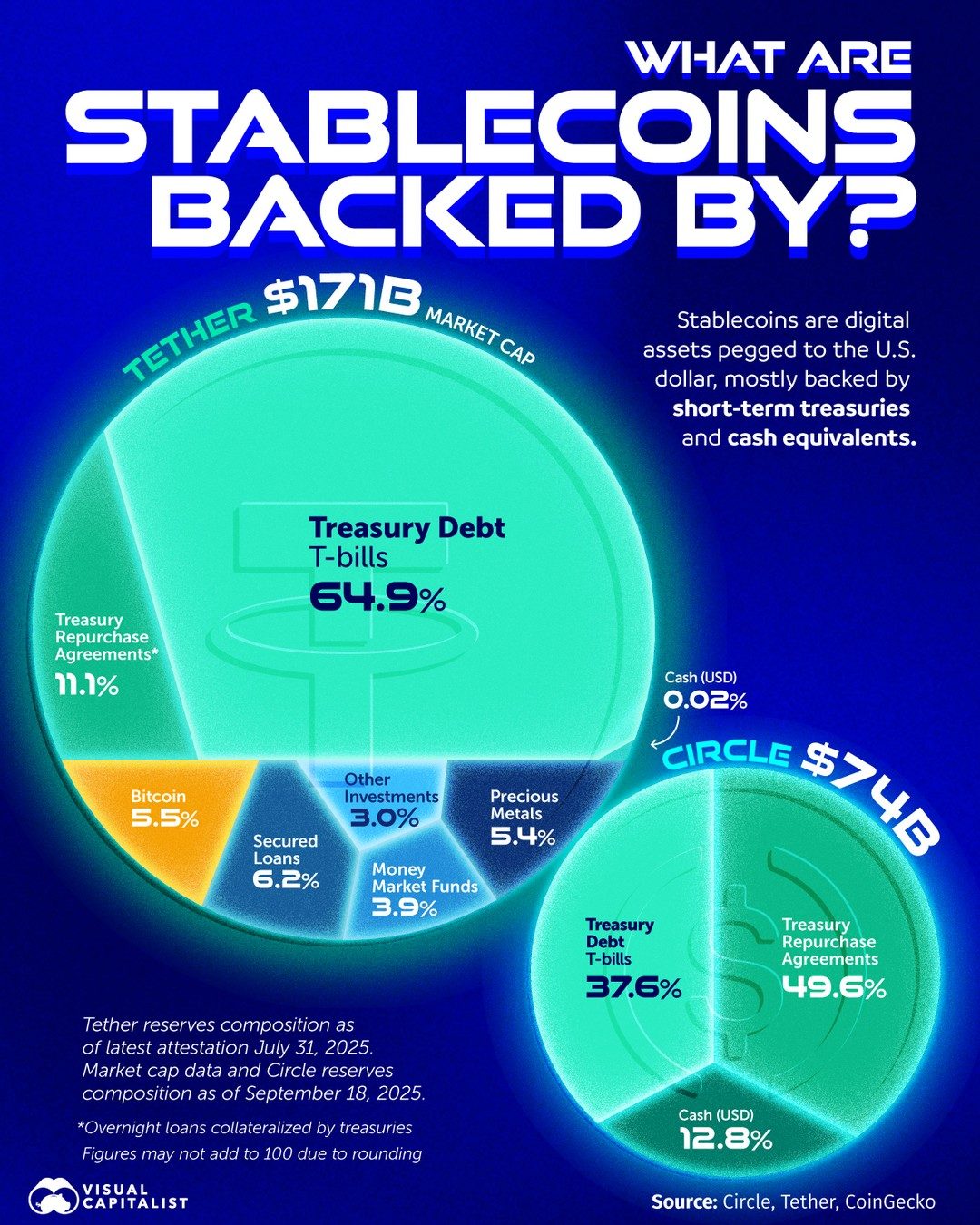
The backing of stablecoins, particularly Tether (USDT) and Circle (USDC), is primarily composed of U.S. Treasuries and other short-term assets. These stablecoins are digital assets that are pegged to the U.S. dollar. Understanding their reserves is crucial to grasping the financial stability and trustworthiness that these assets offer.
Context / Why This Matters
Stablecoins have become integral to the cryptocurrency ecosystem, providing a stable medium of exchange and a safe haven during market volatility. They are widely used for trading, lending, and borrowing within the decentralized finance (DeFi) space. The stability and transparency of their reserves directly impact the trust that users, investors, and regulators place in these digital assets.
Main Discussion
The Role of U.S. Treasuries
U.S. Treasuries dominate the reserves of both Tether and Circle, playing a crucial role in maintaining the stability of these stablecoins. For Tether, Treasury Debt and T-bills make up significant portions of its reserves. As of the latest attestation in July 2025, 64.9% of Tether's reserves are backed by Treasury Debt, with an additional 11.1% in T-bills. These short-term, highly liquid assets ensure that Tether can meet redemptions and maintain its peg to the U.S. dollar. This emphasis on U.S. Treasuries reflects the broader market's trust in the stability and security of these government-issued securities.
Other Assets in Tether's Reserves
While U.S. Treasuries dominate Tether's reserves, a diverse range of other assets also contribute to its backing. Treasury Repurchase Agreements, which are overnight loans collateralized by treasuries, account for 5.5% of Tether's reserves. Bitcoin, a more volatile cryptocurrency, makes up 3.0% of the reserves. Additionally, precious metals, secured loans, and money market funds contribute 5.4%, 6.2%, and 3.7% respectively. The inclusion of these assets, though relatively small, adds diversification to Tether's reserve portfolio and helps mitigate the risks associated with any single asset class.
Circle's Reserve Composition
Circle's stablecoin, USDC, also relies heavily on U.S. Treasuries but with a slightly different composition. As of the latest data, 49.6% of Circle's reserves are in Treasury Repurchase Agreements, and 37.5% are in Treasury Debt. This focus on repurchase agreements reflects a strategy that emphasizes liquidity and short-term stability. Cash (USD) makes up 12.8% of Circle's reserves, providing immediate liquidity to meet redemption requests.
Market Capitalization and Growth
The market capitalization of these stablecoins underscores their significance in the cryptocurrency market. As of September 2025, Tether's market cap stands at an impressive $171 billion, making it one of the largest stablecoins by market value. This substantial size indicates the high level of trust and usage that Tether enjoys within the market. In contrast, Circle's market cap is $74 billion, reflecting its growing adoption and importance in the stablecoin ecosystem.
Transparency and Attestation
Both Tether and Circle regularly attest to their reserve holdings, providing transparency to users and investors. This commitment to transparency is crucial for maintaining trust in these digital assets. Data from reliable sources, including Circle, Tether, and CoinGecko, are used to verify these holdings, ensuring that the information is accurate and up-to-date. This transparency helps to build confidence and encourages broader adoption of stablecoins.
Practical Tips
If you're considering using or investing in stablecoins, it's essential to understand how they are backed. Here are some practical tips:
- Choose Reputable Issuers: Opt for stablecoins issued by reputable companies that prioritize transparency and regular attestation. Both Tether and Circle are examples of issuers that provide detailed information about their reserves.
- Diversify Your Holdings: Consider diversifying your stablecoin holdings across different issuers to mitigate risks associated with any single stablecoin.
- Stay Informed About Reserve Compositions: Regularly check the latest reserve compositions and attestations from stablecoin issuers. This information is often available on the issuers' websites or through third-party sources like CoinGecko.
- Consider the Use Case: Depending on your use case, you may prefer a stablecoin with a higher proportion of liquid assets like cash or Treasury Repurchase Agreements for immediate redemptions. Conversely, if you plan to hold the stablecoin for an extended period, a stablecoin with a higher proportion of long-term assets like Treasury Debt might be more suitable.
Important Takeaways
- U.S. Treasuries Dominate: The reserves of both Tether and Circle are predominantly backed by U.S. Treasuries, ensuring stability and liquidity.
- Diversification Matters: Both stablecoins maintain a diversified portfolio of reserves, including various types of Treasuries, cash, and other assets.
- Transparency Builds Trust: Regular attestation of reserve holdings by issuers like Tether and Circle helps build and maintain trust in these stablecoins.
- Market Capitalization Reflects Trust: The significant market capitalization of Tether and Circle reflects their widespread adoption and trust within the cryptocurrency market.
Conclusion
The reserves of Tether and Circle are meticulously structured to ensure stability and liquidity, with U.S. Treasuries playing a dominant role. Understanding these reserves is essential for anyone involved in the cryptocurrency market, whether as a trader, investor, or user. By maintaining transparency and diversifying their asset portfolios, stablecoin issuers like Tether and Circle build trust and confidence in the market. This clarity and stability are crucial for the continued growth and adoption of stablecoins in the digital finance ecosystem.
Watch the Reel
Questions readers ask
What are the primary assets backing Tether (USDT) and Circle (USDC) stablecoins?
The primary assets backing Tether (USDT) and Circle (USDC) stablecoins are U.S. Treasuries and other short-term assets. These include U.S. Treasury bills, short-term loans, and other highly liquid assets that ensure the stability of these digital currencies.
Why is it important to understand the reserves behind stablecoins?
Understanding the reserves behind stablecoins is vital as it provides insight into their financial stability and reliability. It helps users, investors, and regulators assess the trustworthiness of these digital assets, especially given their role in the cryptocurrency ecosystem.
How do Tether and Circle maintain the stability of their stablecoins?
Tether and Circle maintain the stability of their stablecoins by holding reserves primarily in U.S. Treasuries and other short-term, liquid assets. This strategy ensures that the value of the stablecoins remains pegged to the U.S. dollar, which is essential for their use in trading, lending, and borrowing in the decentralized finance (DeFi) space.
What role do U.S. Treasuries play in the backing of stablecoins?
U.S. Treasuries play a crucial role in the backing of stablecoins like USDT and USDC. They are considered one of the safest and most liquid assets, providing a stable foundation that helps maintain the 1:1 peg to the U.S. dollar. This ensures that stablecoins can be reliably used for transactions and trading.
What are the implications of stablecoin reserves for the broader market?
The stability and transparency of stablecoin reserves have significant implications for the broader market. They directly impact the trust and confidence that users, investors, and regulators have in these digital assets, which are essential for secure transactions and trading within the cryptocurrency ecosystem.
Why are short-term assets important for stablecoin reserves?
Short-term assets are important for stablecoin reserves because they provide liquidity and stability. These assets can be quickly converted into cash, ensuring that stablecoins can meet redemption demands and maintain their peg to the U.S. dollar, which is crucial for their reliability in transactions and trading.
How do the reserves of Tether and Circle affect their stablecoin debt?
The reserves of Tether and Circle, which include U.S. Treasuries and other short-term assets, are crucial for managing their stablecoin debt. By maintaining strong and liquid reserves, these companies can ensure that they have the necessary assets to redeem stablecoins, thereby maintaining trust and stability in the market.
Recent articles
Fresh deep dives from the latest Reels we unpacked.




Comments
Be the first to comment.