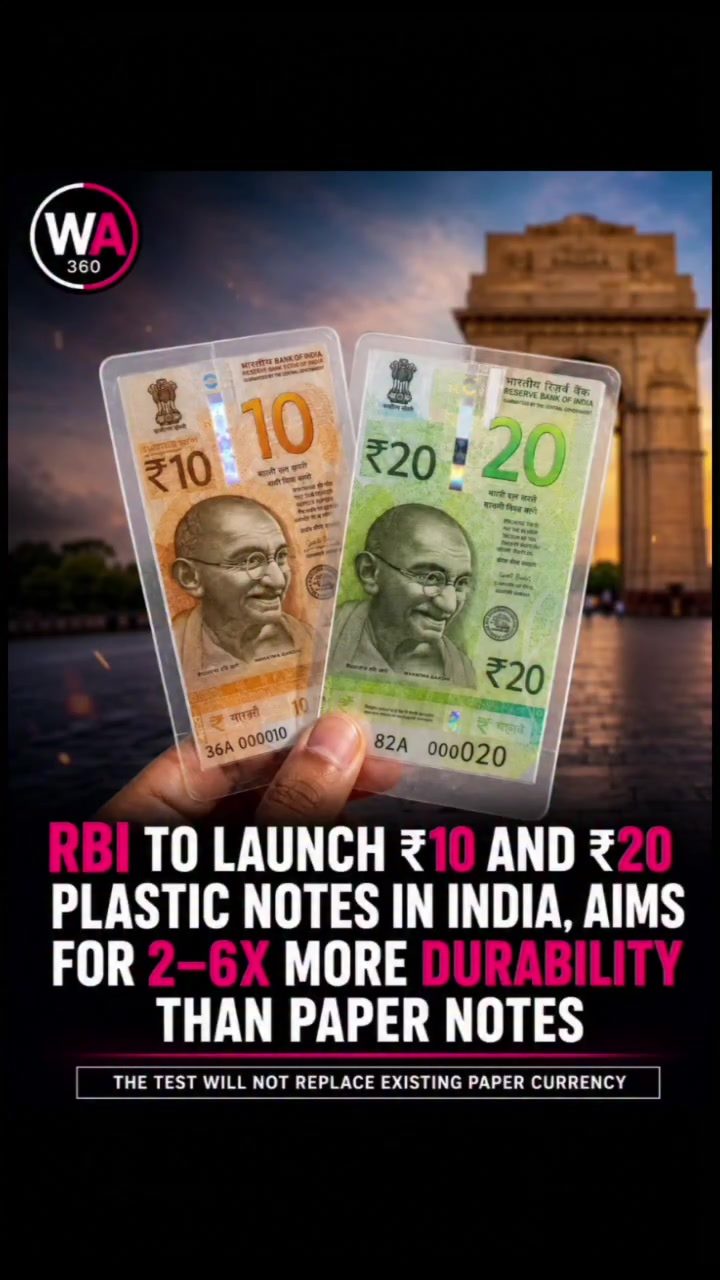
Plastic Notes in India: RBI's Initiative for More Durable Currency
The Reserve Bank of India (RBI) is set to introduce a significant change in the country's currency system with the launch of plastic ₹10 and ₹20 banknotes. This pilot initiative aims to enhance the durability and longevity of frequently used currency notes, addressing long-standing issues related to wear and tear.
Why This Matters
The transition from paper to plastic notes could have substantial implications for India's economy. Durable currency notes can reduce the cost of frequent replacements, mitigate environmental impact, and improve overall efficiency in cash transactions. The move aligns with global trends where several countries, including Australia and Canada, have successfully implemented polymer-based currencies.
Main Discussion
What Are Polymer Notes?
Polymer notes, made from a thin film of plastic, are designed to last significantly longer than traditional paper notes. The plastic material offers several advantages, including:
- Increased Durability: Polymer notes can last 2-6 times longer than paper notes, reducing the frequency of replacements.
- Resistance to Water and Dirt: These notes are more resistant to water and dirt, maintaining their integrity even in harsh conditions.
- Enhanced Security Features: Polymer notes often include advanced security features that are harder to counterfeit, such as transparent windows and fluorescent inks.
The Pilot Test
The RBI's pilot test is a critical phase in determining the feasibility of a nationwide switch to plastic notes. Key points to note about this test include:
- Selected Denominations: The initial test focuses on ₹10 and ₹20 denominations, which are among the most frequently circulated notes in India.
- Non-Replacement of Existing Currency: The existing paper currency will remain valid. This ensures that the transition does not disrupt the current financial system.
- Sustainability and Cost-Effectiveness: The long-term benefits include reduced costs associated with printing and replacing worn-out notes, as well as lower environmental impact due to less frequent replacements.
Potential Benefits
If the pilot test is successful, the move to plastic notes could offer several benefits:
- Financial Savings: Reduced costs associated with frequent replacements of worn-out notes.
- Environmental Impact: Lower environmental footprint due to less frequent production and disposal of notes.
- Efficiency: A more sustainable and efficient currency system that can withstand daily wear and tear better.
Challenges and Considerations
While the transition to plastic notes offers numerous benefits, there are also challenges to consider:
- Public Acceptance: Ensuring that the public embraces the new notes and understands their benefits.
- Infrastructure Adaptation: Upgrading vending machines and other infrastructure to handle the new polymer notes.
- Cost of Transition: Initial costs associated with setting up the production of polymer notes and educating the public.
Practical Tips
For Businesses
- Upgrade Equipment: Ensure that your cash-handling equipment, such as ATMs and vending machines, is compatible with polymer notes.
- Educate Staff: Train your staff on the new notes' features and benefits to answer customer queries effectively.
- Publicize Benefits: Inform your customers about the advantages of the new notes to encourage acceptance.
For Individuals
- Recognize the Notes: Familiarize yourself with the appearance and security features of the new polymer notes.
- Care for Your Notes: Treat the new notes with care to extend their lifespan, even though they are more durable.
- Stay Informed: Keep an eye on official announcements from the RBI regarding the pilot test and future rollouts.
Important Takeaways
- Increased Durability: Polymer notes are designed to last 2-6 times longer, reducing replacement frequency.
- Public Engagement: The success of the pilot test relies on public acceptance and understanding of the new notes.
- Environmental Impact: A shift to more durable notes could lower the environmental footprint associated with currency production.
- Cost Efficiency: Long-term savings on replacement and production costs.
Conclusion
The RBI's initiative to test plastic ₹10 and ₹20 banknotes represents a significant step towards a more durable and efficient currency system in India. While the pilot test is in its early stages, the potential benefits in terms of cost savings, environmental impact, and overall efficiency are substantial. As the trial progresses, it will be crucial for both the public and businesses to stay informed and adapt to the new notes, ensuring a smooth transition towards a smarter and more sustainable currency system.
Watch the Reel
Questions readers ask
What are the main benefits of RBI's plastic ₹10 and ₹20 notes?
The primary benefits include enhanced durability, reduced frequency of replacement, and lower environmental impact. Additionally, these polymer notes are more secure and water-resistant.
How do plastic notes compare to traditional paper notes in terms of lifespan?
Plastic notes typically last 2.5 times longer than paper notes. This extended lifespan can significantly reduce the cost and resources associated with frequent replacements.
Why is the RBI launching a pilot initiative for plastic currency?
The RBI aims to test the performance of plastic notes in real-world conditions. This initiative will help gather data on durability, acceptance, and any potential challenges before a wider rollout.
What other countries have successfully implemented plastic currency?
Countries like Australia, Canada and others have successfully transitioned to polymer-based currency, showcasing the durability and security benefits of plastic notes.
How do plastic notes contribute to environmental sustainability?
By lasting longer, plastic notes reduce the need for frequent production, which in turn lowers the consumption of resources and decreases waste. This makes them a more environmentally friendly option compared to paper notes.
What features make polymer notes more secure than traditional paper notes?
Polymer notes are more secure because they are made from a single piece of polymer, making them harder to counterfeit. They also incorporate advanced security features such as transparent windows and holographic elements.
When will the general public have access to the new plastic ₹10 and ₹20 notes?
The new plastic ₹10 and ₹20 notes will be introduced through a pilot initiative and will be distributed in select regions. The RBI will monitor the performance and eventually scale up the availability based on the outcomes.
Related deep dives
Similar reads based on topic and creator.


Recent articles
Fresh deep dives from the latest Reels we unpacked.




Comments
Be the first to comment.