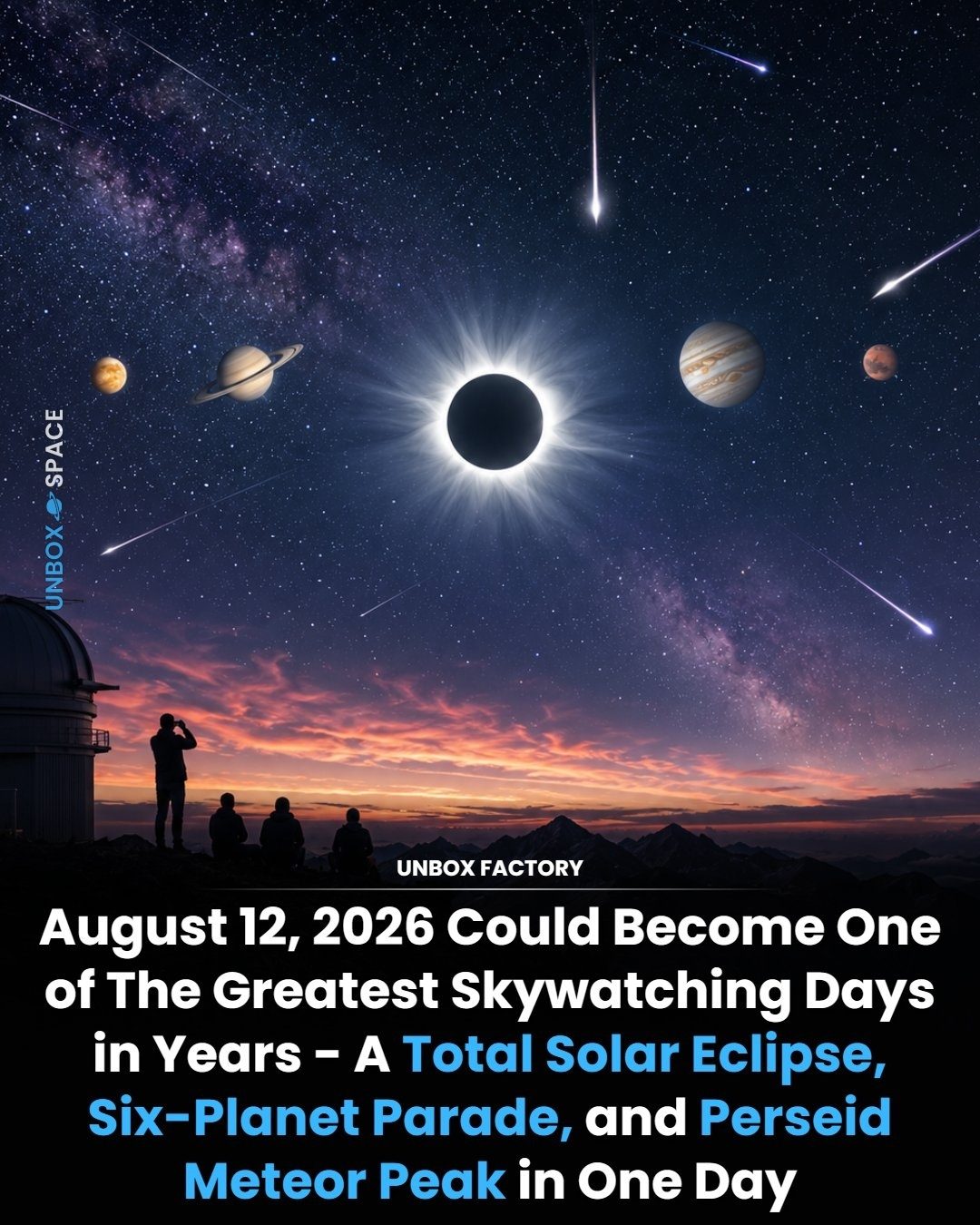
The Celestial Spectacle of August 12, 2026
August 12, 2026, is poised to be an extraordinary day for astronomy enthusiasts. This date promises a rare and spectacular alignment of celestial events: a total solar eclipse, a six-planet parade, and the peak of the Perseid meteor shower. These occurrences, happening on the same day, will create a unique and unforgettable experience for skywatchers across the globe.
Why This Matters
Celestial events like these are not only visually stunning but also offer invaluable opportunities for scientific observation and public engagement with astronomy. The convergence of a total solar eclipse, a planetary parade, and a meteor shower peak provides a rare chance to study the interactions between these phenomena and to inspire a broader interest in space science.
Understanding the Celestial Events
Total Solar Eclipse
A total solar eclipse occurs when the Moon passes directly between the Sun and Earth, casting a shadow on the Earth's surface. During this event, the Sun's corona becomes visible, offering a unique sight for astronomers and the public alike. On August 12, 2026, the eclipse will be visible in parts of Greenland, Iceland, Spain, and the Arctic, making it a significant event for northern hemisphere observers.
Six-Planet Parade
A six-planet parade is a rare alignment where six planets are visible in the night sky. This alignment happens when the planets align in a way that allows them to be seen from Earth within a relatively short period. The six planets involved in this parade are likely to be the closest to the Sun, including Mercury, Venus, Mars, Jupiter, and Saturn.
Perseid Meteor Shower
The Perseid meteor shower is one of the most spectacular meteor events of the year. Producing up to 100 meteors per hour under ideal dark-sky conditions, the Perseids are a highlight for any stargazer. This meteor shower occurs when Earth passes through the debris trail left by the comet Swift-Tuttle.
The Rare Convergence of Events
While each of these events is remarkable on its own, their simultaneous occurrence makes August 12, 2026, a truly extraordinary day. The combination of a total solar eclipse, a six-planet parade, and the Perseid meteor shower peak offers a unique glimpse into the wonders of the universe. This rare alignment provides an exceptional opportunity for both professional astronomers and amateur stargazers to observe and document these phenomena in a way that is rarely possible.
Practical Tips for Observers
To make the most of this rare celestial event, observers should prepare well in advance. Here are some practical tips:
Equipment and Preparation
-
Solar Eclipse Viewing:
- Solar Filters: Always use certified solar filters for direct viewing of the Sun. Regular sunglasses are not safe for this purpose.
- Telescopes and Binoculars: Equip them with solar filters to enhance your viewing experience.
- Pinhole Projectors: A simple and safe way to view the eclipse without looking directly at the Sun.
-
Planetary Observing:
- Binoculars and Telescopes: Use these to get a clear view of the planets. A good pair of binoculars can enhance your viewing experience.
- Star Charts and Apps: Use star charts or mobile apps to identify the positions of the planets.
- Find a Clear Sky: Choose a location with minimal light pollution and a clear view of the horizon.
-
Meteor Shower Viewing:
- Dark Sky: Find a dark location away from city lights.
- Comfortable Seating: Bring a reclining chair or blanket to lie down comfortably.
- Patience: Give your eyes time to adjust to the darkness and be patient for the meteors to appear.
Safety and Comfort
-
Clothing and Warmth:
- Dress in layers as temperatures can drop significantly during the eclipse, especially in Arctic regions.
-
Hydration:
- Stay hydrated, especially if you're observing in a remote area.
-
Emergency Supplies:
- Carry a first-aid kit, a map, and a flashlight or headlamp with extra batteries.
-
Weather Monitoring:
- Keep an eye on the weather forecast and have a backup plan in case of cloudy conditions.
Important Takeaways
- Rarity of the Event: The convergence of a total solar eclipse, a six-planet parade, and the Perseid meteor shower on the same day is a once-in-a-lifetime opportunity.
- Scientific Significance: This rare alignment provides valuable data for astronomers and contributes to our understanding of the solar system.
- Public Engagement: Events like these inspire curiosity and excitement about astronomy, fostering a deeper appreciation for the night sky.
Conclusion
The celestial spectacle of August 12, 2026, promises to be a landmark event for astronomy enthusiasts worldwide. The combination of a total solar eclipse, a six-planet parade, and the peak of the Perseid meteor shower offers a unique viewing experience and presents significant opportunities for scientific observation and public engagement. Prepare well, observe safely, and immerse yourself in the wonders of the universe.
Watch the Reel
Questions readers ask
What are the celestial events happening on August 12, 2026?
On August 12, 2026, three significant celestial events will occur simultaneously: a total solar eclipse, a six-planet parade, and the peak of the Perseid meteor shower. This rare combination will provide an exceptional experience for skywatchers around the world.
What is a six-planet parade, and which planets will be visible?
A six-planet parade refers to the alignment of six planets in a straight line, as seen from Earth. The specific planets that will be visible during this event in 2026 are Mercury, Venus, Mars, Jupiter, Saturn, and Uranus. This alignment is a rare sight and will add to the spectacle of the day.
Where will the total solar eclipse be visible on August 12, 2026?
The path of totality for the total solar eclipse on August 12, 2026, will traverse specific regions, with exact details to be confirmed by NASA and other astronomical organizations as the date approaches. Skies will darken along this path, offering a spectacular view of the eclipse, though specific areas are subject to change.
Can I see the Perseid meteor shower during the total solar eclipse?
The Perseid meteor shower peak will occur on the same day as the total solar eclipse, but visibility of the meteors may be impacted by the eclipse. During totality, when the moon fully blocks the sun, it may be possible to observe some meteors against the darkened sky. However, the brightness of the meteors will depend on the specific conditions during totality.
How can I prepare for this rare astronomical event?
To prepare for this rare celestial event, consider researching the best viewing locations, obtaining necessary equipment like binoculars or telescopes, and checking local weather conditions. Additionally, following updates from NASA and other astronomical organizations will provide the latest information on the event's visibility and specifics.
Will NASA provide live coverage of the 2026 celestial events?
NASA typically provides live coverage and streams of significant astronomical events. For the 2026 celestial events, NASA is expected to offer live broadcasts, detailed updates, and expert commentary to help the public observe and understand these phenomena. Stay tuned to NASA's official channels for the latest information.
Related deep dives
Similar reads based on topic and creator.
Recent articles
Fresh deep dives from the latest Reels we unpacked.




Comments
Be the first to comment.