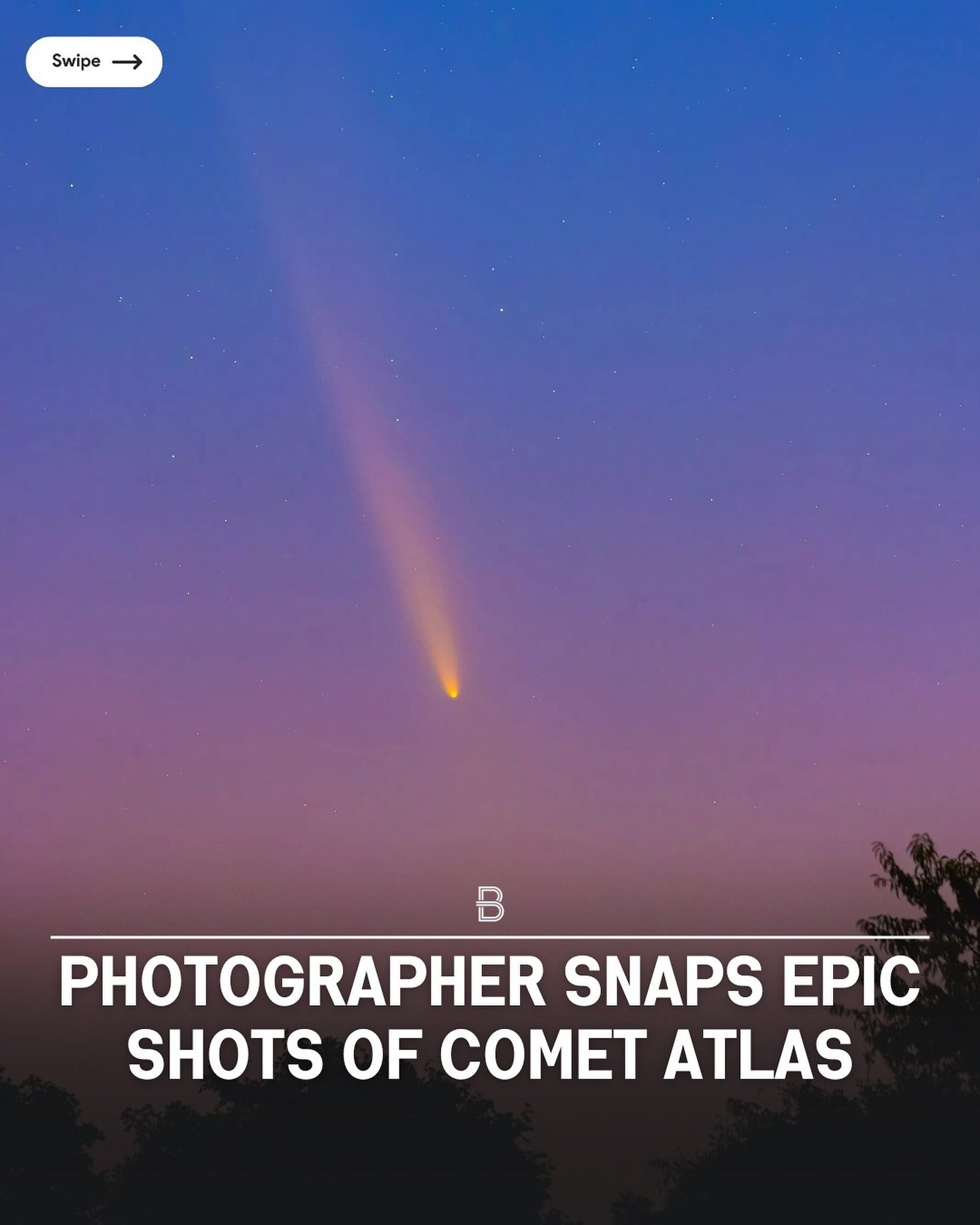
The Spectacular Journey of Comet C/2023 A3 (Tsuchinshan-ATLAS) Over Tennessee
On September 29, 2023, Comet C/2023 A3 (Tsuchinshan-ATLAS) took center stage in the night sky. Its journey is an incredible tale of cosmic wonder. Captured from the skies over Tennessee, these images showcase the comets vibrant colors and trail. This celestial event offers a rare opportunity to witness a "dirty snowball" with a long, elliptical orbit around the sun. Here's a closer look at this remarkable occurrence.
Why This Matters
The arrival of a new comet is always a thrilling event for astronomers and stargazers alike. Comet C/2023 A3 (Tsuchinshan-ATLAS) is particularly significant due to its brightness and visibility, earning it the title of "comet of the century." This comet's journey through our skies is a rare treat, as it has not visited our solar system since the time of the Neanderthals. Its appearance in the night sky over Tennessee provides a unique opportunity to observe and appreciate this celestial marvel.
The Comet's Path and Characteristics
Discovery and Path
Comet C/2023 A3 (Tsuchinshan-ATLAS) was first spotted in the Southern Hemisphere on September 29, 2023. This initial sighting marked the beginning of its journey through our solar system. The comet's trajectory is highly elliptical, meaning it travels a long, oval-shaped path around the sun. This type of orbit is characteristic of long-period comets, which can take thousands or even millions of years to complete one orbit.
Composition
The term "dirty snowball" is often used to describe comets like C/2023 A3 (Tsuchinshan-ATLAS). This nickname refers to their composition, which is a mixture of dust, ice, and rocky particles. The comet's nucleus, or core, is believed to be composed of these materials, which are held together by frozen gases. As the comet approaches the sun, the heat causes the ice to vaporize, releasing the dust and gases that form the comet's coma and tail. The vibrant colors and clear trail captured in the photographs are a result of this dynamic process.
Visibility and Brightness
One of the most striking features of Comet C/2023 A3 (Tsuchinshan-ATLAS) is its brightness. This comet has been visible to the naked eye, making it a rare celestial treat for observers. Its brightness is due in part to its size and proximity to the sun, as well as the amount of dust and gas it releases. The comet's visibility has been enhanced by its position in the night sky, which has allowed for clear and unobstructed views.
Astronomer Images
Astrophotography
The photographs of Comet C/2023 A3 (Tsuchinshan-ATLAS) from the skies over Tennessee showcase the skill and dedication of the photographer in capturing these rare celestial events. Astrophotography is a specialized branch of photography that involves taking images of astronomical objects, such as stars, planets, and comets. The process requires a deep understanding of both photography and astronomy, as well as specialized equipment and techniques. The vibrant colors and clear trail of the comet in the photographs are a testament to the photographer's expertise and the beauty of this celestial event.
Equipment and Techniques
To capture stunning images of Comet C/2023 A3 (Tsuchinshan-ATLAS), photographers use a combination of specialized equipment and techniques. This includes telescopes, cameras, and tracking mounts, as well as long-exposure photography and image stacking. Long-exposure photography involves using a slow shutter speed to capture the comet's motion, while image stacking involves combining multiple images to enhance the overall quality and detail. These techniques, along with the right equipment, allow photographers to capture the breathtaking beauty of this celestial phenomenon.
The View from Tennessee
Location
The photographs were captured from the Water Valley Overlook, located on the Natchez Trace in Tennessee. This location offers a clear, unobstructed view of the night sky, making it an ideal spot for astrophotography. The dark skies and minimal light pollution in rural Tennessee provide optimal conditions for observing and photographing celestial events, like Comet C/2023 A3 (Tsuchinshan-ATLAS).
A Rare Celestial Event
Historical Context
The last journey of Comet C/2023 A3 (Tsuchinshan-ATLAS) through our skies occurred during the time of the Neanderthals, making its current appearance a rare and extraordinary event. The Neanderthals were a species of archaic humans who lived in Europe and Asia during the Middle Paleolithic period, roughly 400,000 to 40,000 years ago. The fact that this comet has not been seen since then highlights the significance of its current visit.
The Impact on Stargazers
The appearance of Comet C/2023 A3 (Tsuchinshan-ATLAS) has captivated stargazers and astronomers around the world. Its brightness and visibility have made it a popular subject for observation and photography. The comet's journey through our skies offers a unique opportunity to witness a rare celestial event and appreciate the beauty of the night sky. Whether viewed through a telescope or captured in a photograph, this comet's visit is a memorable and awe-inspiring experience.
Capturing the Moment
Tips for Comet Photography
Capturing stunning images of a comet like C/2023 A3 (Tsuchinshan-ATLAS) requires careful planning and the right equipment. Here are some practical tips for comet photography:
- Choose the Right Location: Find a dark spot with minimal light pollution for the best visibility.
- Use a Stable Tripod: A sturdy tripod will help keep your camera steady during long exposures.
- Long Exposure Settings: Use a slow shutter speed to capture the comet's motion and trail.
- Image Stacking: Combine multiple images to enhance detail and reduce noise.
- Tracking Mount: Consider using a tracking mount to follow the comet's path across the sky.
- Practice: Experiment with different settings and techniques to get the best results.
Important Takeaways
The journey of Comet C/2023 A3 (Tsuchinshan-ATLAS) through our skies is a captivating event that offers a unique opportunity to witness a rare celestial phenomenon. Its bright appearance and vibrant colors make it a breathtaking sight for stargazers and astronomers alike. The photographs captured from Tennessee highlight the skill and dedication of astrophotographers in documenting this remarkable event. Whether you observed the comet through a telescope or captured it in a photograph, its visit is a memorable and awe-inspiring experience.
Conclusion
Comet C/2023 A3 (Tsuchinshan-ATLAS) is a remarkable celestial event that has captivated the world with its bright appearance and vibrant colors and trail. The photographs from the skies over Tennessee offer a stunning glimpse of this rare phenomenon. The comet's journey through our skies is a testament to the beauty and wonder of the night sky, and a reminder of the significance of this celestial event.
Watch the Reel
Questions readers ask
What makes Comet C/2023 A3 (Tsuchinshan-ATLAS) a notable celestial event in 2023?
Comet C/2023 A3 (Tsuchinshan-ATLAS) is notable for its brightness and visibility, earning it the title of 'comet of the century.' Its long, elliptical orbit means it has not visited our solar system in millennia, making its appearance a rare and thrilling sight.
Who captured the images of Comet C/2023 A3 (Tsuchinshan-ATLAS) over Tennessee?
The images of Comet C/2023 A3 (Tsuchinshan-ATLAS) over Tennessee were captured by Rami Astro, a skilled astrophotographer known for his stunning celestial imagery.
What is the significance of the comet's long, elliptical orbit?
The comet's long, elliptical orbit means it has not visited our solar system in millennia. This makes its appearance particularly exciting for astronomers and stargazers, as it provides a rare opportunity to observe a celestial body with such an orbit.
What is the best way to view Comet C/2023 A3 (Tsuchinshan-ATLAS) in 2023?
To view Comet C/2023 A3 (Tsuchinshan-ATLAS), find a dark location away from city lights, such as those in rural Tennessee. Use a telescope or binoculars for a clearer view, and check reliable sources for the exact location of the comet in the night sky.
How can I photograph a comet like Comet C/2023 A3 (Tsuchinshan-ATLAS)?
To photograph a comet, use a sturdy tripod and a camera with manual settings. Set a long exposure time and a high ISO to capture the comet's faint light. Using a telephoto lens or telescope can help capture more detail. Consider using specialized astrophotography software to enhance your images.
What are some of the best places to see comets in the United States?
Some of the best places to see comets in the United States include rural areas with minimal light pollution, such as national parks, deserts, and other remote locations. Tennessee, with its dark skies, is an excellent location for comet viewing, as demonstrated by the stunning images captured by Rami Astro.
Why is the nickname 'dirty snowball' applied to comets?
Comets are often referred to as 'dirty snowballs' due to their composition, which typically includes ice, dust, and rock. As a comet approaches the sun, the heat causes the ice to sublimate, releasing gas and dust that form the characteristic coma and tail visible in the night sky.
Related deep dives
Similar reads based on topic and creator.


Recent articles
Fresh deep dives from the latest Reels we unpacked.




Comments
Be the first to comment.