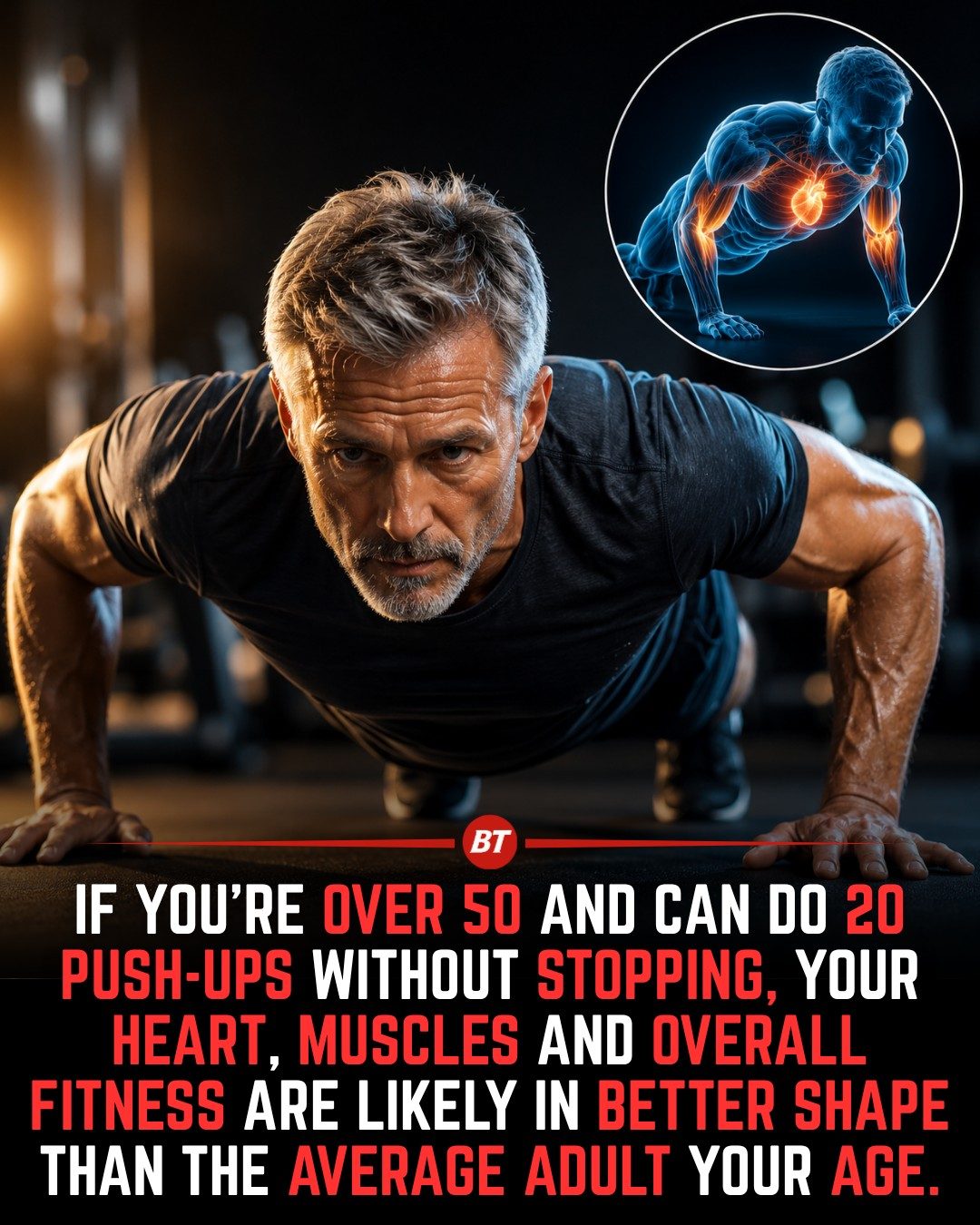
Push-ups as a Measure of Fitness for Adults Over 50
Push-ups are a deceptively simple exercise that can provide valuable insights into your overall fitness, especially as you age. For adults over 50, the ability to perform around 20 consecutive push-ups without stopping is a strong indicator of better-than-average strength, cardiovascular health, and overall fitness. This is because push-ups engage multiple systems in the body, including the heart, lungs, muscles, joints, balance, and core. There's a reason why researchers are increasingly interested in push-up capacity as a marker of general health.
Why This Matters
As we age, maintaining physical fitness becomes increasingly important for healthy aging. Push-ups offer a convenient and accessible way to assess and improve various aspects of fitness. They are a practical indicator of cardiovascular health, muscular endurance, and functional fitness. For adults over 50, being able to complete around 20 push-ups can suggest that your heart and lungs are in good shape, and that you have the muscle strength and endurance to support sustained physical effort.
The Science Behind Push-Ups
The Role of Push-Ups in Cardiovascular Health
One of the most notable studies on push-ups and health was published in JAMA Network Open. This study followed 1,104 active adult men for 10 years and found that participants who could perform more than 40 consecutive push-ups had a substantially lower risk of developing cardiovascular disease compared to those who could perform fewer than 10.
Although this study focused on a specific group of firefighters, the results highlight the potential of push-up capacity as a strong indicator of cardiovascular fitness. The findings suggest that push-up ability could be a useful marker of overall health, even for the general population.
Full-Body Engagement
Push-ups are not just about upper-body strength. They require coordination between the heart, lungs, muscles, joints, balance, and core. This full-body engagement makes push-ups a challenging but effective exercise for assessing and improving overall fitness. The ability to do 20 push-ups means that these systems are working together efficiently, which is crucial for maintaining good health as you age.
Practical Tips for Improving Push-Up Capacity
Start with Modifications
If you can't do 20 standard push-ups yet, don't be discouraged. There are several modifications you can use to build strength gradually:
Incline Push-Ups: Perform push-ups with your hands on an elevated surface, such as a bench or wall. This reduces the amount of weight you have to lift, making the exercise easier.
Knee Push-Ups: Begin in a standard push-up position, but place your knees on the ground. This modification helps build upper-body strength while reducing the demand on your core and lower body.
Modified Push-Ups: Use a resistance band or a fitness ball to modify the exercise. Resistance bands can be placed around your back and wrists to assist in pushing up, while a fitness ball can provide additional support.
Gradual Progression
Once you've mastered the modified versions, gradually increase the difficulty by moving to standard push-ups. Focus on proper form and gradually increase the number of repetitions you can complete. Aim to add one or two push-ups to your count each week. Consistency is key, so try to incorporate push-ups into your routine at least 2-3 times a week.
Incorporate Variations
To keep your workouts interesting and to challenge your muscles in different ways, consider incorporating push-up variations. Some variations to try include:
Decline Push-Ups: Elevate your feet on a bench or step to increase the demand on your upper body.
Diamond Push-Ups: Place your hands close together in a diamond shape under your chest. This variation targets the triceps more intensely.
Wide-Grip Push-Ups: Place your hands wider than shoulder-width apart to focus on the chest muscles.
Monitor and Adjust
Everyone's fitness journey is unique, so it's essential to monitor your progress and adjust your approach as needed. If you're struggling with push-ups, consider working with a fitness professional to develop a tailored plan that addresses any specific challenges you might be facing.
Important Takeaways
- Cardiovascular Fitness: Push-ups can serve as a practical indicator of cardiovascular health, especially for adults over 50.
- Full-Body Strength: They engage multiple body systems, making them a comprehensive test of functional fitness.
- Progression: Start with modifications like incline or knee push-ups and gradually build strength.
- Variations: Incorporate different push-up variations to challenge your muscles in new ways and keep your workouts interesting.
- Consistency and Monitoring: Aim for regular practice and monitor your progress to make necessary adjustments.
Conclusion
Push-ups are a simple yet powerful exercise that can provide valuable insights into your overall fitness, especially as you age. For adults over 50, the ability to perform around 20 consecutive push-ups is a strong indicator of good cardiovascular health, muscular endurance, and functional fitness. By incorporating push-ups into your routine and gradually increasing your capacity, you can support healthy aging and maintain your independence.
Watch the Reel
Questions readers ask
Why are push-ups a good indicator of fitness for adults over 50?
Push-ups are an excellent indicator of fitness for adults over 50 because they engage multiple body systems, including the heart, lungs, muscles, joints, balance, and core, to perform the exercise. The ability to perform around 20 consecutive push-ups suggests better-than-average strength, cardiovascular health, and overall fitness.
What are the benefits of doing push-ups for older adults?
Push-ups provide numerous benefits for older adults. They help maintain muscle strength, improve cardiovascular health, and enhance lung capacity. Additionally, push-ups can contribute to better balance, which is crucial for preventing falls and injuries as we age. They also provide a convenient and accessible way to assess and improve overall fitness.
What does the ability to perform 20 push-ups consecutively indicate for an older adult?
The ability to perform 20 push-ups consecutively in an older adult indicates good strength and cardiovascular health. This capacity suggests that the individual has better-than-average muscular and cardiovascular endurance, which are essential for maintaining overall fitness and functional mobility as we age.
How do push-ups assess cardiovascular health in older adults?
Push-ups assess cardiovascular health in older adults by requiring the heart and lungs to work together to supply oxygen to the muscles. The continuous movement engages the heart and lungs in a way that increases heart rate and breathing rate, providing a moderate cardiovascular workout. The ability to perform a certain number of push-ups without stopping reflects the efficiency of the cardiovascular system in meeting the body's demands.
Can push-ups help improve lung capacity in older adults?
Yes, push-ups can help improve lung capacity in older adults. During push-ups, the body works harder to supply oxygen to the muscles, which can strengthen the respiratory system. Over time, regular push-up practice can increase lung capacity and efficiency, making it easier to perform daily activities and engage in other forms of exercise.
How often should older adults do push-ups to maintain fitness?
Older adults should aim to incorporate push-ups into their routine 2-3 times a week, with at least one rest day between sessions. Start with a number that challenges you but is achievable, and gradually increase the number of push-ups as your strength and endurance improve. Consistency is key, and it's important to listen to your body and avoid overexertion.
Related deep dives
Similar reads based on topic and creator.



Recent articles
Fresh deep dives from the latest Reels we unpacked.




Comments
Be the first to comment.