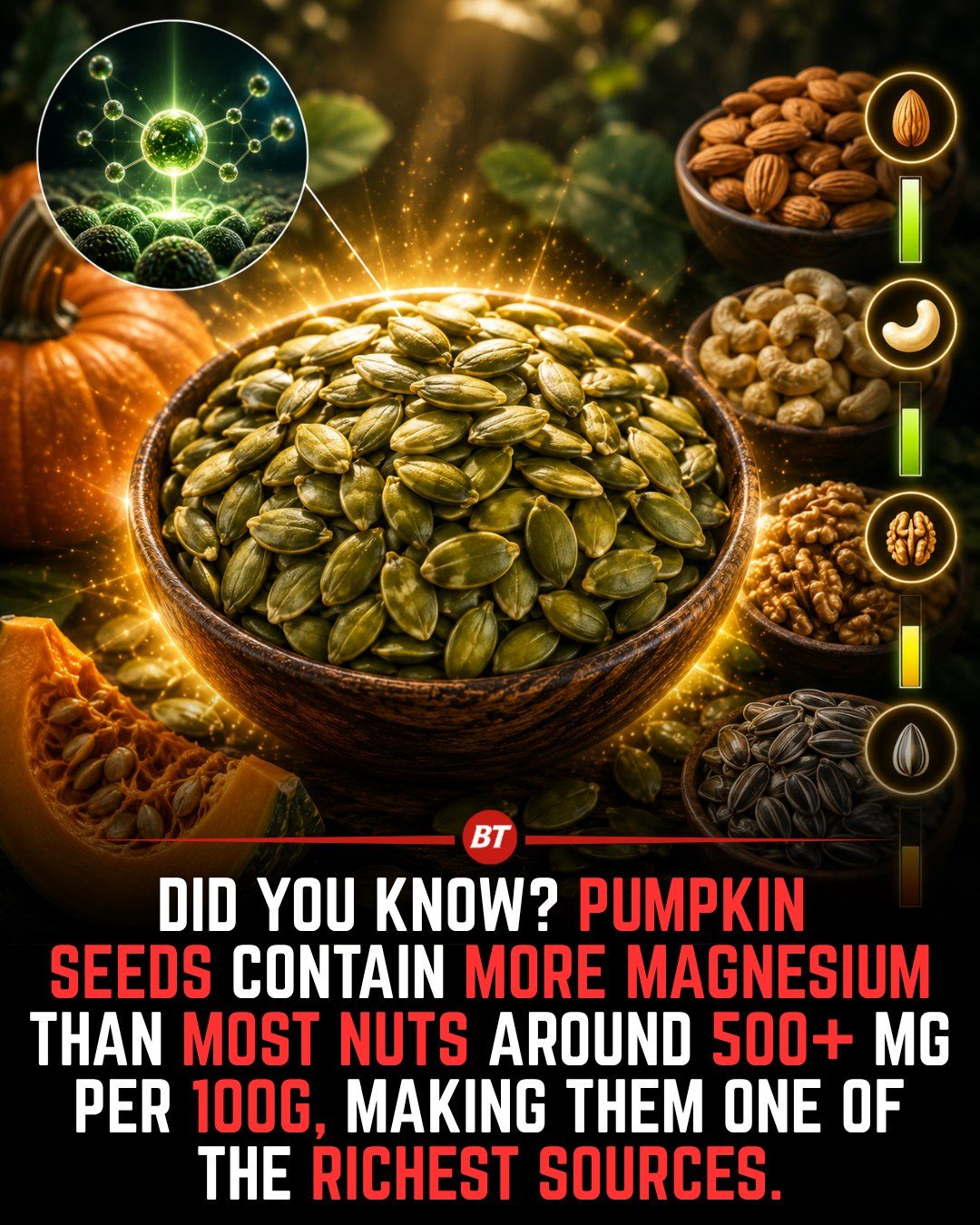
Pumpkin Seeds and Magnesium
Pumpkin seeds, often overlooked as mere snacks, are actually a nutritional powerhouse. They are packed with magnesium, one of the most essential minerals for the human body. In fact, they are one of the richest natural sources of magnesium, providing over 500 mg per 100 grams—more than many commonly eaten nuts.
Why This Matters
Magnesium is a vital mineral involved in over 300 enzymatic reactions in the body. It aids in converting food into energy, supporting muscle contractions, maintaining nerve function, and regulating heart rhythm. Despite its critical role, research indicates that many adults do not consume enough magnesium through their diets. This deficiency can lead to various health issues, including muscle cramps, fatigue, and even cardiovascular problems.
Pumpkin seeds are especially valuable because they deliver magnesium in a whole-food package, along with zinc, iron, healthy unsaturated fats, plant protein, and fiber. These nutrients work in tandem to support overall health, including muscle recovery, bone health, blood sugar regulation, and cardiovascular function. Choosing nutrient-dense foods like pumpkin seeds can help meet your daily magnesium needs without relying solely on supplements.
The Benefits of Magnesium
Magnesium is essential for numerous bodily functions. Here are some of the key benefits:
Energy Production
Magnesium plays a crucial role in converting the food you eat into energy. It is involved in the metabolism of carbohydrates, fats, and proteins, making it essential for maintaining energy levels throughout the day.
Muscle and Nerve Function
Magnesium supports normal muscle contractions and keeps nerves communicating properly. This is why a deficiency in magnesium can lead to muscle cramps, spasms, and even seizures.
Heart Health
Magnesium is vital for maintaining a steady heartbeat. It helps regulate the electrical activity of the heart, ensuring that it beats rhythmically and efficiently.
Bone Health
Magnesium is essential for bone health, working alongside calcium to maintain bone density and structure.
Pumpkin Seeds: A Nutritional Powerhouse
Pumpkin seeds are not just high in magnesium; they also offer a range of other health benefits. Here’s a closer look at what makes them so valuable:
Rich in Magnesium
As previously mentioned, pumpkin seeds contain around 500+ mg of magnesium per 100 grams, making them one of the richest sources of this essential mineral.
Zinc and Iron
Pumpkin seeds are an excellent source of zinc and iron, both of which are crucial for immune function, energy production, and oxygen transport in the blood.
Healthy Fats
Pumpkin seeds are rich in healthy unsaturated fats, which support heart health and help reduce inflammation in the body.
Plant Protein and Fiber
They also provide a good amount of plant protein and dietary fiber, which are essential for muscle repair, digestion, and overall health.
Practical Tips for Incorporating Pumpkin Seeds
Here are some practical ways to incorporate pumpkin seeds into your daily diet:
Snacking
Enjoy a small handful (about ¼ cup) of unsalted pumpkin seeds as a daily snack. This is an easy way to boost your magnesium, protein, and healthy fat intake.
Adding to Meals
Sprinkle pumpkin seeds over oatmeal, yogurt, or salads for an extra crunch and nutritional boost. They can also be added to baked goods, trail mix, or even blended into smoothies.
Important Takeaways
Pumpkin seeds are a nutritional powerhouse, offering a rich source of magnesium and a host of other essential nutrients. Incorporating them into your diet can support overall health, from muscle and nerve function to heart health and bone density. Whether you enjoy them as a snack or add them to your meals, pumpkin seeds are a versatile and valuable addition to any diet.
Conclusion
Pumpkin seeds stand out as one of the most magnesium-rich foods available. Their high magnesium content, combined with other essential nutrients, makes them a valuable addition to a balanced diet. Whether you sprinkle them over your favorite foods or enjoy them as a snack, pumpkin seeds offer a multitude of health benefits.
Watch the Reel
Questions readers ask
What makes pumpkin seeds a top source of magnesium?
Pumpkin seeds are one of the richest natural sources of magnesium, providing over 500 mg per 100 grams. This makes them an excellent choice for those looking to boost their magnesium intake through whole foods.
How does magnesium benefit muscle and nerve function?
Magnesium plays a crucial role in muscle contractions and nerve function. It helps regulate the electrical signals that control muscle movements and transmit information between nerves.
Why are pumpkin seeds a better choice than nuts for magnesium intake?
While many nuts do contain magnesium, pumpkin seeds often provide a higher concentration of this mineral. Additionally, pumpkin seeds offer a broader range of nutrients, making them a more well-rounded snack option.
What are some other health benefits of pumpkin seeds besides magnesium?
Pumpkin seeds are packed with other essential nutrients like zinc, copper, and healthy fats. They also provide antioxidants and plant-based proteins, supporting overall health and well-being.
How can I incorporate more pumpkin seeds into my diet to boost magnesium intake?
Pumpkin seeds can be easily added to salads, yogurt, or smoothies. They can also be eaten as a snack on their own or as a topping for oatmeal and baked goods.
What happens if I do not get enough magnesium in my diet?
Insufficient magnesium intake can lead to various health issues, including muscle cramps, fatigue, and even cardiovascular problems. Ensuring an adequate intake of magnesium through foods like pumpkin seeds is essential for overall health.
How does magnesium support heart health?
Magnesium helps regulate heart rhythm and is involved in the production of energy, which is crucial for the heart to function properly. It also aids in maintaining healthy blood pressure levels, contributing to overall heart health.
Related deep dives
Similar reads based on topic and creator.




Recent articles
Fresh deep dives from the latest Reels we unpacked.




Comments
Be the first to comment.