Protein Food Comparison
Avoiding processed ingredients and hidden sugars is more important than ever as protein becomes a popular focus for many diets—especially for those looking to build muscle and maintain a healthy weight. While many foods are labeled as high in protein, their nutritional content and actual benefits can vary greatly. By understanding the difference between whole food protein sources and processed protein products, you can make better choices that support your fitness goals.
Why This Matters
Focusing on protein is essential for muscle growth and repair, maintaining overall health, and managing your weight effectively. However, not all protein sources are created equal. Whole foods provide a more complete nutritional profile, while processed protein products often come with added sugars, fillers, and higher calories. This distinction is crucial for anyone aiming to optimize their nutrition for fitness and overall well-being.
Main discussion
To navigate the protein landscape effectively, it’s important to understand the three main categories: worst protein, best protein, and misleading protein.
Worst Protein
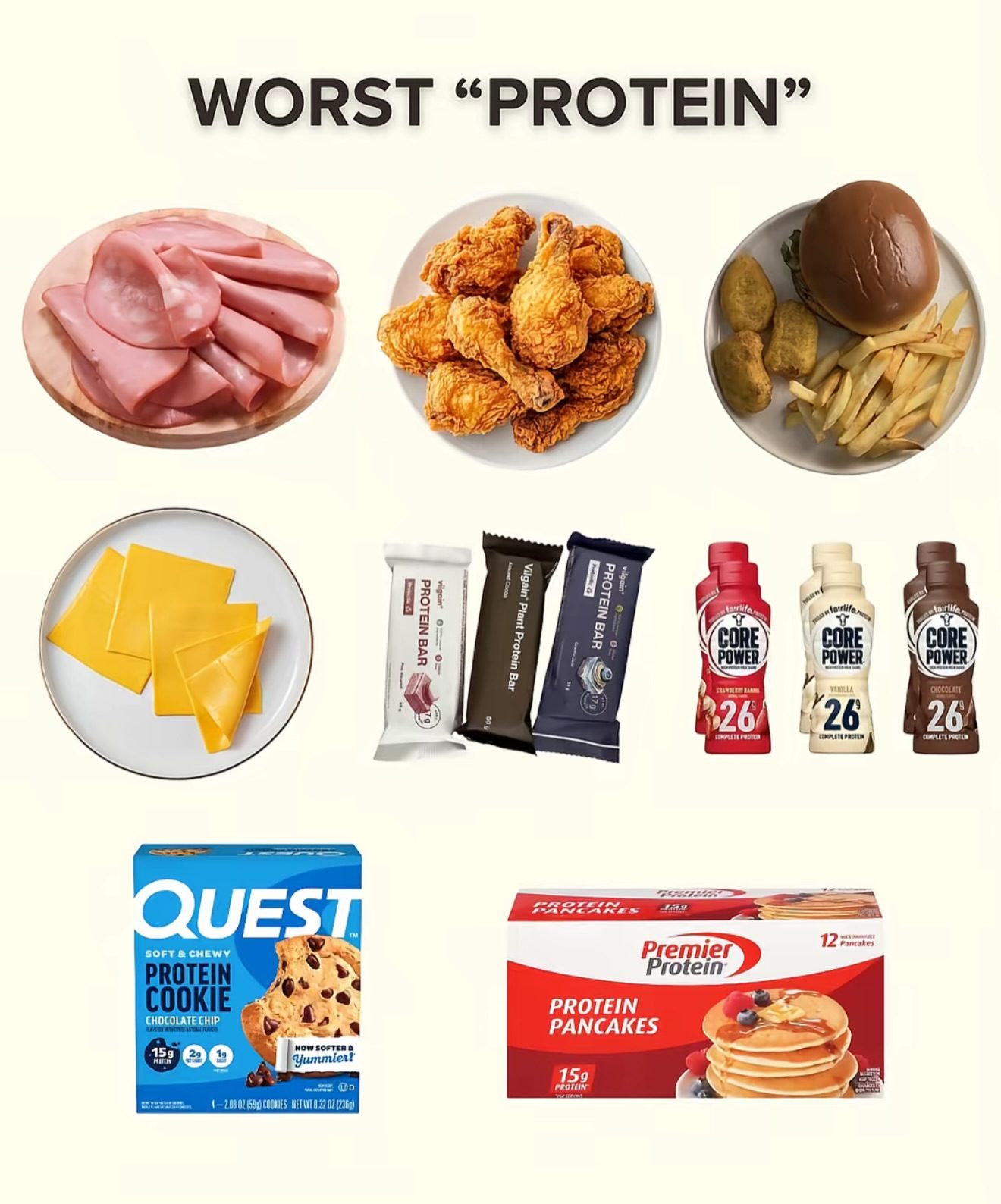
Unfortunately, many products marketed as high in protein fall into the "worst" category. These foods are highly processed and often contain added sugars, unhealthy fats, and artificial ingredients. Some examples include:
- Processed Protein Bars: While convenient, these often come with a high sugar content and artificial sweeteners.
- Protein Pancakes: These can be high in calories and low in actual protein, despite their marketing claims.
- Quest Protein Cookie Chips: While these may be lower in carbs, they often contain artificial sweeteners and additives.
Best Protein
Best protein sources are whole foods that provide a rich nutritional profile. These foods are not only high in protein but also contain essential vitamins, minerals, and healthy fats. Some of the best protein sources include:
- Eggs: A complete protein source with essential amino acids, vitamins, and minerals.
- Salmon: Rich in omega-3 fatty acids, which are crucial for heart health and brain function.
- Chicken: A lean protein source that is versatile and easy to incorporate into meals.
- Cottage Cheese: High in protein and low in calories, making it an excellent choice for weight management.
- Steak: Provides a dense source of protein along with essential minerals like iron and zinc.
- Shrimp: Lean and low in calories, making it a great option for those watching their weight.
- Tofu: A versatile plant-based protein source that is also rich in calcium and iron.
Misleading Protein
Misleading protein sources are those that are often marketed as high in protein but may not live up to their claims. These foods can be deceptive because they may contain hidden sugars or unhealthy fats. It’s important to read labels carefully and understand the nutritional content of these products. Examples include:
- High-Protein Breads: Often high in carbs and may contain added sugars.
- Protein Shakes with Added Ingredients: Some shakes are packed with artificial sweeteners and fillers.
Practical Tips
Understand Your Protein Needs
To fuel your body effectively, it's essential to understand your protein needs. This can vary based on your age, weight, activity level, and fitness goals. Using a fitness app like WORKIT can help you track your protein intake and ensure you're meeting your daily requirements.
Focus on Whole Foods
Whole foods provide a more balanced nutritional profile compared to processed protein products. By focusing on whole foods, you can ensure that you're getting a variety of essential nutrients without the added sugars and unhealthy fats.
Read Labels Carefully
Even foods marketed as high in protein can be deceiving. Always read the labels to understand the nutritional content and avoid products with added sugars, artificial ingredients, and unhealthy fats.
Track Your Intake
Using a nutritional tracking app can help you monitor your protein intake and ensure you're meeting your goals. Apps like WORKIT allow you to set targets for calories, protein, and other macros, making it easier to stay on track.
Incorporate Variety
Including a variety of protein sources in your diet can help you get a more complete nutritional profile. For example, pairing plant-based proteins with animal proteins can provide a full range of amino acids and other essential nutrients.
Consider Nutritional Tracking
Using a fitness and nutritional tracking app like WORKIT can help you stay on track with your protein intake and ensure you're meeting your goals. These apps often provide detailed nutritional information, allowing you to make informed choices about your diet.
Examples of Tracking Features
- Macro Tracking: Set targets for protein, carbohydrates, and fats, and track your daily intake to stay on track with your fitness goals.
- Calorie Tracking: Monitor your daily calorie intake to ensure you're meeting your nutritional needs without overconsuming.
- Progress Tracking: Track your progress over time to see how your diet and exercise habits are affecting your physique and overall health.
Important Takeaways
- Read Labels and Understand Content: Look beyond the marketing claims and understand the nutritional content of protein products.
- Focus on Whole Foods: Prioritize whole food sources for a more balanced nutritional intake.
- Think in Terms of Macros: Use macro tracking tools to measure your protein, carbohydrate, and fat intake effectively.
- Consistency is Key: Building a strong physique requires consistent effort in exercise, nutrition, and overall lifestyle. Always keep your eyes on the long-term goal.
- Use Technology to Track Progress: Smart apps like WORKIT can help you monitor your nutritional intake and stay motivated to achieve your fitness goals.
Conclusion
When it comes to protein, it's essential to look beyond the label and understand the actual nutritional content of the foods you're consuming. By focusing on whole food sources and avoiding processed protein products, you can ensure that you're getting the protein your body needs to build muscle, maintain a healthy weight, and support overall health. With the right tools and knowledge, you can make informed choices and achieve your fitness goals effectively.
Watch the Reel
Questions readers ask
What are some of the best protein sources for muscle growth?
Some of the best protein sources for muscle growth include lean meats like chicken and turkey, fish such as salmon and tuna, eggs, dairy products like Greek yogurt and cottage cheese, and plant-based options like lentils, chickpeas, and tofu. These whole foods provide a complete amino acid profile essential for muscle repair and growth.
Which processed protein foods should I avoid?
Avoid protein products with a long list of ingredients, high amounts of added sugars, artificial sweeteners, and excessive sodium. Examples include many protein bars, shakes, and powders that are heavily processed and may contain hidden sugars and unhealthy fats.
Why are whole food protein sources better than processed ones?
Whole food protein sources offer a more complete nutritional profile, including essential vitamins, minerals, and fiber that support overall health. In contrast, processed protein products often lack these nutrients and may contain additives and preservatives that can hinder fitness goals.
How do I decode protein labels to make better fitness choices?
To decode protein labels, look for a short ingredient list with recognizable whole food ingredients. Check the sugar content and ensure it's low; ideally, less than 5% of total calories. Also, compare the protein content with the calorie count to ensure you're getting a good amount of protein per calorie.
Can processed protein products still support my fitness goals?
While processed protein products can be convenient, they should not be the primary source of protein for fitness goals. They often lack the full range of nutrients found in whole foods and may contain unwanted additives. It's better to rely on whole foods and use processed products sparingly.
What role does protein play in weight management?
Protein is crucial for weight management as it helps build and repair muscles, which in turn boosts metabolism. High-protein foods also increase feelings of fullness, reducing overall calorie intake and aiding in weight loss or maintenance. Opt for whole food protein sources to maximize these benefits.
How much protein should I consume to support my fitness goals?
The ideal protein intake varies based on individual factors like age, weight, and activity level. A common recommendation for active individuals is 1.6 to 2.2 grams of protein per kilogram of body weight per day. Consult with a healthcare provider or a nutritionist to determine the optimal protein intake for your specific fitness goals.
Recent articles
Fresh deep dives from the latest Reels we unpacked.




Comments
Be the first to comment.