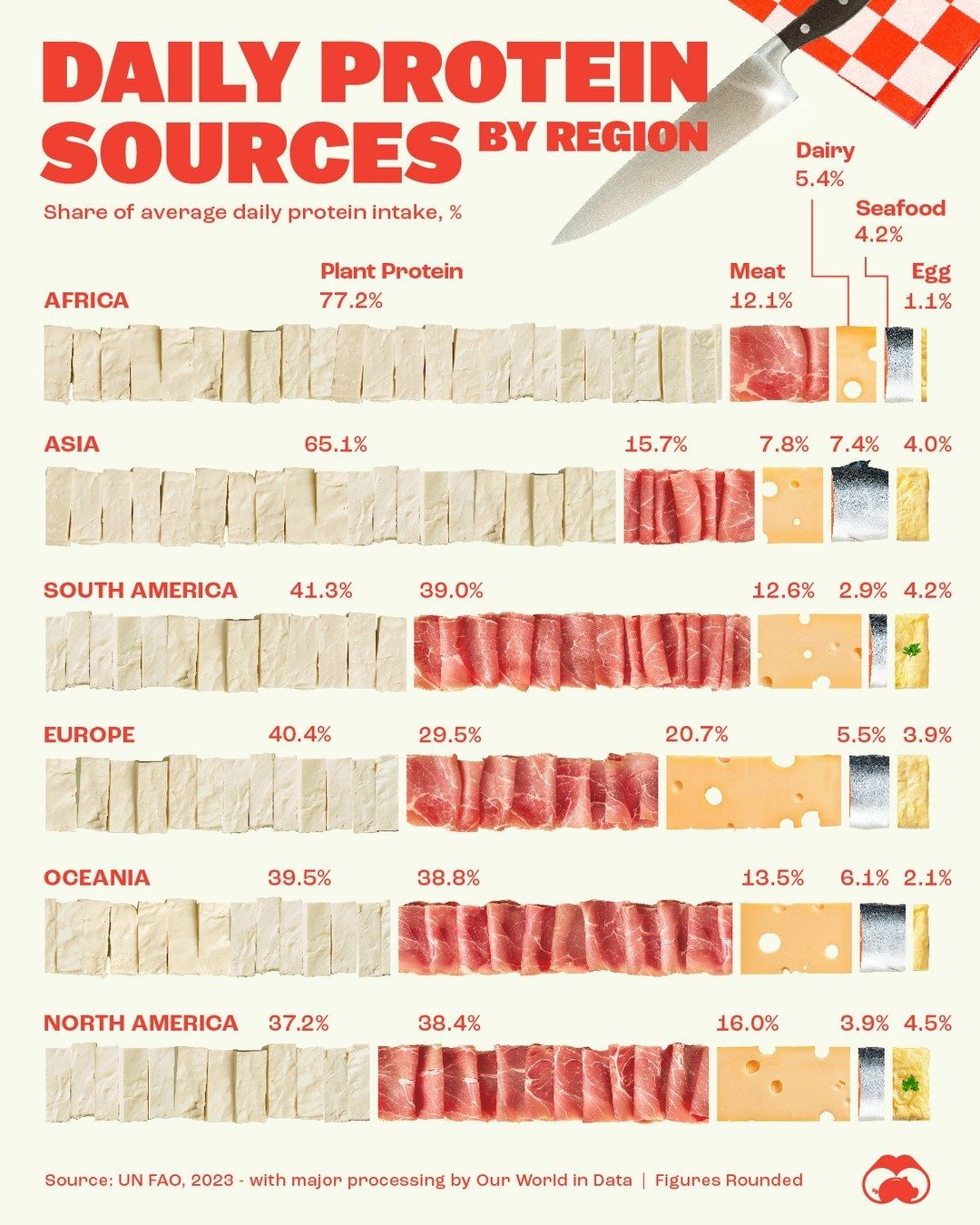
Protein Sources by Region
The way different regions around the world source their daily protein intake varies significantly. This breakdown highlights the diverse origins of protein, from plant-based sources to animal products, and explores the regional differences in protein consumption.
Context / Why this matters
Understanding protein sources by region is essential for comprehending global nutrition trends, agricultural practices, and cultural dietary habits. This information can influence policies related to food security, sustainability, and health initiatives.
Main discussion
Protein Intake in Africa
Africa stands out with the highest percentage of protein intake from plant sources, at 77.2%. This is largely due to the availability and affordability of plant-based proteins like legumes, grains, and nuts. Meat contributes to 12.1% of the protein intake, while eggs and dairy are minimal, making up 1.1% and 2.9% respectively. This trend is influenced by factors such as agricultural practices, economic conditions, and cultural preferences.
Protein Intake in Asia
Asia's protein intake is more diversified. Plant protein constitutes 65.1% of the daily intake, followed by meat at 15.7%. Eggs and dairy also play a notable role, contributing 7.8% and 7.4% respectively. This variety reflects the continent's diverse culinary traditions and the availability of different protein sources.
Protein Intake in South America
In South America, the protein intake is relatively balanced between plant and animal sources. Plant protein makes up 41.3% of the daily intake, while meat contributes 39.0%. Eggs and dairy are less significant, making up 12.6% and 4.2% respectively. This balance could be attributed to the region's agricultural diversity and dietary habits.
Protein Intake in Europe
Europe exhibits a more varied protein intake pattern. Plant protein constitutes 40.4% of the daily intake, with meat contributing 29.5%. Eggs and dairy are also substantial, making up 20.7% and 5.5% respectively. This mix reflects Europe's robust dairy industry and diverse agricultural practices.
Protein Intake in Oceania
Oceania's protein intake is notably high in meat, at 38.8%, closely followed by plant protein at 39.5%. Eggs and dairy contribute 13.8% and 6.1% respectively. This high meat consumption can be linked to the region's strong livestock industry and cultural preferences for meat-based diets.
Protein Intake in North America
North America has a relatively balanced protein intake between meat (38.4%) and plant protein (37.2%). Eggs and dairy make up 16.0% and 3.9% respectively. This balance is influenced by the region's diverse agricultural sectors and dietary trends that emphasize both plant and animal proteins.
Practical tips
When considering protein sources, it's important to understand the regional context and the availability of different protein sources. Here are some practical tips for optimizing protein intake:
- Diversify your protein sources: Incorporating a variety of protein sources can provide a broader range of nutrients. For example, including legumes, nuts, and seeds in your diet can complement animal proteins.
- Understand local availability: Being aware of the locally available protein sources can help in making sustainable and cost-effective choices. For instance, in regions where plant protein is abundant, incorporating more plant-based meals can be beneficial.
- Cultural preferences: Respecting and understanding cultural preferences can help in making dietary choices that are both enjoyable and nutritious. For example, in regions where meat is a significant part of the diet, ensuring a balance with plant proteins can be beneficial.
Important takeaways
- Regional Variations: Protein intake varies significantly by region, influenced by factors such as agricultural practices, economic conditions, and cultural preferences.
- Plant vs. Animal Protein: The proportion of plant versus animal protein intake differs widely, with Africa relying heavily on plant protein and North America having a more balanced intake.
- Dietary Balance: Understanding the regional context can help in making informed dietary choices that are both sustainable and nutritious.
Conclusion
The diversity in protein sources across different regions highlights the importance of understanding local dietary habits and agricultural practices. Whether it's the plant-based diets of Africa or the balanced protein intake of North America, each region has its unique approach to meeting daily protein needs. By recognizing these variations, individuals can make more informed choices about their protein intake, ensuring a balanced and nutritious diet.
Watch the Reel
Questions readers ask
Which regions have the highest plant-based protein intake?
Africa has the highest percentage of plant-based protein intake, with 77.2% of its protein consumption coming from plant sources. This is followed by Asia and Latin America, which also have significant plant-based protein intakes, although the exact percentages vary by country.
What are the primary sources of protein in America?
In America, protein intake comes from a mix of animal and plant sources. Animal proteins, such as meat, poultry, fish, eggs, and dairy, are commonly consumed, while plant-based sources like beans, lentils, and tofu are also popular, especially among those who follow vegetarian or vegan diets.
How does Europe's protein consumption compare to other regions?
Europe has a varied protein intake, with a relatively balanced mix of plant and animal proteins. Compared to Africa and Asia, Europe tends to have a higher intake of animal proteins. However, there is a growing trend towards increased plant-based protein consumption, driven by health and environmental concerns.
What factors influence protein intake by region?
Protein intake by region is influenced by various factors, including dietary habits, agricultural practices, and cultural preferences. For instance, regions with abundant plant-based food sources and limited access to animal proteins tend to rely more on plants. Conversely, areas with well-established livestock farming often have higher animal protein consumption.
What are the main sources of protein in Asia?
Asia has a diverse range of protein sources, with a significant portion coming from plant-based foods like soy, lentils, and rice. However, animal proteins such as fish, poultry, and pork are also widely consumed. The specific sources can vary greatly among different countries in the region, reflecting unique cultural and geographical contexts.
Why is it important to understand global protein consumption trends?
Examining global protein consumption trends is crucial for developing effective food policies, ensuring food security, and promoting sustainable agricultural practices. Understanding these trends can also aid in addressing health issues related to diet and nutrition, and in fostering a more balanced and sustainable global food system.
Recent articles
Fresh deep dives from the latest Reels we unpacked.




Comments
Be the first to comment.