Protein: Not All Sources are Equal
Understanding the nuances of protein sources is crucial for anyone focused on fitness or weight management. Whether aiming for fat loss or muscle gain, the type of protein you consume can significantly impact your progress. This guide dives into the differences between various protein sources, emphasizing the importance of calories and fat content in achieving your nutritional goals.
Why This Matters
Many people believe that all protein sources are created equal, but this is a common misconception. While it's true that all proteins provide essential amino acids, the caloric and fat content can vary significantly. For instance, 30 grams of protein from Greek yogurt contains around 180 calories, while the same amount from peanut butter packs about 750 calories. This difference highlights why it's essential to choose your protein sources wisely based on your specific goals.
The Protein Dilemma
Calories and Fat Content
The primary factor to consider when choosing a protein source is the calorie and fat content. Foods with higher fat content generally have more calories, which can either support muscle gain or hinder fat loss efforts, depending on your goals.
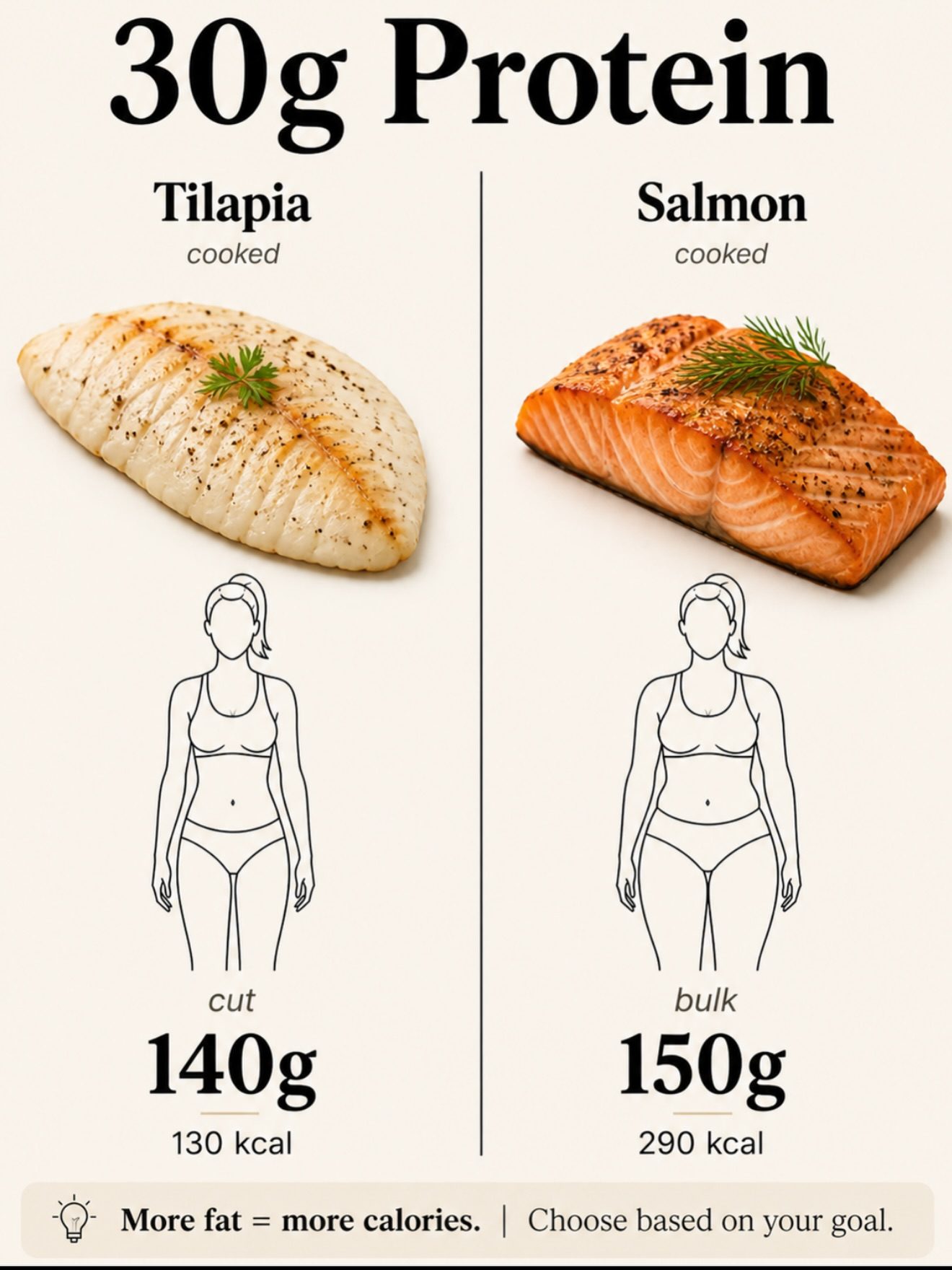
- Tilapia vs. Salmon: Cooked tilapia offers 130 calories for 140 grams, while the same amount of cooked salmon provides 290 calories.
- Greek Yogurt vs. Peanut Butter: Non-fat Greek yogurt delivers 180 calories for 300 grams, whereas peanut butter provides 750 calories for just 130 grams.
- Whey Protein vs. Full-Fat Cheese: Whey protein isolate gives 120 calories for 35 grams, while full-fat cheese offers 480 calories for 120 grams.
Goal-Oriented Protein Selection
Choosing the right protein source can make or break your nutritional goals. If your aim is fat loss, opt for leaner protein sources that are lower in calories and fat. On the other hand, if muscle gain is your objective, higher-calorie protein sources can be beneficial.
Fat Loss
For those looking to lose fat, prioritize high-protein, lower-calorie sources. This approach helps maintain a caloric deficit while ensuring you meet your protein needs. Some effective choices include:
- Lean Proteins: Chicken breast, turkey, and non-fat dairy products.
- Fish: Tilapia, cod, and other lean fish options.
- Low-Calorie Dairy: Non-fat Greek yogurt and low-fat cottage cheese.
Additionally, while fats are essential, controlling their intake is crucial. Avoid eliminating fats entirely, but focus on including healthy fats like avocados, nuts, and olive oil in moderation.
Muscle Gain
For muscle growth, don't shy away from higher-calorie protein options. These foods can provide the necessary calories and nutrients to support muscle repair and growth. Consider the following:
- Lean Proteins: Salmon, beef, and high-calorie dairy products.
- Nut Butters: Peanut butter and almond butter.
- High-Calorie Dairy: Full-fat Greek yogurt and cottage cheese.
Regardless of your goal, consistency is key. Aim to hit your daily protein targets consistently, even if you're not perfect every day.
Practical Tips
Calculating Your Needs
To determine your optimal protein intake, consider your body weight, activity level, and specific goals. A common starting point is 1.6 to 2.2 grams of protein per kilogram of body weight for active individuals. For muscle gain, lean towards the higher end, while for fat loss, aim for the lower end.
Tracking and Adjusting
Use a nutrition app or food diary to track your protein intake and adjust as needed. Regularly monitor your progress and make adjustments based on your observations. Apps can help you set goals, track progress, and provide data-driven nutrition insights to ensure you stay on track.
Important Takeaways
- Not All Proteins Are Equal: Different protein sources have varying calorie and fat contents.
- Goal-Specific Choices: Choose protein sources based on whether you're aiming for fat loss or muscle gain.
- Consistency Over Perfection: Stay consistent with your protein intake, even if you're not perfect every day.
- Use Tools: Utilize nutrition apps to track your progress and make data-driven decisions.
Conclusion
Understanding the differences between protein sources can significantly enhance your nutritional strategy, whether your goal is fat loss or muscle gain. By choosing the right protein sources and monitoring your calorie and fat intake, you can achieve your fitness goals more effectively. Consistency and informed choices are key, and tools like nutrition apps can provide valuable insights to help you stay on track.
Watch the Reel
Questions readers ask
How does the calorie content of protein affect fat loss?
The calorie content of protein plays a significant role in fat loss. Lower-calorie protein sources help create a caloric deficit, which is essential for burning fat. Opt for lean proteins like chicken breast, turkey, or low-fat dairy to support your fat loss goals while maintaining muscle mass.
What are the best protein sources for muscle gain?
For muscle gain, focus on protein sources that provide a high amount of protein per calorie, such as whey protein, eggs, and lean meats. These foods support muscle recovery and growth. Aim for around 1.6 to 2.2 grams of protein per kilogram of body weight per day to optimize muscle gain.
How do I compare the fat content in different protein sources?
To compare the fat content in different protein sources, check the nutrition labels or use a calorie calculator. For example, 30 grams of protein from Greek yogurt has around 180 calories and 0 grams of fat, while the same amount from peanut butter has approximately 180 calories and 15 grams of fat. Opt for lower-fat options if you're aiming for fat loss.
What are some high- protein, low-calorie meal prep ideas?
For high-protein, low-calorie meal prep, consider meals like grilled chicken breast with steamed vegetables, turkey and vegetable stir-fry, or a protein shake with a scoop of whey protein, almond milk, and a handful of berries. These options provide ample protein without excess calories, supporting both fat loss and muscle maintenance.
What are some higher-calorie protein foods that support muscle gain?
Higher-calorie protein foods that support muscle gain include red meat, salmon, and nuts. These foods provide a good balance of protein and healthy fats, which are essential for muscle recovery and growth. Incorporate these into your diet if you're looking to build muscle and increase your caloric intake.
How can I calculate the calories in my protein intake?
To calculate the calories in your protein intake, you can use online calorie calculators or refer to nutrition labels. For a rough estimate, remember that one gram of protein contains approximately 4 calories. For example, if you consume 100 grams of protein, you will consume around 400 calories from protein alone.
Why does the type of protein matter for my fitness goals?
The type of protein you consume matters because different protein sources have varying calorie and fat contents. For fat loss, choose lower-calorie, lean proteins. For muscle gain, opt for proteins that provide a good balance of calories and amino acids to support muscle recovery and growth.
Recent articles
Fresh deep dives from the latest Reels we unpacked.




Comments
Be the first to comment.