Protein Intake: Understanding Portion Sizes and Caloric Impact
Choosing the right foods to meet your protein goals can significantly impact your health and fitness journey. Understanding how different foods with the same protein content can have vastly different caloric values is crucial for making informed dietary choices.
Why this matters
When aiming for a specific protein intake, the type of food you choose can greatly influence your calorie consumption and overall nutritional impact. Awareness of these differences allows for more flexible and sustainable dietary choices, rather than restrictive eating habits.
Comparing Protein Sources
Chicken Breast vs. Beef
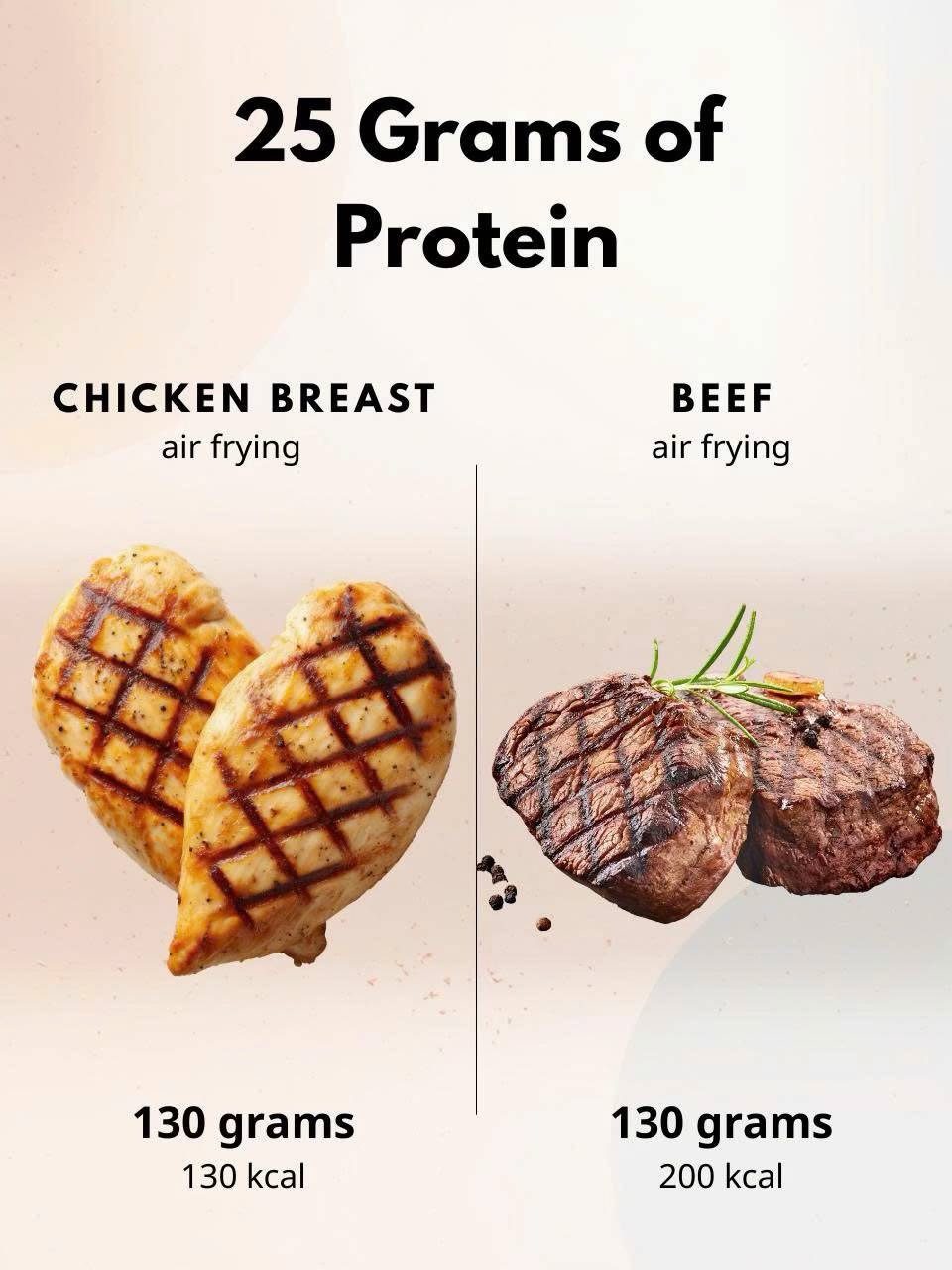
Chicken breast and beef are both excellent sources of protein, but their caloric content and nutritional profiles can vary significantly. For instance, 130 grams of air-fried chicken breast contains approximately 25 grams of protein and 130 calories. In contrast, 130 grams of air-fried beef offers the same protein amount but with 200 calories. This difference can be substantial when trying to manage weight or meet specific dietary goals.
Bread vs. Whole Wheat Bread
When it comes to bread, the difference in caloric content is also notable. To achieve 25 grams of protein, you would need around six pieces of regular bread, which amounts to 1250 calories. On the other hand, twelve pieces of whole wheat bread provide the same protein content but with 1000 calories. This comparison highlights the benefit of choosing whole wheat bread for both protein and lower calorie intake.
Salmon vs. Basa Fish
Fish is another protein-rich food with varying nutritional profiles. For example, 130 grams of raw salmon contains 25 grams of protein and 130 calories, while 130 grams of raw basa fish provides the same amount of protein but with 200 calories. This difference can impact your overall calorie intake and should be considered when planning meals.
The Workit Approach to Nutrition
The Workit app takes a holistic approach to nutrition and fitness. Rather than promoting rigid dietary restrictions, Workit emphasizes awareness, intention, and consistency. Here are some key principles of the Workit philosophy:
Moving Your Body
Regular physical activity is essential for overall health and weight management. Workit encourages moving your body consistently, whether through structured workouts or daily activities.
Eating with Intention
Mindful eating involves paying attention to your body's needs and fueling it appropriately. This approach helps in making healthier choices and understanding the impact of different foods on your body.
Learning What Fuels You
Everyone's nutritional needs are unique. Workit helps users learn what foods work best for their bodies, allowing for personalized and effective dietary choices.
Getting Rewarded for Your Efforts
One of the standout features of the Workit app is its ability to convert workouts into real money. This incentivizes users to maintain a consistent fitness routine and achieve their health goals with added motivation.
Practical Tips for Balanced Nutrition
- Portion Control: Understanding portion sizes is crucial for managing calorie intake. Use measuring tools or visual cues to ensure you're eating the right amounts.
- Variety in Protein Sources: Incorporate a variety of protein sources into your diet to benefit from different nutritional profiles.
- Consistency Over Perfection: Aim for consistent healthy habits rather than striving for perfection. Small, sustainable changes add up over time.
- Track Your Intake: Use a nutrition app to track your calorie and macro intake. This helps in making informed decisions and staying on track with your goals.
- Stay Informed: Keep learning about nutrition and how different foods impact your body. Knowledge is power when it comes to making healthier choices.
Important Takeaways
- Awareness Over Restriction: Focus on understanding portion sizes and nutritional content rather than eliminating foods.
- Consistency and Knowledge: Progress comes from consistent effort and knowledge, not perfection.
- Personalized Choices: Choose foods that work best for your body and goals. There's no one-size-fits-all approach to nutrition.
- Rewards and Motivation: Find ways to reward and motivate yourself to stay consistent with your fitness and nutrition goals.
Conclusion
Understanding the caloric impact of different protein sources is essential for making informed dietary choices. By focusing on awareness, intention, and consistency, you can achieve your health and fitness goals without resorting to restrictive eating habits. The Workit app provides a comprehensive approach to nutrition and fitness, helping you track your progress and stay motivated. Whether you prefer lean protein options or richer choices, both can fit into a balanced diet with the right understanding and approach.
Watch the Reel
Questions readers ask
How does the calorie count of beef compare to chicken breast when they contain the same amount of protein?
When comparing a 4-ounce portion of beef to a 4-ounce portion of chicken breast, the beef can have 200+ calories and 20g of protein, while the chicken breast will have only 128 calories for the same 20g of protein. The calories in chicken breast is much lower for the same protein content.
Why should I consider the calorie count of different protein sources when trying to lose weight?
When focusing on weight loss, it's important to consider the calorie count of different protein sources because consuming the same protein amount from higher-calorie foods can lead to excess calorie intake, which may hinder weight loss progress. It is important to choose the right proteins.
What are some low-calorie protein sources I can incorporate into my diet?
Some low-calorie, high-protein sources include chicken breast, turkey breast, lean fish like basa fish or salmon, tofu, and low-fat dairy products. These options provide a good amount of protein without significantly increasing your calorie intake.
How can understanding protein portion sizes help in achieving fitness goals?
Understanding protein portion sizes helps in achieving fitness goals by allowing you to consume the right amount of protein without excess calories. It enables you to create a balanced meal plan that supports muscle growth and recovery while managing overall calorie intake.
Which has more calories: a serving of bread or a serving of salmon, and why does this matter?
A serving of bread typically has more calories than a serving of salmon. For example, two slices of bread can have around 200 calories, while a 4-ounce serving of salmon provides around 200 calories but with a substantial amount of protein and healthy fats. This matters because choosing salmon over bread can help you meet your protein goals while managing calorie intake.
Why is it important to track the calories and protein amounts in my meals?
Tracking the calories and protein amounts in your meals is important because it helps you make informed decisions about your food choices. By monitoring these nutrients, you can ensure that you are consuming enough protein to support your health and fitness goals. This is important for both the daily diet and for long term health.
How can I use the Workit nutrition app to track my protein intake and calorie consumption?
The Workit nutrition app can help you track your protein intake and calorie consumption by allowing you to log your meals and snacks throughout the day. The app provides detailed nutritional information for various foods, helping you stay on track with your health and fitness goals. You can track your protein for weight loss, and you can identify the protein choices for health that are best for you.
Recent articles
Fresh deep dives from the latest Reels we unpacked.




Comments
Be the first to comment.