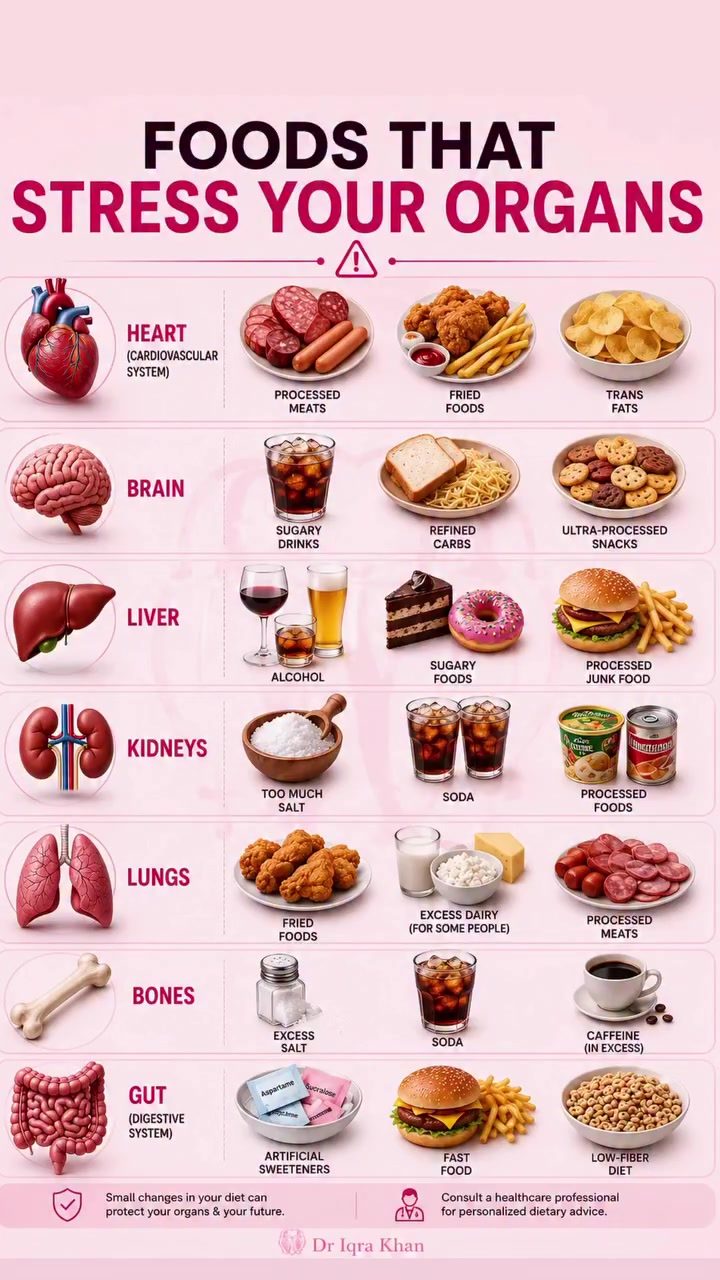
Foods That Stress Your Organs
Diet plays a crucial role in maintaining overall health, particularly in supporting organ function. Understanding which foods can stress the organs is essential for maintaining long-term health. Certain foods, when consumed regularly, can lead to various health issues and place significant stress on specific organs. Below, we explore the key organs in the body and the specific foods that can negatively impact them.
Why This Matters
Regular consumption of ultra-processed foods, sugary drinks, excess salt, processed meats, and fried foods is associated with a higher risk of numerous chronic conditions. These include heart disease, fatty liver, kidney disease, poor gut health, and other serious ailments. By making small but impactful changes to your diet, you can significantly reduce the stress on your organs and improve your overall health.
Main Discussion
Organs and Their Associated Foods
Heart (Cardiovascular System)
The heart is one of the most severely affected organs by poor dietary choices. Foods that are particularly harmful to the cardiovascular system include:
- Processed meats: These are high in saturated fats and sodium, which can lead to hypertension and increase the risk of heart disease.
- Fried foods: High in trans fats, these foods can increase bad cholesterol levels and contribute to heart disease.
- Sugary drinks and foods: Excessive sugar consumption can lead to obesity, diabetes, and heart disease.
Brain
The brain is sensitive to dietary choices, and certain foods can adversely affect its function:
- Refined carbs and sugary foods: These can cause inflammation and oxidative stress, which are linked to cognitive decline and neurodegenerative diseases.
- Excess salt: High sodium intake can lead to hypertension, which in turn affects brain health by increasing the risk of strokes and cognitive impairment.
Liver
The liver is responsible for filtering toxins from the body, and certain foods can overburden it:
- Alcohol: Consumed in excess, alcohol can lead to liver inflammation, cirrhosis, and even liver cancer.
- Sugary drinks and processed foods: High intake of these can cause fatty liver disease, which is a growing health concern.
Kidneys
The kidneys play a vital role in filtering waste from the blood, and certain foods can impair their function:
- Excess salt: High sodium intake can lead to hypertension, which places extra strain on the kidneys and can cause kidney disease.
- Processed meats and excess protein: High protein intake, especially from processed meats, can increase the workload on the kidneys and lead to kidney stones and other issues.
Lungs
While not often associated with dietary choices, the lungs can also be affected by certain foods:
- Excess dairy (for some people): Some individuals may experience increased mucus production, which can worsen respiratory conditions like asthma.
- Caffeine (in excess): High caffeine intake can cause respiratory distress and exacerbate conditions like asthma.
Bones
Bone health is influenced by various dietary factors, and certain foods can negatively impact bone density:
- Low-fiber diet: A diet lacking in fiber can lead to poor gut health, which in turn affects calcium absorption and bone health.
- Excess salt: High sodium intake can increase calcium excretion, leading to bone loss and increased risk of osteoporosis.
Gut (Digestive System)
The gut is highly sensitive to dietary choices, and certain foods can disrupt its delicate balance:
- Ultra-processed snacks and fast food: These are often high in unhealthy fats, sugars, and artificial additives, which can cause inflammation and disrupt the gut microbiota.
- Artificial sweeteners: While they provide no nutritional value, they can alter gut bacteria and lead to digestive issues.
- Fried foods and processed meats: High in unhealthy fats and additives, these foods can cause inflammation and disrupt the gut microbiome.
Practical Tips
Making small changes to your diet can have a significant impact on your organ health. Here are some practical tips to consider:
Focus on Whole Foods
- Fruits and vegetables: Rich in vitamins, minerals, and fiber, these foods support overall health and reduce inflammation.
- Whole grains: Provide essential nutrients and fiber, aiding in digestion and maintaining stable blood sugar levels.
- Lean protein: Opt for lean sources of protein like poultry, fish, beans, and lentils to support muscle health and repair.
- Healthy fats: Incorporate sources like avocados, nuts, seeds, and olive oil for heart health and brain function.
Hydrate Properly
Drinking plenty of water is essential for maintaining organ function. Aim for at least 8 glasses of water per day, and limit your intake of sugary drinks and alcohol.
Limit Processed Foods
Processed foods are often high in unhealthy fats, sugars, and sodium. Limit your intake of:
- Processed meats
- Fried foods
- Sugary drinks and snacks
- Ultra-processed foods
Consult a Healthcare Professional
Everyone's dietary needs are unique, and what works for one person may not work for another. Consulting a healthcare professional can help you tailor your diet to your specific needs and protect your organs for the long term.
Important Takeaways
Understanding which foods stress your organs is the first step in protecting your long-term health. By focusing on a balanced diet rich in whole foods and limiting processed, sugary, and high-sodium foods, you can significantly reduce the stress on your organs. Small changes in your diet today can lead to significant health benefits in the future.
Conclusion
Maintaining organ health through a balanced diet is crucial for long-term well-being. By being mindful of the foods that stress your organs and making conscious choices to limit their intake, you can support the health and function of your vital organs. Always remember to consult with a healthcare professional to tailor your diet to your specific needs and ensure optimal organ health.
Watch the Reel
Questions readers ask
What are some examples of ultra-processed foods that can negatively impact my organs?
Ultra-processed foods are typically high in sugar, salt, and unhealthy fats, and low in essential nutrients. Examples include packaged snacks, sugary cereals, instant noodles, and ready-to-eat meals. These foods can stress your organs and increase the risk of chronic health conditions.
How do sugary drinks affect my organ health?
Sugary drinks, such as soda and sweetened beverages, can lead to weight gain, type 2 diabetes, and high blood pressure. Regular consumption of these drinks can also stress your liver, kidneys, and impact your heart health, increasing the risk of chronic conditions.
What are some fried foods to avoid for better organ health?
Fried foods, including fried chicken, french fries, and doughnuts, are high in unhealthy fats and can contribute to inflammation. Regular consumption of these foods can stress your heart, liver, and kidneys, and increase the risk of various health issues.
How does excess salt impact my organs?
Consuming too much salt can lead to high blood pressure, which in turn can stress your heart and kidneys. It can also contribute to kidney disease and kidney stones. Processed foods, canned soups, and fast food are often high in salt and should be avoided or limited.
Which processed meats should I avoid to support my organ health?
Processed meats, such as bacon, sausages, hot dogs, and deli meats, are high in sodium and unhealthy fats. Regular consumption of these meats can increase the risk of heart disease and other health problems, and can also stress your liver, kidneys, and gut.
How do these foods negatively impact brain health?
Foods high in sugar and unhealthy fats, such as processed foods, sugary drinks, and fried foods, can contribute to inflammation and oxidative stress, which negatively impact your brain health. This can increase the risk of cognitive decline and neurodegenerative diseases.
What are some alternative foods to improve my organ health?
To support your organ health, focus on whole, unprocessed foods, including fruits, vegetables, lean proteins, and whole grains. These foods are rich in essential nutrients and can help reduce inflammation, lower blood pressure, and support overall organ function.
Recent articles
Fresh deep dives from the latest Reels we unpacked.




Comments
Be the first to comment.