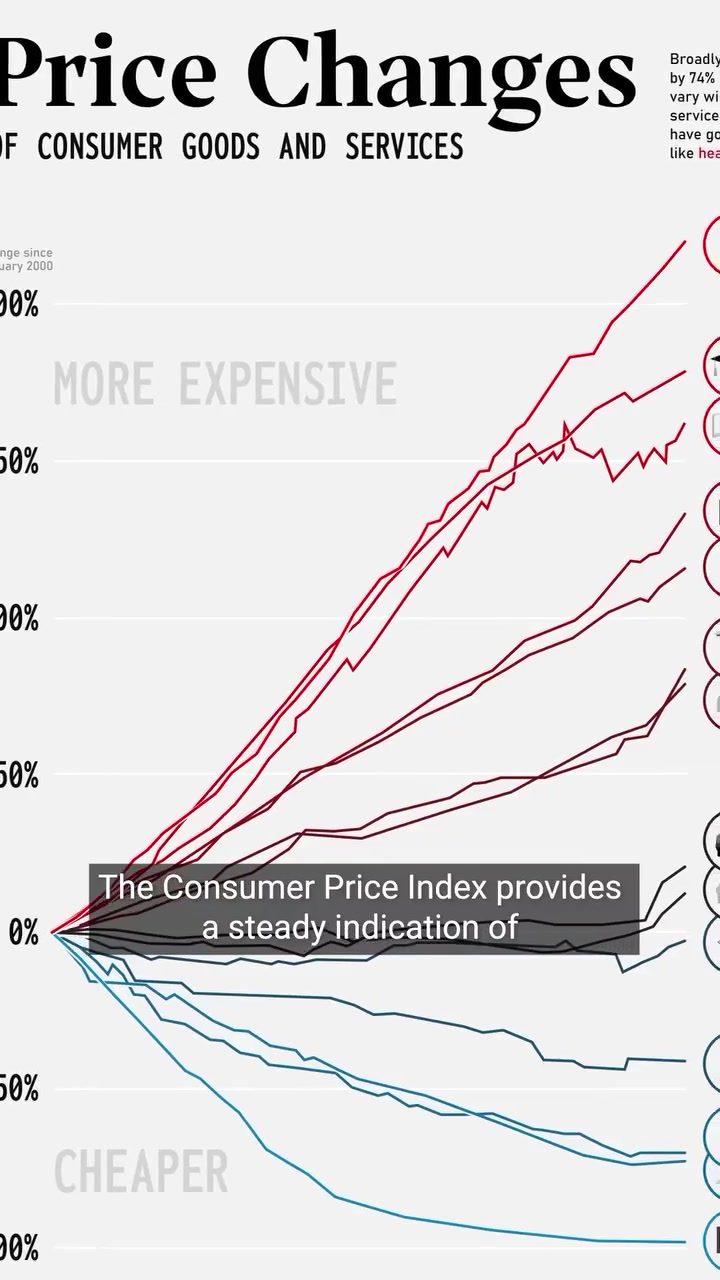
Price Changes in Consumer Goods and Services (2000-2022)
Inflation affects everyone, but not all goods and services are impacted equally. Since the start of the 21st century, the cost of living has evolved in complex ways, with some sectors experiencing significant price increases while others have seen dramatic drops. Understanding these trends can help consumers make informed decisions and plan for the future.
Why This Matters
Inflation is a broad economic concept, but its effects are personal. The Consumer Price Index (CPI) provides a comprehensive view of how prices are changing, but the true impact is felt at the cash register. Whether you’re buying groceries, paying for healthcare, or purchasing a new car, the cost of goods and services can vary widely. By delving into the specific trends since 2000, we can better understand the economic landscape and anticipate future changes.
Main Discussion
The Big Picture
The Consumer Price Index is a key indicator of inflation. It shows how the general level of prices for goods and services is changing over time. While this big-picture number is crucial for policy makers and economists, it doesn't always translate directly to what consumers experience in their daily lives. The following sections break down how prices have changed for various categories of goods and services over the past two decades.
Healthcare and Education
Healthcare and education have seen some of the most dramatic price increases. Since 2000, hospital services, college tuition, and medical care services have all risen significantly. College textbooks have also become more expensive, as have childcare services. These sectors have seen price increases of over 100%, with college tuition and fees nearly doubling.
Healthcare, in particular, has been a major driver of inflation. Rising medical costs have a broad impact, affecting not only individuals but also employers and government programs. The increased cost of childcare and education further strains household budgets, making it essential for families to plan and save accordingly.
Housing and Food
Housing and food are two other major categories that have seen significant price increases. The cost of housing has risen steadily, driven by factors like rising construction costs and limited housing supply. While food and beverage prices have also increased, the rate of inflation in this sector has been more variable, influenced by factors such as crop yields and global supply chains.
Fluctuating Costs
Some goods, including new cars, clothing, and household furnishings, have remained relatively flat in price. This means that consumers have not seen dramatic price increases in these areas, although the cost of these items has still risen over time. However, there are some notable exceptions. Clothing, for instance, has been heavily influenced by global supply chains and the rise of fast fashion, which has kept prices relatively stable despite increasing production costs.
Declining Prices
On the other hand, some categories have seen significant price decreases. Cell phone services, software, toys, and televisions have all become more affordable. This is particularly true for electronics, where technological advancements and increased competition have driven down costs. A new television, for instance, now costs less than 1% of the current U.S. median income, making it an affordable luxury for most households. This trend is also seen in software, where the shift to digital distribution and subscription models has made high-quality products more accessible.
Practical Tips
Understanding these trends can help consumers make more informed decisions. Here are some practical tips for navigating the changing landscape of consumer prices:
Budget and Plan
One of the most important steps is to create a detailed budget that accounts for both fixed and variable expenses. By understanding which categories are likely to increase in cost, you can allocate your resources more effectively. For example, if you know that healthcare costs are rising, you might want to set aside more funds for medical expenses.
Invest Wisely
Investing in categories that are likely to maintain or decrease in price can be a smart financial move. For instance, electronics and software are generally becoming more affordable, so investing in these areas could yield good returns. However, it's important to diversify your investments to protect against market fluctuations.
Compare Prices
Comparison shopping is more important than ever in a world of fluctuating prices. Use price comparison tools and apps to find the best deals on essential items. This can help you save money and ensure that you're getting the best value for your purchases.
Important Takeaways
Healthcare and Education Costs
The cost of healthcare and education has risen significantly, making these sectors some of the most expensive in the economy.
Housing and Food
Housing and food costs have also increased, although at varying rates. These are essential expenses for most households, so understanding their cost trajectory is crucial for financial planning.
Fluctuating and Declining Prices
Some goods, like new cars and clothing, have remained relatively flat in price, while others, such as electronics and software, have become more affordable. This trend highlights the importance of strategic investments and careful budgeting.
Conclusion
Inflation affects everyone, but its impact varies widely across different sectors. By understanding these trends, consumers can make more informed decisions about their spending and investments. Whether it's planning for rising healthcare costs or taking advantage of falling prices in electronics, staying informed is the key to navigating the ever-changing landscape of consumer prices.
Watch the Reel
Recent articles
Fresh deep dives from the latest Reels we unpacked.




Comments
Be the first to comment.