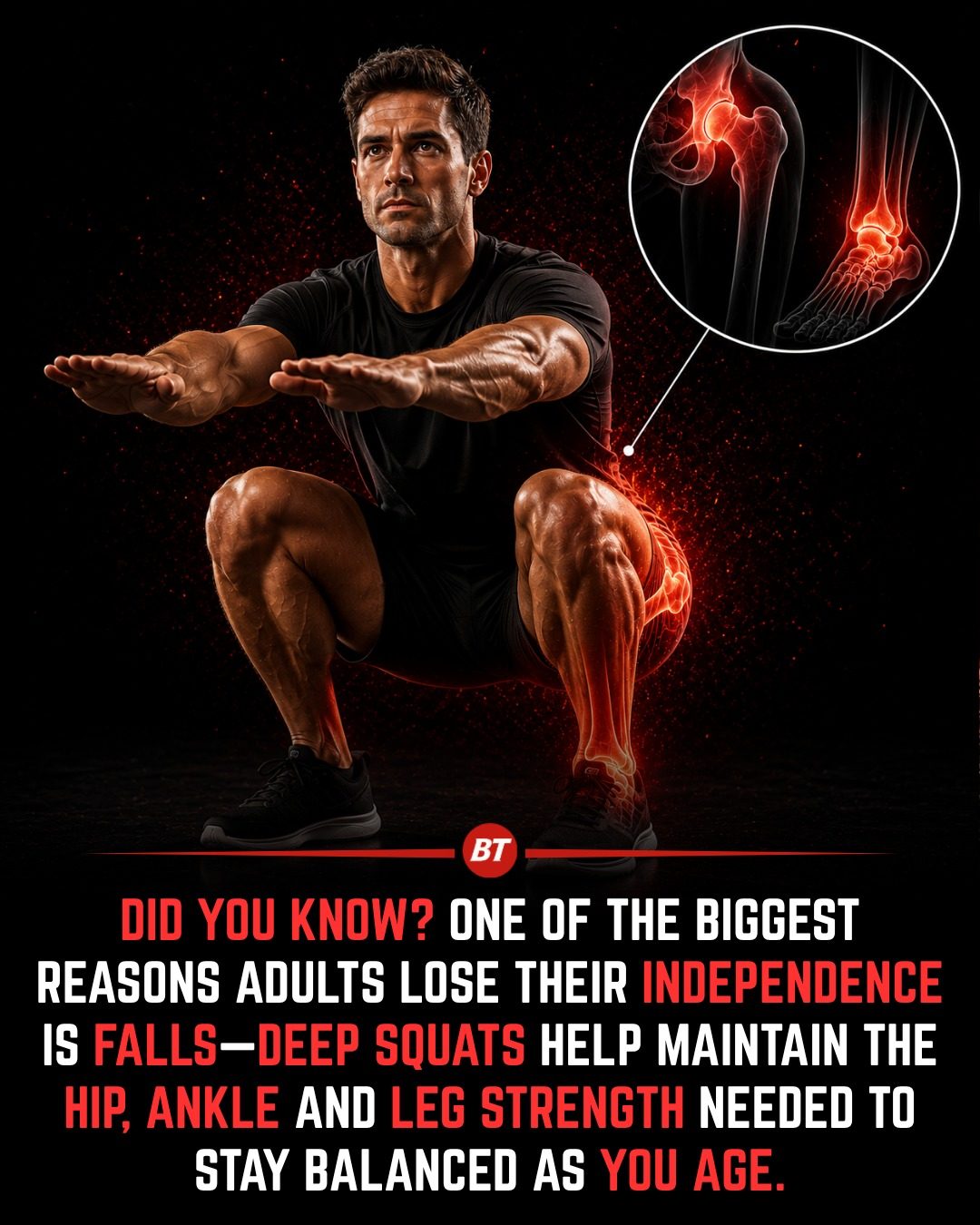
Squat Exercise Benefits
Deep squats are a powerful exercise that can significantly improve strength and mobility, especially for older adults. These exercises are not just about building muscle; they play a critical role in maintaining independence and preventing falls, which are a major concern as people age.
Why This Matters
Falls are a leading cause of injury-related hospitalization and loss of independence among adults over 65. According to the U.S. Centers for Disease Control and Prevention (CDC), millions of older adults experience falls each year, often resulting in fractures, reduced mobility, and a loss of confidence in performing everyday activities. By maintaining the ability to perform deep squats, older adults can preserve the physical qualities needed to stay balanced, mobile, and independent.
The Role of Deep Squats
Strengthening Key Muscles
Deep squats target multiple muscle groups, including the quadriceps, glutes, hamstrings, calves, and core. These muscles are essential for various daily activities such as walking, climbing stairs, and getting out of a chair. By strengthening these muscles, deep squats help maintain overall lower-body strength and stability.
Improving Mobility and Balance
In addition to building strength, deep squats enhance hip, knee, and ankle mobility. This improved mobility is crucial for maintaining balance and preventing falls. The exercise also stimulates the muscles and tendons responsible for proprioception, which is the body's ability to sense its position in space. This sensory feedback is vital for maintaining balance and recovering from trips or stumbles before they become falls.
Preserving Independence
The ability to comfortably perform a deep squat and stand back up is a strong indicator of overall physical fitness and independence. This movement requires a combination of strength, flexibility, and balance—all key components of healthy aging. By practicing deep squats, older adults can preserve these physical qualities, reducing the risk of falls and maintaining their independence for years to come.
Practical Tips
Getting Started
If the idea of a full squat feels daunting, start with simpler variations. Chair squats, supported squats (holding onto a sturdy surface for balance), or bodyweight squats to a comfortable depth are great starting points. Gradually increase the depth and intensity of your squats as your strength and mobility improve.
Progressing Safely
Remember, the goal is not necessarily to squat with heavy weights, but to preserve the movement itself. Focus on proper form and gradually challenge yourself. Incorporate deep squats into your regular fitness routine, aiming for at least two to three sessions per week. As you progress, you can add resistance with weights or resistance bands to continue building strength.
Integrating into Daily Life
Deep squats don't have to be confined to the gym. Incorporate them into your daily life by practicing them during breaks, while waiting for tasks to complete, or even as part of a morning routine. The more you practice, the more natural and comfortable the movement will become, which is excellent for maintaining long-term mobility and independence.
Important Takeaways
Performing deep squats is a practical and effective strategy for older adults to maintain their strength, mobility, and independence. By strengthening the quadriceps, glutes, hamstrings, calves, and core, and improving hip, knee, and ankle mobility, deep squats help prevent falls and reduce the risk of fractures and reduced mobility. Consistently incorporating deep squats into a fitness routine can significantly enhance overall physical fitness and quality of life for years to come.
Conclusion
Deep squats are a fundamental exercise that provides numerous benefits, especially for older adults. By focusing on strength, mobility, and balance, deep squats help maintain independence and reduce the risk of falls. Whether you are just starting out or looking to enhance your existing fitness routine, deep squats are a valuable addition to any exercise regimen. Embrace the power of deep squats and take proactive steps toward a healthier, more independent future.
Watch the Reel
Questions readers ask
How do deep squats help prevent falls in older adults?
Deep squats enhance lower-body strength, particularly in the hips and ankles, which are crucial for maintaining balance and stability. By improving these areas, older adults can better navigate uneven surfaces and avoid tripping, thus reducing the risk of falls.
How often should older adults perform deep squats to see benefits?
To see benefits, older adults should aim to incorporate deep squats into their routine 2-3 times a week. It's important to start slowly and gradually increase the number of repetitions and sets as strength and mobility improve.
What if an older adult has difficulty performing deep squats?
If deep squats are too challenging, it's recommended to start with chair squats or assisted squats, using a stable chair or counter for support. As strength improves, gradually progress to deeper squats.
Can deep squats help improve mobility in older adults?
Yes, deep squats can significantly improve mobility. They help in increasing the range of motion in the hips and knees, making daily activities like standing up from a chair, climbing stairs, and walking easier and safer.
Are there specific precautions to consider when doing deep squats?
Yes, older adults should ensure proper form to avoid injury. This includes keeping the back straight, knees behind the toes, and feet shoulder-width apart. It's also important to consult a healthcare provider before starting any new exercise program.
How do deep squats contribute to maintaining independence in older adults?
By enhancing lower-body strength and balance, deep squats help older adults maintain the physical capabilities needed for daily tasks. This reduced risk of falls, in turn, helps preserve independence and confidence in performing everyday activities.
Related deep dives
Similar reads based on topic and creator.




Recent articles
Fresh deep dives from the latest Reels we unpacked.




Comments
Be the first to comment.