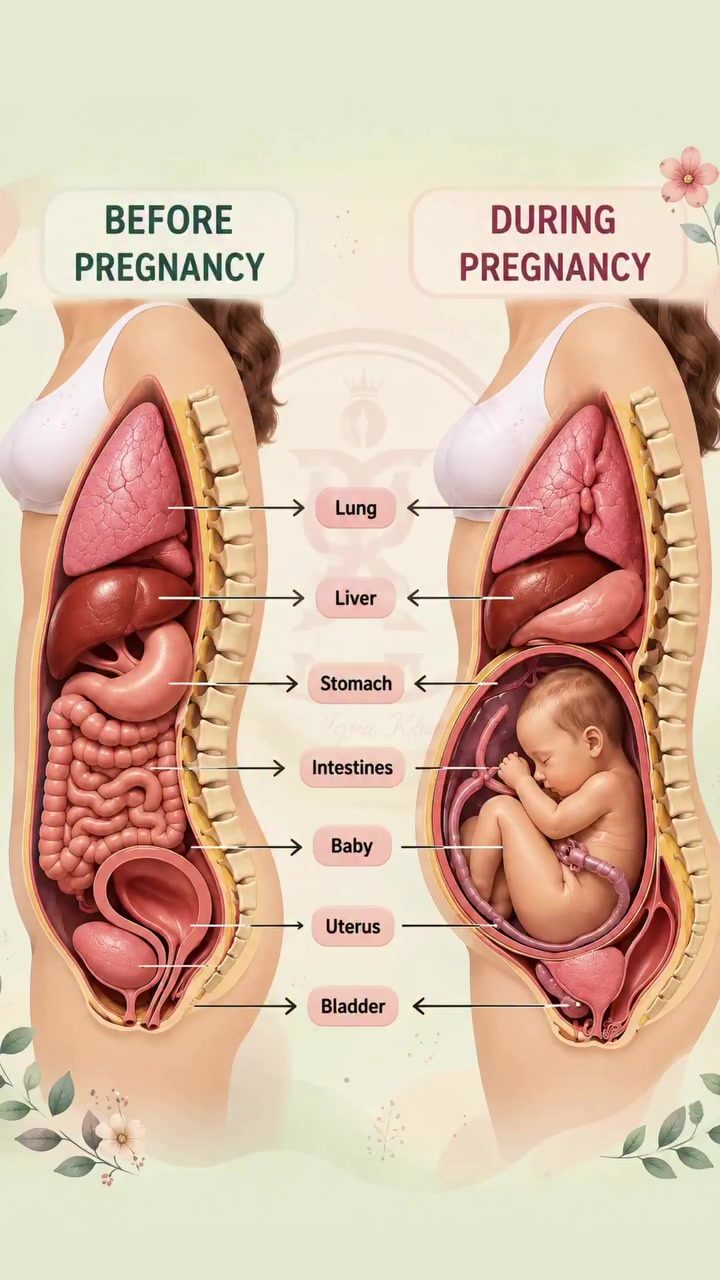
Pregnancy and Organ Changes
Pregnancy transforms a woman's body in remarkable ways, creating the perfect environment for a growing baby. Among the most significant changes is the expansion of the uterus and the subsequent shift in nearby organs. Understanding these changes can help expecting mothers anticipate and manage various symptoms that arise during this transformative journey.
Why This Matters
Recognizing the physical changes that occur during pregnancy can provide comfort and reassurance to future mothers. Knowing what to expect can help alleviate worries and prepare women for the unique challenges they may face. These changes also explain many of the common discomforts experienced during pregnancy, such as frequent urination, heartburn, and shortness of breath. Understanding these shifts can empower women to take proactive steps to enhance their comfort and well-being.
Main Discussion
The Expanding Uterus: The Central Player
The uterus plays a pivotal role in the dramatic transformations that occur during pregnancy. As the baby grows, the uterus expands to accommodate the increasing size of the fetus. This expansion is not just a simple increase in volume; it also involves a significant shift in the position of nearby organs. The uterus starts as a small, pear-shaped organ located in the pelvic cavity. However, by the end of pregnancy, it grows to occupy a much larger space, pushing other organs out of their usual positions.
Changes in Organ Position
Several key organs undergo positional shifts to make room for the growing uterus. These changes are crucial for accommodating the baby's growth and ensuring optimal conditions for fetal development.
Diaphragm and Lungs
One of the most notable changes involves the diaphragm, the muscle that separates the chest cavity from the abdominal cavity. As the uterus expands, it pushes the diaphragm upward, reducing the available space for the lungs. This can lead to shortness of breath, a common symptom experienced by many pregnant women. The lungs have less room to expand, which can make breathing feel more labored, especially during physical exertion.
Liver and Stomach
The liver, which is normally positioned in the upper right side of the abdomen, also shifts slightly upward. This movement can affect digestion and lead to symptoms like heartburn and indigestion. The stomach, too, moves upward and to the left to make room for the growing uterus. This shift can cause discomfort and contribute to feelings of fullness or nausea, even after eating smaller meals.
Intestines
The intestines, which are responsible for digestion and nutrient absorption, move upward and to the sides. This repositioning can lead to constipation and other digestive issues. The intestines may become compressed, slowing down the digestive process and making it more challenging to pass stool.
Bladder
The bladder, located in the pelvic region, becomes compressed by the growing uterus. This compression is the primary cause of frequent urination, a common and often uncomfortable symptom during pregnancy. As the bladder's capacity decreases, women may need to urinate more frequently, even at night.
Other Physical Changes
In addition to organ shifts, pregnancy brings about several other physical changes. The lower back, for instance, develops a natural inward curve known as lumbar lordosis. This change in posture can lead to back discomfort and may require additional support or adjustments in daily activities.
The growing uterus also affects the position of the baby. In late pregnancy, the baby is typically positioned head-down, ready for delivery. This position ensures that the baby is in the optimal orientation for a safe and smooth delivery.
Practical Tips
Manage Symptoms with Comfort Strategies
To manage the discomforts associated with organ shifts, consider the following tips:
- Frequent Urination: Empty your bladder regularly and wear loose, comfortable clothing to reduce pressure.
- Heartburn and Indigestion: Eat smaller, more frequent meals. Avoid lying down immediately after eating and elevate the head of your bed.
- Shortness of Breath: Take breaks and avoid overexertion. Practice deep breathing exercises to improve lung capacity.
- Constipation: Increase fiber intake through fruits, vegetables, and whole grains. Stay hydrated and engage in gentle exercise.
- Back Discomfort: Use supportive pillows, practice good posture, and consider prenatal yoga or other gentle exercises to strengthen your back.
Stay Informed and Seek Support
Pregnancy is a unique experience for each woman, and symptoms can vary widely. It's essential to stay informed about the changes your body is undergoing and to seek support when needed.
- Regular Check-Ups: Schedule regular prenatal check-ups to monitor your health and the baby's development.
- Communicate with Your Doctor: If you experience severe pain, heavy bleeding, reduced fetal movements, or persistent vomiting, seek medical care immediately.
- Support Groups: Consider joining support groups or prenatal classes to connect with other expecting mothers and share experiences.
Important Takeaways
Every Pregnancy is Unique
Remember that every pregnancy is unique, and not everyone will experience the same symptoms. The changes in organ position and the accompanying discomforts are normal and usually temporary. By understanding these changes, you can better prepare for and manage the challenges of pregnancy.
Seek Professional Guidance
While the information provided here offers valuable insights, it is not a substitute for professional medical advice. Always consult your healthcare provider for personalized guidance and support.
Conclusion
Pregnancy is a journey filled with incredible physical transformations. Understanding how the uterus expands and how nearby organs shift can provide valuable context for the symptoms and discomforts experienced during this time. By staying informed, managing symptoms proactively, and seeking support when needed, you can navigate pregnancy with confidence and comfort. Embrace the changes and focus on creating a healthy, supportive environment for both you and your growing baby.
Watch the Reel
Questions readers ask
How does the uterus expand during pregnancy and affect nearby organs?
The uterus expands greatly during pregnancy to accommodate the growing baby, which can displace nearby organs. It starts as a small, pear-shaped organ, but by the third trimester, it can grow to around 1,000 times its original size, pushing against and shifting organs like the bladder, intestines, and even the liver and diaphragm.
Why might I experience frequent urination during pregnancy?
As the uterus expands, it places pressure on the bladder, reducing its capacity and leading to more frequent urination. This is one of the earliest signs of pregnancy and can continue throughout the pregnancy. It may also be accompanied by leakage when coughing, sneezing, or laughing due to the weakened pelvic floor muscles.
Can pregnancy cause heartburn and stomach issues?
Yes, as the uterus enlarges, it can push stomach acid up into the esophagus, causing heartburn. Additionally, the hormone progesterone can slow down food movement through the digestive system, leading to constipation and other stomach issues. Eating smaller, more frequent meals and avoiding trigger foods can help manage these symptoms.
How does the liver shift during pregnancy and what symptoms might this cause?
As the uterus expands, it can displace the liver, especially in the third trimester. This can cause a feeling of discomfort or pain in the upper abdomen or shoulder. In some cases, it may also lead to heartburn or a feeling of fullness, as the liver presses on the stomach and diaphragm.
Can pregnancy affect my breathing and if so, why?
Yes, as the uterus expands, it can push up on the diaphragm, reducing lung capacity and causing shortness of breath. This is more common in the third trimester. Most women find that breathing returns to normal fairly quickly after delivery.
Why might I experience intestinal discomfort during pregnancy?
The expanding uterus can displace the intestines, leading to discomfort, bloating, and changes in bowel habits. Additionally, the hormone progesterone can slow down food movement through the digestive system, contributing to these symptoms. Eating a high-fiber diet and staying hydrated can help manage these issues.
Recent articles
Fresh deep dives from the latest Reels we unpacked.




Comments
Be the first to comment.