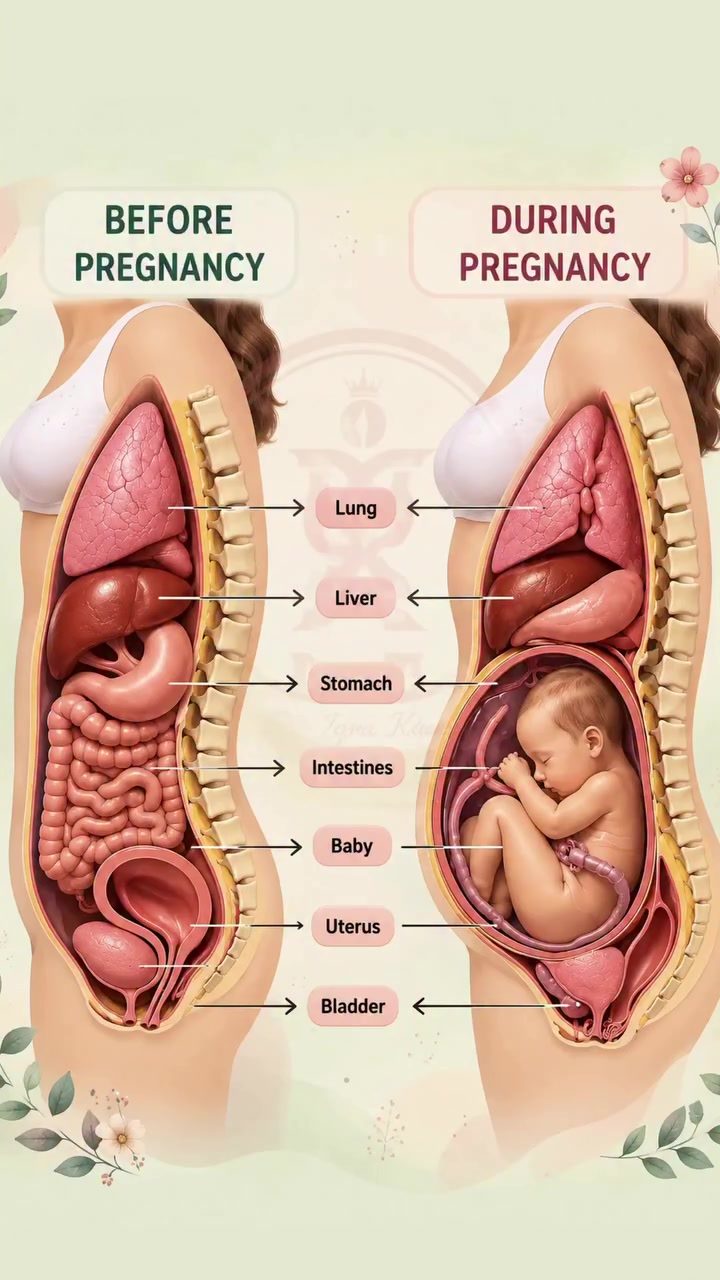
Pregnancy is a transformative journey, and one of the most significant changes a woman's body goes through is the rearrangement of internal organs to accommodate the growing fetus. Understanding this process can help expecting mothers recognize and manage the symptoms they experience.
Context / Why this matters
As the baby grows, the uterus expands significantly to create the necessary space and support. This expansion exerts pressure and shifts other organs, leading to various symptoms. Recognizing the reasons behind these changes can be comforting and empowering for pregnant individuals.
Main discussion
Organ Shifts During Pregnancy
Several key organs shift position to accommodate the growing uterus. Knowing which organs are affected and how they move can help make sense of the physical changes and discomfort experienced during pregnancy.
Lungs
The diaphragm, the muscle that controls breathing, is pushed upward by the expanding uterus. This upward movement causes the lungs to compress, which can lead to shortness of breath. Expecting mothers might feel this most acutely during the third trimester, especially during physical exertion.
Stomach
The stomach, which normally sits comfortably in the abdomen, is displaced upward as the uterus enlarges. This shift can cause heartburn or acid reflux, as stomach acid flows back up into the esophagus. Pregnant individuals can alleviate this discomfort by eating smaller, more frequent meals and avoiding trigger foods.
Liver
The liver, while slightly displaced, continues to function normally during pregnancy. Although it may move slightly, it remains in the upper abdomen and does not typically cause significant discomfort.
Intestines
The intestines move upward and outward to make room for the growing uterus. This shift can contribute to constipation and bloating, as the intestines have less space to function efficiently. Pregnant individuals may find that adopting a high-fiber diet and staying hydrated can help manage these symptoms.
Uterus
The uterus itself undergoes dramatic changes, growing from a small, pear-shaped organ to a large, rounded structure that occupies most of the pelvic and lower abdominal regions. This expansion is essential for the baby's development and protection but can cause discomfort and pressure.
Bladder
The bladder becomes compressed as the uterus enlarges, leading to frequent urination. This compression can also cause discomfort and a constant need to empty the bladder. Prenatal yoga and gentle pelvic exercises can help relieve some of the pressure on the bladder.
Practical tips
Managing Symptoms
Understanding how organs shift during pregnancy can provide clarity and comfort. Here are some practical tips for managing the related symptoms:
- Breathing Exercises: Practice deep-breathing exercises and prenatal yoga to help manage shortness of breath.
- Diet Adjustments: Eat smaller, more frequent meals and avoid trigger foods to alleviate heartburn and acid reflux.
- Stay Hydrated: Drink plenty of water to support digestive health and reduce constipation.
- Prenatal Yoga: Engage in gentle exercises and stretches to help alleviate discomfort and promote relaxation.
- Frequent Breaks: Take frequent breaks and rest periods to manage fatigue and discomfort.
- Maternity Clothing: Choose comfortable, supportive maternity clothing to accommodate the growing belly and reduce pressure on sensitive areas.
Communication with Healthcare Providers
Discuss any concerns or discomforts with a healthcare provider. Regular check-ups can help monitor the pregnancy and address any issues that arise. Keep a journal of symptoms and questions to discuss during appointments.
Important takeaways
- Pregnancy causes significant shifts in organ position to accommodate the growing uterus.
- Common symptoms, such as shortness of breath, heartburn, constipation, and frequent urination, are often due to these organ shifts.
- Adopting practical tips, such as deep breathing, dietary changes, hydration, and prenatal yoga, can help manage these symptoms.
- Regular communication with healthcare providers is essential for a healthy and comfortable pregnancy.
Conclusion
Pregnancy brings about remarkable changes in a woman's body, particularly in the positioning of internal organs. Recognizing and understanding these shifts can demystify many common pregnancy symptoms. By adopting practical tips and maintaining open communication with healthcare providers, pregnant individuals can navigate this transformative journey with greater comfort and confidence.
Watch the Reel
Questions readers ask
How does the uterus expansion affect other organs during pregnancy?
As the uterus expands to accommodate the growing fetus, it pushes upwards and can displace other organs. This process begins between 12 to 14 weeks, and can press on the bladder, intestines, and even the stomach, leading to various symptoms such as frequent urination, constipation, and heartburn.
What happens to the liver during pregnancy?
The liver, while not shifting in position, increases in size and function during pregnancy. Hormonal changes and the increased blood volume cause the liver to produce more clotting factors and metabolize nutrients more efficiently. Despite these changes, the liver typically returns to its normal size and function after pregnancy.
How do the intestines change during pregnancy?
As the uterus enlarges, it presses on the intestines, causing them to shift and sometimes become compressed. This can lead to symptoms like bloating, constipation, and gas. Additionally, hormonal changes during pregnancy can slow down food movement through the intestines, contributing to these symptoms.
Why do pregnant individuals experience frequent urination?
During pregnancy, the uterus expands and presses on the bladder, reducing its capacity to hold urine. This pressure, combined with the increased blood flow to the kidneys, leads to more urine production and the need to urinate more frequently.
How does the stomach change during pregnancy?
The growing uterus pushes the stomach up and towards the ribcage, reducing its available space. This change can lead to symptoms like heartburn, indigestion, and a feeling of fullness, as the stomach has less room to expand and digest food effectively.
Recent articles
Fresh deep dives from the latest Reels we unpacked.




Comments
Be the first to comment.