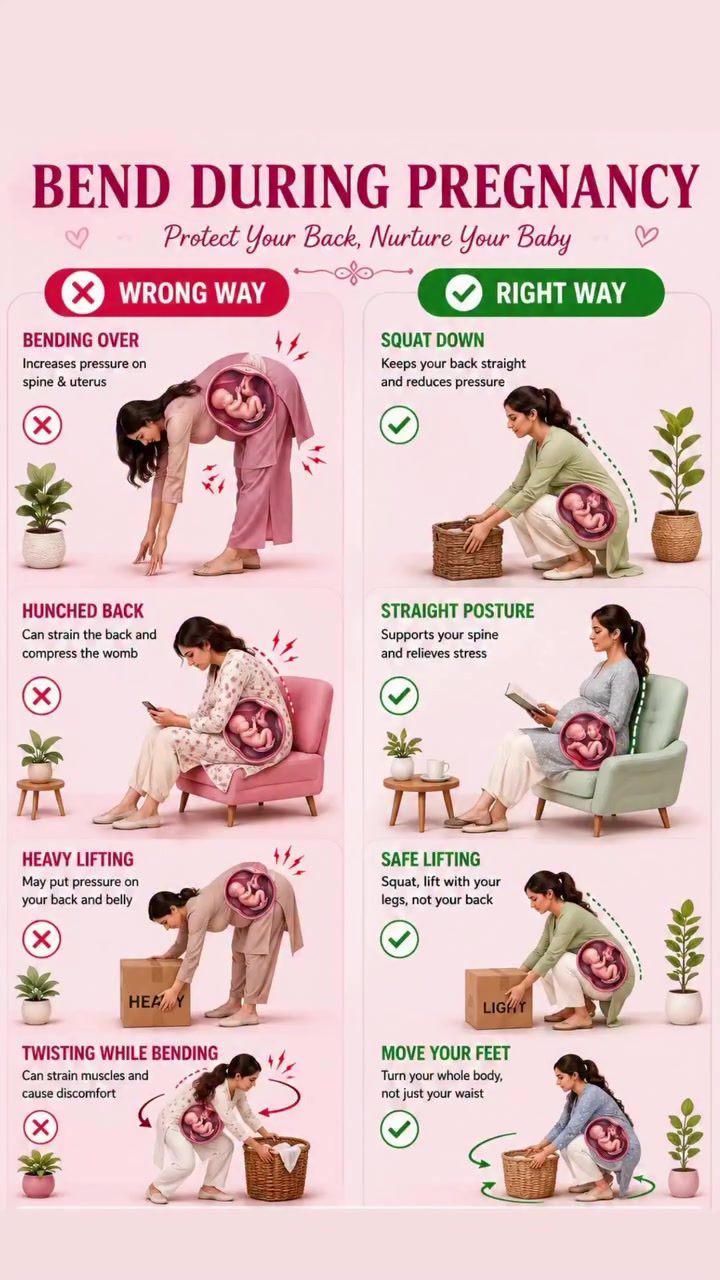
Safe Bending During Pregnancy
Pregnancy brings many changes to a woman's body, and one of the most crucial aspects to pay attention to is posture, especially when bending. Proper bending techniques can significantly reduce strain on the back and make daily activities more comfortable. Here, we'll explore the dos and don'ts of bending during pregnancy, focusing on safe techniques that support both maternal health and fetal well-being.
Why This Matters
Maintaining good posture and using correct bending techniques during pregnancy is essential for several reasons. Pregnancy places additional stress on the spine and joints, and improper movements can lead to back pain, discomfort, and even complications. By adhering to safe bending practices, expectant mothers can:
- Protect their spines and reduce the risk of back injuries.
- Minimize pressure on the uterus and womb.
- Make daily tasks more manageable and less strenuous.
- Improve overall comfort and mobility during pregnancy.
Main Discussion
Common Mistakes to Avoid
Bending Over
Bending over from the waist is a common mistake that can increase pressure on the spine and uterus. This posture can strain the lower back and potentially compress the womb, which is not ideal for fetal health. Instead of bending over, adopt a squatting position to engage your legs and keep your back straight.
Hunched Back
A hunched back can strain the back muscles and compress the womb. This posture is particularly harmful during pregnancy as it can lead to discomfort and potentially affect fetal development. Maintaining a straight posture supports the spine and relieves stress, making it easier to perform daily tasks.
Heavy Lifting
Heavy lifting can put excessive pressure on the back and belly, leading to discomfort and potential injuries. If you need to lift something, ensure it's within a safe weight range and use proper lifting techniques. Always lift with your legs, not your back, to distribute the weight evenly and reduce strain.
Twisting While Bending
Twisting the waist while bending can strain muscles and cause discomfort. This movement is particularly risky during pregnancy as it can lead to back injuries and affect the spine's alignment. To turn your body, move your feet instead of twisting your waist. This technique ensures that your entire body turns, reducing the risk of injury.
Safe Bending Techniques
Squatting Down
Squatting down is a safe alternative to bending over. This technique engages your legs and keeps your back straight, reducing pressure on the spine and uterus. To squat correctly, stand with your feet shoulder-width apart, bend your knees, and lower your body as if sitting in a chair. Keep your back straight and your chest up.
Moving Your Feet
Moving your feet to turn your whole body is a safe way to change direction without straining your spine. This technique ensures that your entire body turns, reducing the risk of back injuries. To move your feet, take small steps to the side or pivot on your heels, keeping your back straight and your shoulders aligned.
Straight Posture
Maintaining a straight posture supports your spine and relieves stress. Good posture helps distribute weight evenly and reduces pressure on the back and uterus. To maintain a straight posture, keep your shoulders back, your chest up, and your chin parallel to the ground. Avoid slouching or leaning forward, as these positions can strain the back and affect breathing.
Practical Tips
-
Listen to Your Body: Every pregnancy is different, and what works for one person might not work for another. Pay attention to your body's signals and adjust your movements accordingly. If you experience severe pain or discomfort, consult your healthcare provider immediately.
-
Take Frequent Breaks: Pregnancy can be physically demanding, so it's essential to take frequent breaks and rest when needed. Avoid overexerting yourself, and don't hesitate to ask for help when lifting heavy objects or performing strenuous tasks.
-
Stay Active: Regular exercise can help improve posture and strengthen the muscles that support the spine. Consult your healthcare provider about safe exercises during pregnancy and incorporate them into your daily routine.
-
Wear Supportive Shoes: Supportive shoes can help maintain proper posture and reduce the risk of back injuries. Opt for shoes with good arch support and a stable heel to keep your body aligned and balanced.
-
Use Assistive Devices: If you struggle with lifting or bending, consider using assistive devices such as a lifting belt, stool, or reaching tool. These devices can help you perform tasks safely and reduce the risk of injury.
-
Practice Safe Lifting: When lifting objects, always bend at the knees and keep your back straight. Hold the object close to your body and avoid twisting or turning while lifting. If the object is too heavy, ask for help or use a lifting device.
Important Takeaways
- Avoid bending over, as it increases pressure on the spine and uterus.
- Maintain a straight posture to support your spine and relieve stress.
- Use a squatting motion when lifting to engage your legs instead of your back.
- Move your feet to turn your whole body instead of twisting your waist.
- Every pregnancy is unique, so listen to your body and consult your healthcare provider if you experience severe pain or discomfort.
Conclusion
Safe bending techniques during pregnancy are crucial for protecting your back and ensuring a healthy pregnancy. By avoiding common mistakes and adopting safe practices, you can make daily activities more comfortable and reduce the risk of injuries. Always listen to your body and consult your healthcare provider if you have concerns about your posture or experience severe pain. With the right techniques and mindfulness, you can enjoy a comfortable and healthy pregnancy.
Watch the Reel
Questions readers ask
How can I safely bend down to pick up an object while pregnant?
To safely bend down, stand with your feet shoulder-width apart and keep the object close to your body. Bend at your knees and hips, not your waist, and avoid twisting your body. If the object is heavy, consider asking for assistance.
What are some techniques to support my back while lifting during pregnancy?
Use your legs, not your back, to lift objects. Stand close to the object, bend at your knees, and keep the object close to your body. If possible, use a lifting belt or ask someone to help you with heavier items. Maintain a straight back and avoid twisting or jerking motions.
How should I position myself to avoid putting pressure on my spine while bending?
To avoid putting pressure on your spine, keep your back straight and bend from your hips and knees. Keep the object you are bending to pick up close to your body, and avoid twisting. This technique helps to distribute the weight evenly and reduces strain on your lower back.
Are there any specific bending techniques I should avoid during pregnancy?
Yes. Avoid bending at the waist and twisting your body while lifting. Never lift heavy objects above your head or lift and twist at the same time. These movements can put unnecessary strain on your back and spine, leading to discomfort or injury.
What is the proper way to bend over to tie my shoes while pregnant?
To tie your shoes safely, sit down on a stable surface, like a chair or the edge of your bed. Prop one foot up on a low stool or ottoman, keeping your back straight as you lean forward slightly to reach your shoe.
Why is it important to keep objects close to my body when bending or lifting during pregnancy?
Keeping objects close to your body helps to maintain your center of gravity and reduces the amount of strain on your back. The closer the object is to your body, the less pressure it puts on your spine and the more stable you will be.
How can I use a squat lift technique to protect my back during pregnancy?
Stand with your feet shoulder-width apart and keep the object close to your body. Bend your knees and hips to lower yourself into a squatting position, keeping your back straight. This technique helps to distribute the weight evenly and reduces strain on your lower back.
Recent articles
Fresh deep dives from the latest Reels we unpacked.




Comments
Be the first to comment.