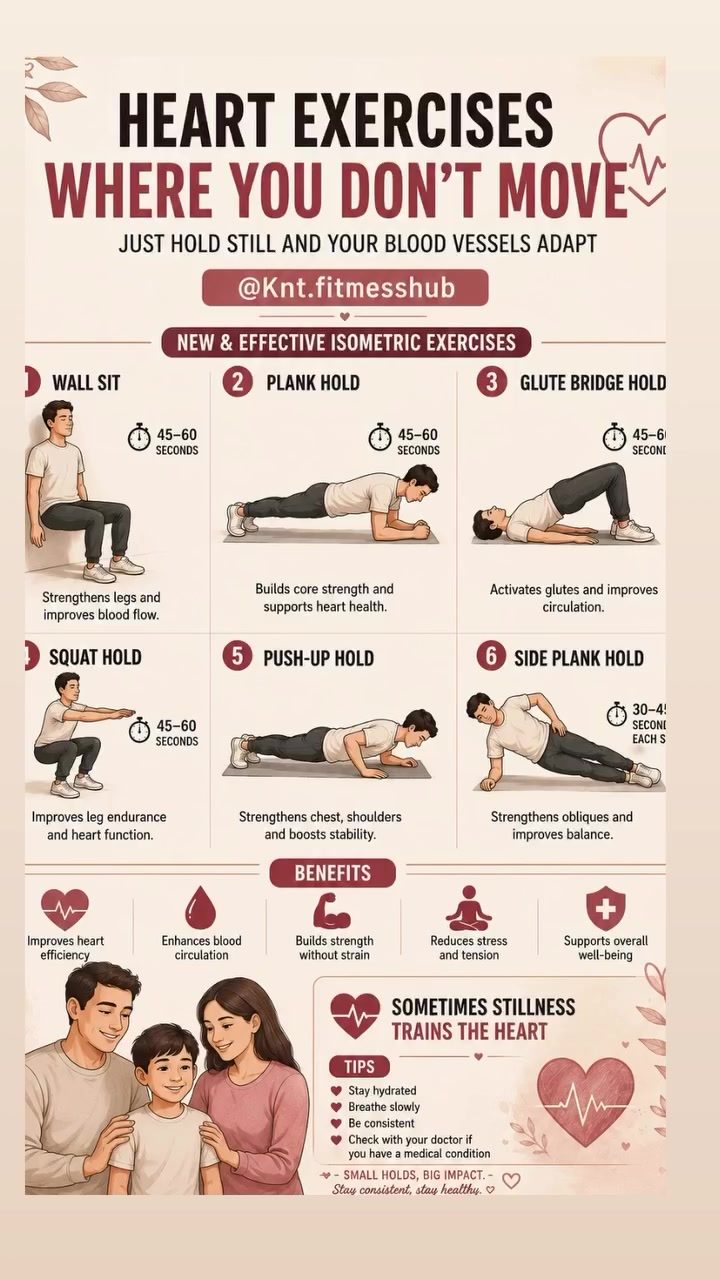
Heart Exercises — Effective Isometric Training for Better Heart Health
Heart health is crucial for overall well-being. Isometric exercises, which involve holding a static position, can significantly improve heart health and lower resting blood pressure. These exercises are backed by research as an effective way to enhance cardiovascular function without the need for expensive equipment or a gym membership.
Why This Matters
In today's fast-paced world, finding time for exercise can be challenging. Isometric exercises offer a practical solution. They can be done anywhere, anytime, and require no special equipment. These exercises not only improve heart health but also enhance blood circulation and reduce stress. Regular practice can lead to a noticeable improvement in overall well-being. This makes them an ideal choice for those looking to incorporate fitness into their daily routine without disrupting their schedule.
Understanding Isometric Exercises
Isometric exercises involve static positions where muscles are engaged without any movement. Unlike traditional exercises where muscles contract and lengthen, isometric exercises maintain a constant length while generating force. This type of training is particularly beneficial for improving muscle endurance and strength.
There are several key isometric exercises that are especially effective for heart health. Let's delve into the specifics.
Wall Sit
The wall sit is a simple yet effective exercise. Stand with your back against a wall and slide down until your thighs are parallel to the ground. Hold this position for 45-60 seconds. This exercise strengthens the legs and improves blood flow, contributing to better heart health.
Plank Hold
The plank hold is another essential isometric exercise. Lie face down with your forearms on the ground and your body in a straight line. Hold this position for 45-60 seconds. The plank hold builds core strength, which supports heart health by improving overall stability and balance.
Glute Bridge Hold
To perform a glute bridge hold, lie on your back with your knees bent and feet flat on the ground. Lift your hips until your body forms a straight line from shoulders to knees. Hold this position for 45-60 seconds. This exercise activates the glutes and improves circulation, benefiting heart health.
Squat Hold
The squat hold involves standing with feet shoulder-width apart and squatting down as if sitting in a chair. Hold this position for 45-60 seconds. This exercise improves leg endurance and heart function, making it a valuable addition to any heart-healthy routine.
Push-Up Hold
For the push-up hold, assume a push-up position but with your arms straight. Hold this position for 45-60 seconds. This exercise strengthens the chest, shoulders, and core, boosting stability and overall heart health.
Side Plank Hold
The side plank hold is performed by lying on your side with your forearm on the ground and your body in a straight line. Hold this position for 30-45 seconds. This exercise strengthens the obliques and improves balance, contributing to better heart function.
Benefits of Isometric Exercises
Isometric exercises offer a range of benefits that go beyond just physical strength. Some of the key advantages include:
- Improved Heart Efficiency: Regular isometric exercises can enhance the efficiency of the heart, allowing it to pump blood more effectively.
- Enhanced Blood Circulation: These exercises help improve blood flow, ensuring that oxygen and nutrients are delivered to all parts of the body.
- Builds Strength Without Strain: Isometric exercises build muscle strength without the strain associated with traditional weightlifting.
- Reduces Stress and Tension: By focusing on breathing and holding positions, these exercises can help reduce stress and tension, promoting overall well-being.
- Supports Overall Well-being: The combination of physical and mental benefits makes isometric exercises a holistic approach to fitness.
Practical Tips for Effective Isometric Training
To get the most out of your isometric exercises, follow these practical tips:
- Stay Hydrated: Drink plenty of water before, during, and after your workout to support your body's needs.
- Breathe Slowly: Maintain a steady breathing pattern throughout each hold. Avoid holding your breath, as this can increase blood pressure.
- Be Consistent: Aim to perform these exercises regularly to see noticeable improvements in your heart health.
- Check with Your Doctor: If you have any medical conditions, especially heart conditions or high blood pressure, consult your doctor before starting any new exercise routine.
Important Takeaways
Isometric exercises are a powerful tool for improving heart health. They are convenient, require no equipment, and can be done anywhere. The key exercises—wall sit, plank hold, glute bridge hold, squat hold, push-up hold, and side plank hold—each offer unique benefits for heart health. By incorporating these exercises into your routine and following practical tips, you can enhance your overall well-being and reduce the risk of heart-related issues.
Conclusion
Heart health is a critical component of overall fitness. Isometric exercises provide a simple, effective way to improve heart function, enhance blood circulation, and reduce stress. By incorporating exercises like the wall sit, plank hold, glute bridge hold, squat hold, push-up hold, and side plank hold into your routine, you can achieve better heart health and overall well-being. Stay consistent, stay healthy, and reap the benefits of these powerful exercises.
Watch the Reel
Questions readers ask
What are isometric exercises and how do they benefit heart health?
Isometric exercises are movements that involve holding a static position to strengthen and tone muscles. They enhance heart health by improving cardiovascular function, lowering resting blood pressure, and boosting overall circulation. Regular practice can lead to significant improvements in heart health.
Can isometric exercises be done anywhere, and what equipment is needed?
One of the key advantages of isometric exercises is their convenience. They can be performed virtually anywhere, at any time, with no special equipment required. This makes them an ideal option for those with busy schedules or limited access to fitness facilities.
How do isometric exercises help in reducing stress?
Isometric exercises promote relaxation and stress relief by encouraging deep, controlled breathing and releasing physical tension. The focus on static positions allows the mind to calm, making these exercises an effective tool for managing stress levels.
What are some examples of effective isometric exercises for heart health?
Examples of isometric exercises beneficial for heart health include planks, wall holds, and glute bridges. These exercises target various muscle groups and help improve overall cardiovascular function. Incorporating these into a regular routine can yield notable improvements in heart health.
How often should isometric exercises be performed to see improvements in heart health?
To experience the benefits of isometric exercises, aim for at least 2-3 sessions per week. Each session should include a variety of exercises targeting different muscle groups, with holds typically lasting between 10-30 seconds and gradually increasing as fitness levels improve.
Are there specific isometric exercises for improving blood circulation?
Isometric exercises that involve holding positions that engage large muscle groups, such as wall holds and planks, are particularly effective for improving circulation. By activating these muscles, blood flow is enhanced, leading to better overall circulation and cardiovascular health.
Can isometric exercises replace traditional cardio workouts for maintaining heart health?
While isometric exercises offer numerous benefits for heart health, they should be combined with traditional cardio workouts for a well-rounded fitness routine. Isometric exercises improve muscle strength and blood pressure, while cardio workouts enhance cardiovascular endurance and overall fitness.
Related deep dives
Similar reads based on topic and creator.


Recent articles
Fresh deep dives from the latest Reels we unpacked.




Comments
Be the first to comment.