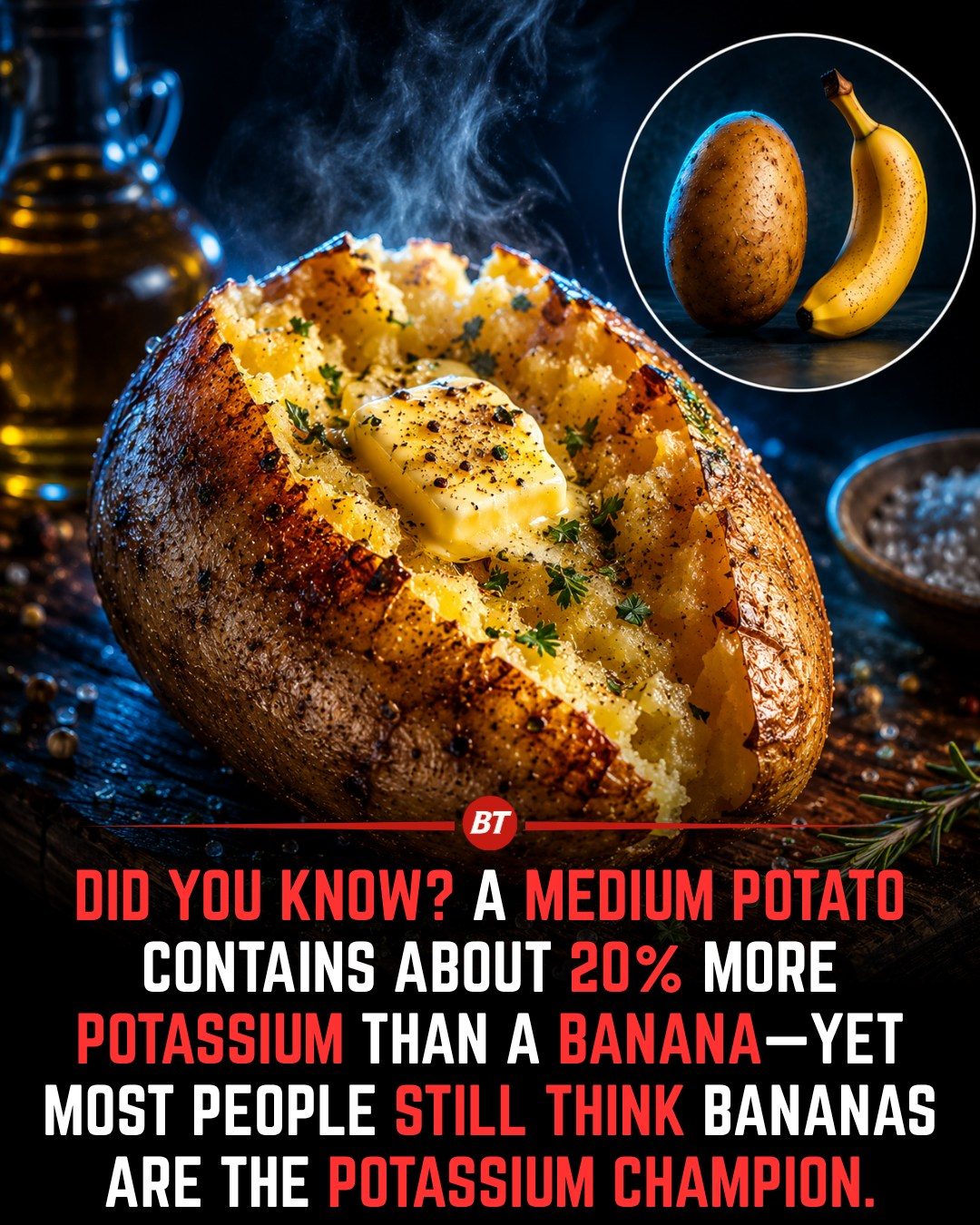
Potato vs. Banana: The Surprising Truth About Potassium
The humble potato often sits on the side of the plate, overlooked for flashier, more fattening alternatives. But when it comes to potassium, bananas — known for their high potassium content — have a surprising challenger: the ordinary potato. A medium baked potato with the skin on provides about 900–950 mg of potassium, while a medium banana contains roughly 420–450 mg. That's nearly twice as much potassium in the potato.
Why this matters
Potassium is an essential mineral that plays a crucial role in various bodily functions. It helps regulate blood pressure, support muscle contractions, maintain normal nerve function, and keep your heart beating properly. Additionally, potassium works alongside sodium to maintain a healthy fluid balance, making it one of the most important nutrients for cardiovascular health. Research published in the American Journal of Clinical Nutrition and recommendations from the American Heart Association have consistently linked higher dietary potassium intake with healthier blood pressure and a lower risk of stroke, particularly when it comes from whole foods like fruits and vegetables.
Understanding Potassium
What is Potassium?
Potassium is an electrolyte, a kind of mineral that has a small electric charge. This charge allows it to perform essential tasks, such as helping muscles contract and nerve cells to respond. It also plays a key role in maintaining a healthy heartbeat and supporting a balanced fluid level in the body. It is found in various foods, including vegetables, fruits, and legumes.
How Much Potassium Do You Need?
The adequate intake (AI) of potassium for adults aged 19 and above is 4,700 mg per day. This amount is based on the known beneficial effects of potassium on blood pressure and bone health.
People with certain health conditions, such as kidney or cardiovascular disease, may need to adjust their potassium intake. If you have such a condition or are on specific medications, consult a healthcare provider for personalized guidance.
The Potato Advantage
Potassium Content in Potatoes
A baked potato with its skin on provides about 900-950 mg of potassium. It also offers a range of other nutrients, including vitamin C, vitamin B6, and fiber. The skin of the potato is particularly nutrient-dense, so it's a good idea to eat it when you can.
Potassium Content in Bananas
A medium banana contains approximately 420-450 mg of potassium. While bananas are a good source of this mineral, they are not the only fruit that provides it.
The Role of Potassium in Health
Cardiovascular Health
Potassium is crucial for cardiovascular health. It helps to regulate blood pressure by counteracting the effects of sodium. This balance is vital for maintaining a healthy heart and reducing the risk of stroke and other cardiovascular diseases.
Muscle and Nerve Function
Potassium is essential for muscle and nerve function. It helps to transmit nerve signals and supports muscle contractions, including those in the heart. Without adequate potassium, muscles may cramp, twitch, or even become weak.
Bone Health
Potassium plays a role in maintaining bone health. It helps to regulate the acid-base balance in the body, which can affect bone density. Adequate potassium intake may help to reduce the risk of osteoporosis and bone fractures.
Fluid Balance
Potassium works alongside sodium to maintain a healthy fluid balance in the body. This balance is essential for various bodily functions, including digestion, nutrient absorption, and waste excretion.
Debunking Potato Myths
Potatoes often get an unfair reputation, but the potato itself isn't the problem. It's usually how it's prepared—deep-fried, smothered in butter, or loaded with salty toppings—that turns it into a less healthy choice. A baked or steamed potato, on the other hand, is naturally rich in potassium, vitamin C, vitamin B6, fiber (when eaten with the skin), and complex carbohydrates that provide long-lasting energy.
Practical Tips
To maximize the health benefits of potatoes, consider the following tips:
Preparation Methods
Opt for healthier cooking methods like baking, steaming, or boiling. These methods help preserve the nutrient content of the potato while minimizing the addition of unhealthy fats and salts.
Toppings
Instead of loading your potato with butter, cheese, or sour cream, consider healthier toppings. Greek yogurt, herbs, black pepper, or cottage cheese are all excellent options that add flavor and nutrition without the extra calories and sodium.
Portion Control
Like any food, potatoes should be enjoyed in moderation. Aim for a balanced meal that includes a variety of nutrient-dense foods.
Important takeaways
A baked potato with the skin on is an excellent source of potassium. It provides nearly twice as much potassium as a banana, making it a surprising contender in the potassium game.
Potassium plays a crucial role in various bodily functions, from regulating blood pressure to supporting muscle and nerve function.
To maximize the health benefits of potatoes, opt for healthier cooking methods and toppings.
Conclusion
The next time you're looking for a potassium boost, consider reaching for a baked potato instead of a banana. With nearly twice the potassium content and a host of other nutrients, potatoes are a versatile and nutritious choice. Just remember to prepare them in a healthy way and enjoy them as part of a balanced diet.
So, the next time you see a baked potato, think of it not just as a side dish, but as a powerful source of potassium and other essential nutrients.
Watch the Reel
Questions readers ask
How much potassium is in a typical baked potato with the skin on?
A medium baked potato with the skin on contains approximately 900–950 mg of potassium. This is almost double the amount found in a medium banana, making it an excellent source of this essential mineral.
Why is potassium important for maintaining health?
Potassium is vital for many bodily functions, including regulating blood pressure, supporting muscle contractions, maintaining normal nerve function, and keeping your heart beating properly. It also works with sodium to maintain a healthy fluid balance.
How does the potassium in potatoes compare to other high-potassium foods?
Potatoes are one of the highest sources of potassium in the food world, comparable to foods like spinach, avocado, and sweet potatoes. They offer a unique combination of high potassium content and versatility in meals.
What are the benefits of eating baked potatoes with the skin on?
Baked potatoes with the skin on offer more potassium and fiber than those without. The skin contains a significant amount of the potato’s nutritional value, including B vitamins, iron, and potassium, enhancing the health benefits of the baked potato.
Can eating potatoes help improve blood pressure?
Yes, consuming foods rich in potassium, like potatoes, can help regulate blood pressure. Potassium works to counteract the effects of sodium, which can raise blood pressure when consumed in excess, making potatoes a beneficial addition to a heart-healthy diet.
What are the best ways to prepare potatoes to maximize their potassium content?
Baking, boiling, or steaming potatoes with the skin on is the best way to maximize their potassium content. These cooking methods help retain the nutrients, including potassium, found in the skin. Avoid deep-frying or peeling the potatoes to preserve their nutritional benefits.
Related deep dives
Similar reads based on topic and creator.




Recent articles
Fresh deep dives from the latest Reels we unpacked.




Comments
Be the first to comment.