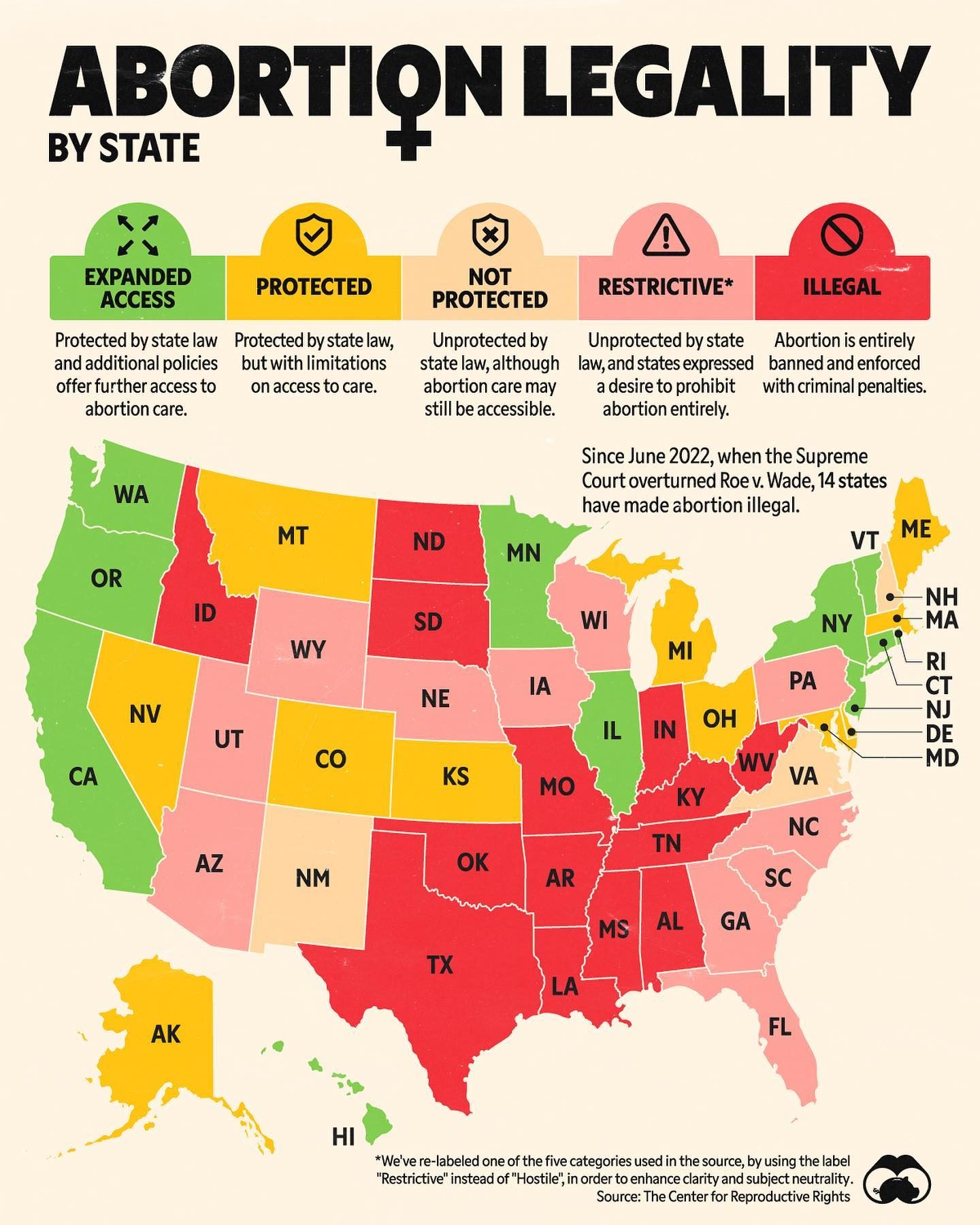
Abortion Legality by State
As of June 2022, abortion laws in the United States have undergone significant shifts, particularly following the U.S. Supreme Court’s decision to overturn Roe v. Wade. This landmark ruling allowed individual states to establish their own abortion laws, resulting in a varied legal landscape across the country.
Why This Matters
The changes in abortion legality post-Roe v. Wade have profound implications for healthcare access and reproductive rights. Understanding the current legal status in each state is crucial for individuals seeking abortion services, healthcare providers, and policymakers. The Center for Reproductive Rights provides detailed data on how each state has adapted its laws, offering a comprehensive view of the nation's abortion legality landscape.
Main Discussion
The Current Legal Landscape
Expanded Access vs. Illegal
Since the overturning of Roe v. Wade, 14 states, including Texas, Missouri, and many in the South, have implemented bans on abortion. This means that in these states, access to abortion services is either highly restricted or completely illegal. Conversely, states like Washington, Oregon, and California have taken steps to expand access to abortion care, ensuring that residents have broader reproductive rights.
State-by-State Breakdown
The current legal status of abortion in each state can be categorized into four main groups:
-
Expanded Access: States in this category, such as Washington, Oregon, and California, have laws that not only protect abortion rights but also enhance access to healthcare services. These states often have additional policies aimed at ensuring that individuals can access abortion care without significant barriers.
-
Protected: States like Minnesota, Wyoming, and Colorado fall into this category. These states have laws that protect abortion rights, but there may be some limitations on access to care.
-
Not Restrictive: This category includes states like Oklahoma, Texas, and many in the South. In these states, abortion is not entirely banned, but there are significant restrictions that limit access to care. The Center for Reproductive Rights categorises these states under "Protected but with limitations on access to care."
-
Illegal: States in this category, such as Mississippi, Louisiana, and South Carolina, have outlawed abortion entirely. These bans are often enforced with criminal penalties, making it extremely difficult for individuals to access abortion services.
Key Differences in State Laws
While some states have taken proactive measures to safeguard or enhance abortion access, others have implemented stringent restrictions or outright bans. For instance, states with expanded access have laws that go beyond merely protecting abortion rights; they also include policies that facilitate access, such as funding for abortion services and protections for healthcare providers.
On the other hand, states with restrictive or illegal abortion laws often impose severe penalties on both providers and individuals seeking abortions. These laws can include jail time, fines, and other criminal charges, creating a climate of fear and uncertainty for those involved.
Practical Tips
Navigating Abortion Laws
If you're seeking information about abortion laws in your state, it's essential to stay informed about the specific regulations in place. Here are some practical tips:
Know Your State's Laws
Understanding the legal status of abortion in your state is the first step. Visit reliable sources like the Center for Reproductive Rights or your state's health department for the most accurate and up-to-date information.
Access Resources
If you're in a state with restricted or illegal abortion laws, consider reaching out to organizations that provide support and resources. These groups can offer guidance on how to access safe and legal abortion services, even if they are not available in your state.
Stay Updated
Abortion laws are subject to change, so it's crucial to stay informed about any updates or new legislation. Follow trusted news sources and advocacy groups to keep tabs on the latest developments in your state.
Important Takeaways
The Impact of Roe v. Wade’s Overturn
The overturning of Roe v. Wade has had a profound impact on the legal landscape of abortion in the United States. It has led to a patchwork of laws across the country, with some states expanding access to abortion care while others impose severe restrictions or outright bans.
The Role of Advocacy
Advocacy groups and organizations play a crucial role in providing support and resources to individuals seeking abortion services. They also work to ensure that abortion remains a legal and accessible option for those who need it.
The Need for Accurate Information
With the varying legal status of abortion across the country, it's essential to have accurate and reliable information. This includes understanding your state's laws, knowing your rights, and staying informed about any changes in legislation.
Conclusion
The legal landscape of abortion in the United States has undergone significant changes since the overturning of Roe v. Wade. With 14 states implementing bans and others expanding access, the current situation is complex and varied. Staying informed about your state's laws, accessing reliable resources, and understanding your rights are crucial steps in navigating this evolving landscape.
Watch the Reel
Questions readers ask
What is the current status of abortion laws by state in the U.S.?
As of the latest updates, abortion laws by state vary significantly. Some states have implemented bans, while others have expanded access to abortion services. It's important to check the most recent data, as laws can change rapidly.
How has the post-Roe abortion legality landscape changed?
Following the U.S. Supreme Court's decision to overturn Roe v. Wade, individual states now hold the authority to determine their own abortion laws. This has resulted in a diverse range of policies across the country, with some states enforcing strict bans and others maintaining or expanding access.
Which states have implemented the most restrictive abortion laws?
Several states have implemented restrictive abortion laws, including Texas, which has some of the most stringent abortion bans in the country. Other states with notable restrictions include Oklahoma, Mississippi, and South Dakota, which have enacted various bans and restrictions.
What resources are available to understand state abortion laws and reproductive rights?
The Center for Reproductive Rights provides detailed data on how each state has adapted its laws post-Roe. This resource offers a comprehensive view of the nation's abortion legality map, helping individuals and healthcare providers stay informed.
How can I find out about abortion access by state?
To find out about abortion access by state, you can refer to resources like the Center for Reproductive Rights, which provides updated information on abortion laws and services available in each state. Additionally, many local and national organizations offer guides and support for individuals seeking abortion services.
What are the key implications of the changes in abortion legality?
The changes in abortion legality post-Roe v. Wade have significant implications for healthcare access and reproductive rights. These shifts affect individuals seeking abortion services, healthcare providers navigating new legal landscapes, and policymakers crafting state-specific regulations.
How can I stay updated on the latest changes in state abortion policies?
To stay updated on the latest changes in state abortion policies, follow reputable sources such as the Center for Reproductive Rights and other organizations that track state-by-state abortion laws. Regularly checking these resources will help you stay informed about the evolving legal landscape.
Recent articles
Fresh deep dives from the latest Reels we unpacked.




Comments
Be the first to comment.