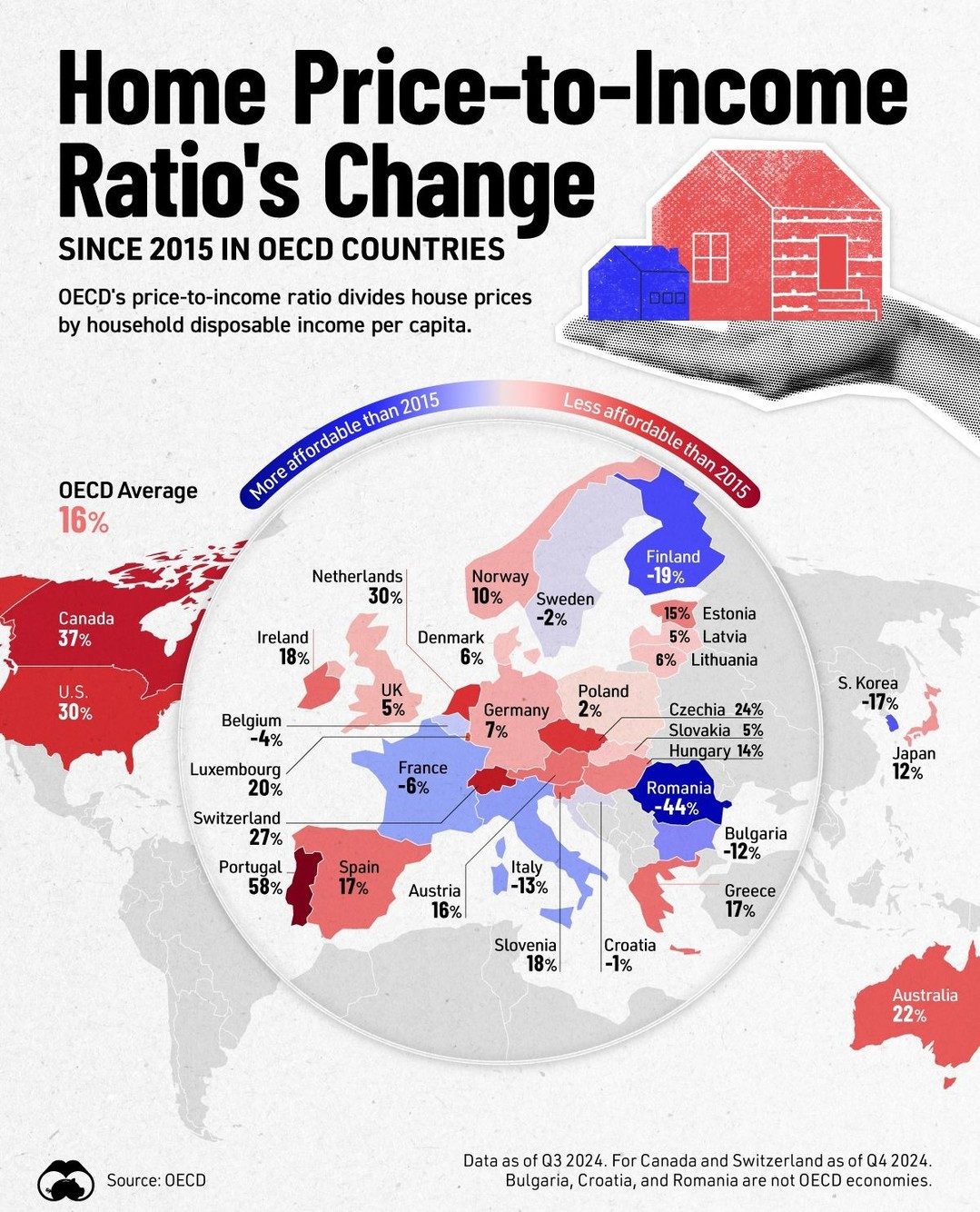
Housing Affordability Trends
Portugal, Canada, and the U.S. have seen significant increases in home price-to-income ratios, making housing less affordable for many residents. This trend is particularly alarming when compared to other OECD countries, where the changes have been less dramatic. To understand the extent of this issue, it's essential to look at the data and the factors driving these changes.
Context / Why This Matters
Home affordability is a critical issue that affects individuals, families, and communities. When home prices outpace income growth, it becomes challenging for people to buy homes, leading to a range of social and economic issues. Understanding the factors that contribute to these trends can help policymakers, real estate professionals, and individuals make more informed decisions.
Main Discussion
The Role of Demand and Supply
One of the primary drivers of the increase in home price-to-income ratios is the imbalance between supply and demand. In Portugal, Canada, and the U.S., there has been a strong demand for housing, fueled by population growth, urbanization, and investment speculation. However, the supply of new housing units has not kept pace with this demand, leading to a shortage of available homes.
Investment speculation has also played a significant role in driving up home prices. Investors, both domestic and foreign, have been buying properties with the expectation of future price appreciation rather than for personal use. This speculation can inflate prices, making it even more difficult for first-time buyers and low-to-middle-income families to enter the market.
The Impact of Economic Conditions
Economic conditions, such as low-interest rates and stable employment, have also contributed to the surge in home prices. Low-interest rates make borrowing cheaper, encouraging more people to buy homes. This increased demand, coupled with limited supply, drives up prices. Additionally, stable employment and wage growth can make it easier for buyers to afford higher home prices, further fueling demand.
Geographical Variations
While Portugal, Canada, and the U.S. have seen the sharpest rises in home price-to-income ratios, other countries have experienced different trends. For example, South Korea has seen a notable decrease in housing affordability, indicating that the factors driving these trends can vary widely by region. Understanding these geographical variations is crucial for developing targeted solutions.
Practical Tips
For Homebuyers
-
Save for a Down Payment: With home prices rising, having a substantial down payment can help you compete in a competitive market. Aim to save at least 20% of the home's value to avoid private mortgage insurance (PMI) and to have a stronger negotiating position.
-
Consider Alternative Markets: If you're having trouble affording a home in a high-demand area, consider looking at less competitive markets. Smaller towns or cities often have lower home prices and may offer a similar quality of life.
-
Get Pre-Approved for a Mortgage: Getting pre-approved for a mortgage can give you a better idea of your budget and make your offer more attractive to sellers. It also helps you avoid disappointment by setting realistic expectations.
For Policymakers
-
Increase Housing Supply: Policymakers can address supply shortages by implementing policies that encourage the construction of new housing units. This could include zoning changes, tax incentives, or direct investment in affordable housing projects.
-
Regulate Investment Speculation: Measures to curb investment speculation, such as higher taxes on second homes or stricter rules for foreign buyers, can help reduce price inflation and make homes more affordable for local buyers.
-
Promote Affordable Housing Initiatives: Programs that provide subsidies, tax breaks, or other forms of financial assistance to first-time buyers, low-income families, or affordably priced housing initiatives can make a significant difference.
Important Takeaways
-
Home Price-to-Income Ratios: The rising home price-to-income ratios in Portugal, Canada, and the U.S. highlight a growing affordability crisis. This trend is driven by strong housing demand, limited supply, and investment speculation.
-
Geographical Variations: The factors driving these trends can vary widely by region, so it's important to consider local conditions when developing solutions.
-
Economic and Policy Factors: Low-interest rates, stable employment, and economic conditions have contributed to the surge in home prices. Policies that address supply shortages and curb speculation can help make housing more affordable.
Conclusion
The rising home price-to-income ratios in Portugal, Canada, and the U.S. are a clear indicator of a growing affordability crisis. Addressing this issue requires a multi-faceted approach that considers supply, demand, and economic conditions. By understanding the factors driving these trends and implementing targeted solutions, we can work towards a more equitable and sustainable housing market.
Watch the Reel
Questions readers ask
Which countries have experienced the most significant increases in home price-to-income ratios recently?
Portugal, Canada, and the U.S. have seen the sharpest rises in home price-to-income ratios, outpacing many other OECD countries. This trend has made housing less affordable for residents in these nations.
What are the primary drivers behind the increase in home price-to-income ratios in these countries?
The main factors contributing to this trend include supply shortages, high demand, investment speculation, and favorable economic conditions, which have collectively driven up home prices relative to income levels.
How does the housing affordability situation in Portugal, Canada, and the U.S. compare to other OECD countries?
The increase in home price-to-income ratios in Portugal, Canada, and the U.S. is more pronounced than in many other OECD countries, indicating a more severe affordability crisis in these nations.
Why is the home price-to-income ratio an important indicator of housing affordability?
The home price-to-income ratio is a crucial measure because it compares the cost of housing to the income of potential buyers. A high ratio indicates that homes are less affordable, making it difficult for individuals and families to purchase a home.
What impact does investment speculation have on the housing market in these countries?
Investment speculation can drive up home prices as investors compete for properties, further straining affordability for local residents. High demand from investors can outpace the supply of available homes, exacerbating the issue.
How do supply shortages and high demand contribute to the rise in home price-to-income ratios?
Supply shortages limit the availability of homes, while high demand increases competition among buyers. This imbalance drives up prices, making it more difficult for those in the housing market to find and afford a home.
What are some potential consequences of rising home price-to-income ratios for individuals and communities?
Rising home price-to-income ratios can lead to a range of social and economic issues, including increased housing insecurity, delayed homeownership, and strain on local economies. It can also result in gentrification and displacement of long-time residents.
Recent articles
Fresh deep dives from the latest Reels we unpacked.




Comments
Be the first to comment.