Understanding the U.S. Population: A State-by-State Comparison
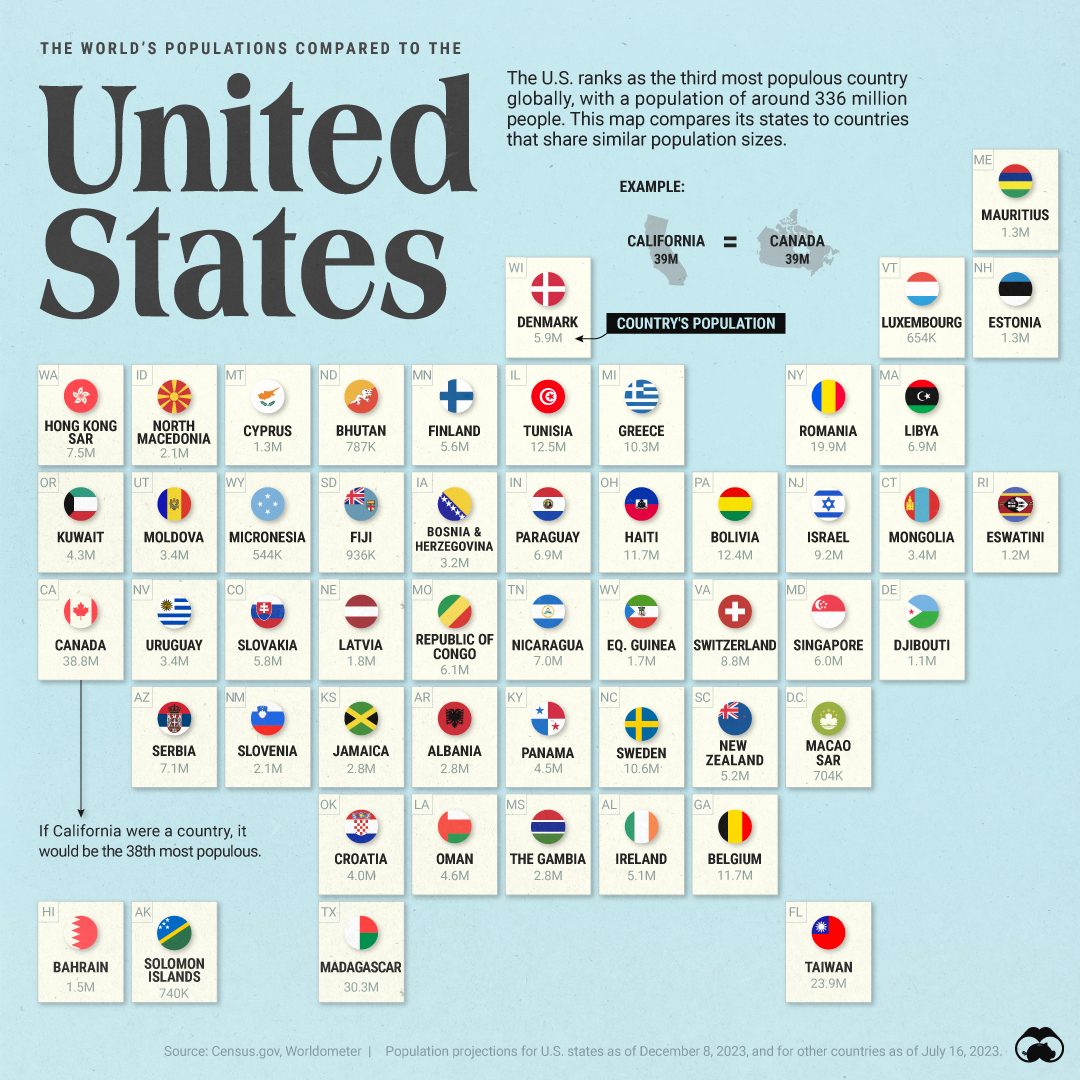
The United States stands as the third-most populous country globally, with approximately 336 million residents. To grasp the distribution of this massive population, it's helpful to compare individual states and the District of Columbia to countries with similar population sizes. This comparison provides a unique perspective on the demographic landscape of the U.S.
Context: Why This Matters
Understanding the population distribution across the U.S. is crucial for various reasons. It aids in resource allocation, urban planning, and policy-making. By examining which states have populations comparable to entire countries, we can better appreciate the demographic diversity and density across the nation.
Main Discussion: Population Comparisons
California: The Most Populous State
California, often referred to as the Golden State, is the most populous state in the U.S. With a population of around 39 million, it ranks as the most populous state in the nation. This figure is comparable to that of Poland, making California a significant demographic entity within the global context. The state's diverse economy and mild climate continue to attract a significant number of residents from across the country and around the world.
Texas: The Lone Star State's Significance
Texas, known as the Lone Star State, is the second-most populous state in the U.S., with approximately 29 million residents. This population is similar to that of countries like Australia and the Philippines. Texas's large size and diverse economic landscape, including thriving industries like technology, energy, and agriculture, contribute to its substantial population growth.
Florida: The Sunshine State's Impact
Florida, the Sunshine State, is the third-most populous state in the U.S., with a population of about 21 million. This figure is comparable to that of countries such as Sri Lanka and Austria. Florida's popularity as a retirement destination, coupled with its vibrant tourism and entertainment industries, continues to drive its population growth.
Interactive Map: State-to-Country Comparison
To provide a clearer picture of the population distribution, let's explore a map that compares the population of each U.S. state to a country with a similar population size. This visual comparison is particularly illuminating. For example, New York, with a population of about 20 million, is comparable to Romania. Illinois, with 13 million residents, is similar in population to the Netherlands. Such comparisons help illustrate the diverse population densities and distributions across the U.S.
Visual Examples
- California (39 million) ≈ Poland (38 million)
- Texas (29 million) ≈ Philippines (111 million)
- Florida (21 million) ≈ Sri Lanka (21 million)
- New York (20 million) ≈ Romania (19 million)
- Illinois (13 million) ≈ Netherlands (17 million)
These comparisons offer a unique perspective on the U.S. population, highlighting the diverse demographic landscapes within individual states and their global relevance.
Other Notable Comparisons
Other states with significant populations include Pennsylvania, with around 13 million residents, which is comparable to Greece. Ohio, with approximately 11.7 million people, is similar in population to Belgium. Michigan, with 10.3 million residents, is comparable to Portugal. These comparisons underscore the varied population densities and distributions across the U.S.
Practical Tips for Understanding Population Data
When analyzing population data, it's important to consider several key factors:
1. Population Density
Population density refers to the number of people living in a specific area. This metric is crucial for understanding the distribution and concentration of people, which can significantly impact urban planning and resource allocation.
2. Economic Factors
Economic opportunities, such as job availability and industry growth, play a significant role in population migration and distribution. States with thriving economies often attract more residents, contributing to their population growth.
3. Climate and Environmental Factors
Climate and environmental conditions also influence population distribution. States with mild climates and natural attractions often have higher population densities, as people are drawn to these desirable living conditions.
4. Urban vs. Rural Areas
The distinction between urban and rural areas is crucial in population analysis. Urban areas typically have higher population densities due to job opportunities, infrastructure, and amenities, whereas rural areas may have lower densities but are essential for agriculture and resource extraction.
5. Migration Patterns
Understanding migration patterns, including both domestic and international migration, helps in predicting future population trends. Migration is driven by various factors, including economic opportunities, family reunification, and educational pursuits.
Important Takeaways
- Demographic Diversity: The U.S. population is diverse, with significant variations in population sizes and densities across different states.
- Economic Influence: Economic opportunities and industry growth are key drivers of population distribution and migration.
- Global Relevance: Comparing U.S. states to other countries provides a global perspective on population sizes and distributions, highlighting the U.S.'s overall demographic significance.
- Population Data: Understanding population data, including density, economic factors, and migration patterns, is crucial for effective resource allocation, urban planning, and policy-making.
Conclusion
Analyzing the U.S. population through state-to-country comparisons offers a unique perspective on the demographic landscape of the nation. By understanding the distribution and diversity of populations across different states, we can better appreciate the complexities and significance of the U.S. population. This knowledge is invaluable for policymakers, urban planners, and anyone interested in the dynamics of population growth and distribution.
Watch the Reel
Questions readers ask
Which U.S. state has the largest population and how does it compare to other countries?
California is the most populous state in the U.S., with over 39 million residents. This population is larger than that of Moldova, which has a population of 2.78 million.
How does the population of Texas compare to smaller countries?
Texas, the second most populous state, has a population of over 29 million. This is significantly larger than the population of Fiji, which has around 930,000 people.
What are the top 3 most populous states in the U.S.?
The top three most populous states are California, Texas, and Florida, with approximate populations of 39 million, 29 million, and 22 million, respectively. These states each have populations that rival many countries around the world.
Where can I find a visual representation of U.S. state populations?
To visualize the population distribution across the U.S. consult a U.S. state population map. These maps offer a clear, graphical comparison that can help you understand the demographic landscape of the country.
What insights can we gain from comparing U.S. state populations to global populations?
Comparing U.S. state populations to global populations helps to highlight the diversity and density of the American population. This kind of comparison can inspire discussions about how these different areas might be managed and planned, as well as help to inform readers about the scale of population density in the U.S.
How does the total population of the U.S. rank globally?
The United States is the third most populous country in the world, with approximately 336 million residents. This ranking underscores the significance of understanding the distribution of its population across different states.
Related deep dives
Similar reads based on topic and creator.


Recent articles
Fresh deep dives from the latest Reels we unpacked.




Comments
Be the first to comment.