Political Polarization in 2023: Key Facts and Insights
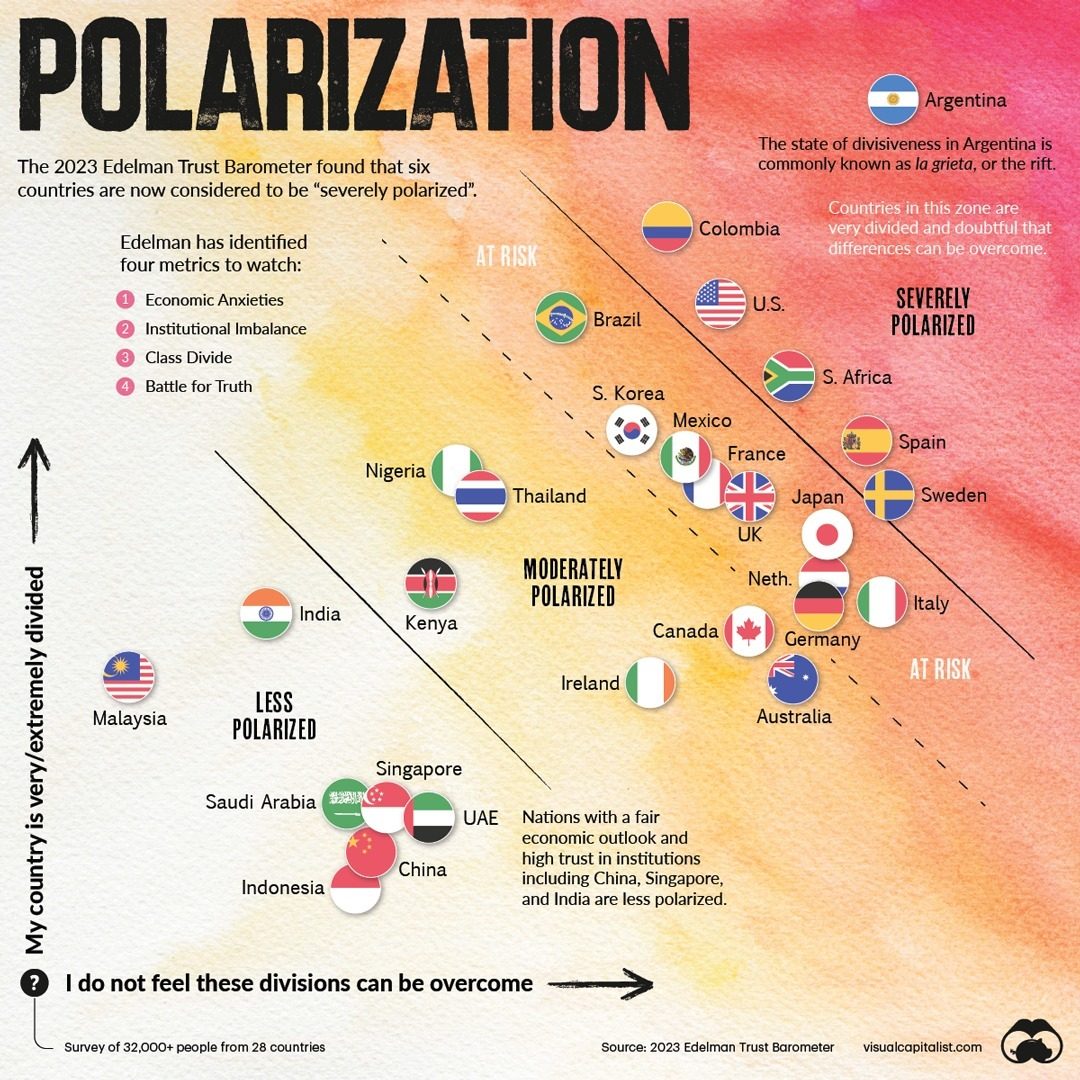
Political polarization has been a prominent topic in global discussions for nearly a decade, but it remains a complex phenomenon to quantify. Within the social sciences, it spans various dimensions, including racial segregation, labor skill levels, class divisions, and political ideologies. Most importantly, the 2023 Edelman Trust Barometer provided a comprehensive report with specific metrics to understand this issue.
Context / Why This Matters
Polarization is a multifaceted issue that affects societies worldwide. According to the Edelman Trust Barometer, it manifests in various ways, including economic anxieties, institutional imbalance, class division, and battles over truth. Understanding these dimensions offers a clearer picture of the societal challenges we face and points toward potential solutions.
Main Discussion
The Four Key Metrics of Political Polarization
The 2023 Edelman Trust Barometer identifies four key metrics that significantly contribute to political polarization. These metrics provide a structured way to analyze and address the issue.
Economic Anxieties
Economic anxieties refer to concerns about financial stability, job security, and overall economic wellbeing. These anxieties can lead to social unrest and political divisions, as individuals and communities grapple with economic uncertainties and inequities. The Edelman report highlights that nations with fair economic outlooks and high trust in institutions, such as China, Singapore, and India, experience less polarization. This underscores the importance of stable economic conditions in mitigating polarization.
Institutional Imbalance
Institutional imbalance occurs when there is a lack of trust in governing bodies, legal systems, and other key institutions. This imbalance can drive polarization by creating a sense of injustice and mistrust among citizens. When institutions are perceived as unfair or ineffective, it exacerbates divisions within society.
Class Divide
Class divide refers to the socioeconomic disparities that exist within a society. These disparities can manifest as income inequality, access to education, and social mobility. When there is a significant class divide, it can lead to resentment and polarization, as different social classes have differing views and experiences of the world.
The Battle for Truth
The battle for truth involves the struggle over the veracity of information and the credibility of sources. In the digital age, misinformation and fake news can easily spread and create widespread doubt and mistrust. This, in turn, can lead to deep divisions within societies, as different groups cling to different versions of the truth. The Edelman report emphasizes the importance of credible information sources in fostering a more unified social fabric.
Severely Polarized vs. Less Polarized Countries
The 2023 Edelman Trust Barometer categorizes countries into different levels of polarization based on the four key metrics. Countries like Argentina, Colombia, Brazil, South Korea, Mexico, Nigeria, Thailand, the United States, South Africa, France, and Spain are considered “severely” or “moderately” polarized. These nations face significant challenges in economic stability, institutional trust, class equity, and information dissemination.
On the other hand, countries such as China, Singapore, and India are categorized as “less” polarized. These nations benefit from a fair economic outlook and high trust in institutions, which contribute to a more unified social environment. Other countries like Japan, the UK, the Netherlands, Italy, Germany, Australia, Canada, and Sweden also fall into the less polarized category, indicating a more stable and cohesive societal structure.
Practical Tips for Addressing Polarization
Addressing polarization requires a multifaceted approach that tackles the root causes and fosters unity within societies. Here are some practical steps that can be taken:
Foster Economic Stability
Promoting economic stability and reducing economic anxieties can mitigate polarization. Governments and policymakers can work on creating policies that ensure fair economic conditions for all citizens. This includes initiatives that address income inequality, improve job security, and provide access to quality education and healthcare.
Build Trust in Institutions
Building trust in institutions is crucial for reducing polarization. This can be achieved through transparency, accountability, and effective governance. Institutions should work towards eliminating corruption and ensuring that they operate in a fair and unbiased manner. Public engagement and participation in governance processes can also enhance trust.
Bridge Class Divides
Bridging class divides involves implementing policies that reduce socioeconomic disparities. This includes providing equal opportunities for education, employment, and social mobility. Public initiatives that promote social cohesion and mutual understanding among different social classes can also be beneficial. Investing in infrastructure and public services in disadvantaged areas can help close the class divide.
Combat Information Disorder
Addressing the battle for truth involves promoting media literacy and combating misinformation. Governments and organizations should invest in credible information sources and support independent journalism. Public awareness campaigns can help citizens identify reliable sources and recognize fake news. Additionally, implementing regulations that hold perpetrators of misinformation accountable can discourage its spread.
Important Takeaways
Understanding political polarization involves examining its multiple dimensions and addressing the underlying issues. The 2023 Edelman Trust Barometer provides valuable insights into how economic anxieties, institutional imbalance, class divide, and the battle for truth contribute to polarization. By tackling these issues, societies can work towards reducing polarization and fostering greater unity.
Conclusion
Political polarization is a complex issue that affects societies worldwide. The 2023 Edelman Trust Barometer offers a comprehensive analysis of the key metrics contributing to polarization and highlights the importance of addressing economic anxieties, institutional imbalance, class divide, and the battle for truth. By taking practical steps to mitigate these issues, societies can work towards a more unified and cohesive future.
Watch the Reel
Questions readers ask
What are the main dimensions of political polarization highlighted in the Edelman Trust Barometer 2023?
The Edelman Trust Barometer 2023 identifies several key dimensions of political polarization, including economic anxieties, institutional imbalance, class divisions, and ideological battles. These dimensions provide a comprehensive overview of the factors contributing to polarization in societies worldwide.
How does economic anxiety contribute to political polarization in 2023?
Economic anxiety is a significant driver of political polarization as it creates a sense of insecurity and distrust among individuals. When people feel economically vulnerable, they are more likely to align with polarized political views and mistrust institutions, leading to further societal divisions.
What is institutional imbalance and how does it relate to political polarization?
Institutional imbalance refers to the perceived unfairness or lack of trust in key institutions such as government, media, and businesses. This imbalance can exacerbate political polarization as individuals lose confidence in these institutions, leading to increased mistrust and division.
Can you explain the role of class divisions in political polarization as per the Edelman Trust Barometer 2023?
Class divisions play a crucial role in political polarization by creating a divide between different socioeconomic groups. These divisions can lead to differing views on policies and issues, further fueling polarization. According to the Edelman Trust Barometer, addressing class divisions is essential for fostering unity and reducing societal challenges.
What are ideological battles in the context of political polarization in 2023?
Ideological battles refer to the conflicts and disagreements over fundamental beliefs and values, which are often rooted in political ideologies. These battles can be intense and divisive, leading to a deepening of political polarization. Understanding these ideological differences is key to addressing the broader issue of societal polarization.
How does the Edelman Trust Barometer 2023 help in understanding polarized societies?
The Edelman Trust Barometer 2023 provides a detailed analysis of the key metrics and dimensions of political polarization, such as economic anxieties and institutional imbalance. By offering specific data and insights, it helps in understanding the underlying factors contributing to polarization in societies, which is crucial for developing strategies to foster unity and address societal challenges.
Related deep dives
Similar reads based on topic and creator.


Recent articles
Fresh deep dives from the latest Reels we unpacked.




Comments
Be the first to comment.