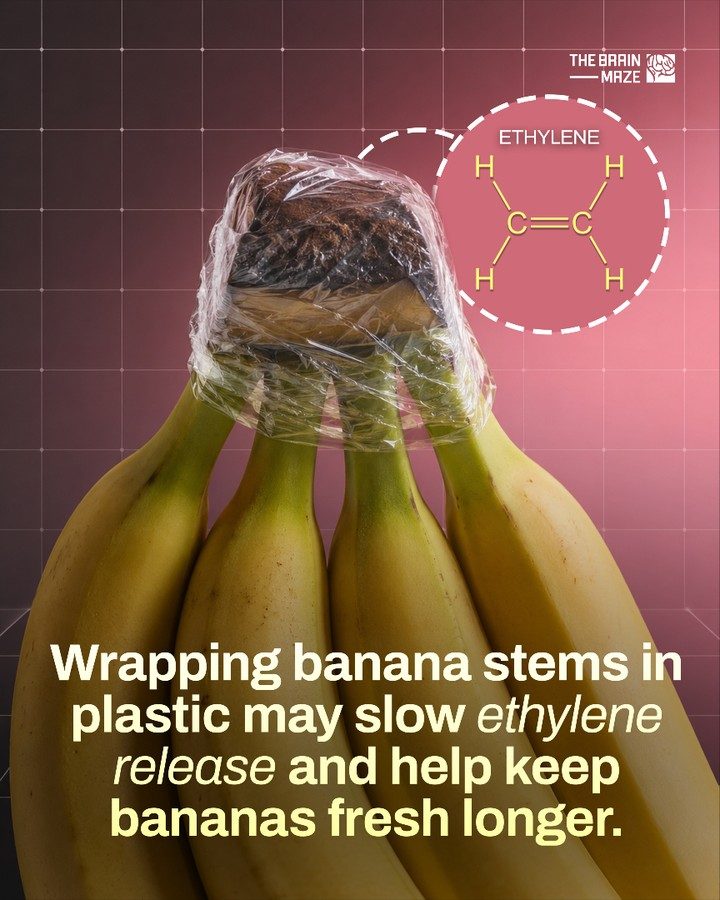
Banana Preservation with Plastic Wrap
Bananas are a beloved fruit, but their short shelf life can be frustrating. One simple method to extend their freshness is wrapping the stems in plastic. This technique helps bananas stay firm and fresh for a longer period by slowing the release of ethylene, a natural plant hormone that triggers ripening.
Why This Matters
Understanding how to preserve bananas is essential for anyone who enjoys this fruit but struggles with its quick deterioration. By wrapping the stems in plastic, you can delay the ripening process and reduce waste. This method is particularly useful for those who buy bananas in bulk or want to enjoy them over an extended period.
Main Discussion
The Role of Ethylene in Ripening
Ethylene is a natural plant hormone that plays a crucial role in the ripening process of fruits, including bananas. As bananas ripen, they release ethylene, which accelerates the ripening process. This hormonal release is why a single ripe banana can cause others nearby to ripen more quickly. By wrapping the stems in plastic, you create a barrier that slows the release and spread of ethylene, thereby delaying the ripening process.
How Plastic Wrap Helps
Covering the banana stems with plastic serves two primary purposes:
- Moisture Retention: Plastic wrap helps retain moisture in the stems, which is essential for the overall health of the banana. By keeping the stems hydrated, you maintain the banana's freshness and firmness.
- Ethylene Control: The plastic barrier reduces the diffusion of ethylene, both within the bunch and to the surrounding environment. This control over ethylene levels slows down the ripening process, allowing bananas to stay fresh longer.
The Effectiveness of the Method
While wrapping banana stems in plastic can help keep bananas fresh for a longer period, the effect is generally modest. This means it's not a foolproof solution, but it can provide a noticeable extension in shelf life. Factors like storage temperature, humidity, and the initial ripeness of the bananas can also influence the effectiveness of this method.
Practical Tips
Choosing the Right Plastic Wrap
Not all plastic wraps are created equal. For the best results, choose a wrap that is breathable but still provides a barrier against ethylene. Common options include cling film or specialized produce bags designed to extend the life of fresh produce.
Proper Wrapping Technique
To maximize the effectiveness of this method, follow these steps:
- Select Firm Bananas: Start with bananas that are not yet ripe. Overripe bananas will continue to ripen rapidly regardless of the plastic wrap.
- Wrap the Stems: Carefully wrap the stems of the bananas with plastic wrap, ensuring that the entire stem is covered. Be gentle to avoid damaging the fruit.
- Store Properly: Place the wrapped bananas in a cool, dry area away from direct sunlight. Avoid putting them in the refrigerator, as the cold temperature can cause the bananas to develop a black peel.
Other Preservation Methods
In addition to wrapping the stems, consider these supplementary methods to extend the shelf life of your bananas:
- Separate Bananas: If you've bought a bunch of bananas and only need a few, separate them. Bananas release ethylene more quickly when grouped together.
- Refrigerate: Once bananas are ripe, you can store them in the refrigerator to slow down further ripening. Keep in mind that the peel may turn black, but the flesh will remain fresh.
- Avoid Ethylene Producers: Store bananas away from other ethylene-producing fruits and vegetables, such as apples, tomatoes, and pears.
Important Takeaways
Preserving bananas with plastic wrap is a simple yet effective method to delay ripening. By controlling ethylene release and retaining moisture, this technique can help bananas stay fresh for a longer period. While the results may vary, it's a worthwhile method to try, especially for those who frequently buy bananas.
Conclusion
Bananas are a versatile and nutritious fruit, but their short shelf life can be a hassle. Wrapping the stems in plastic is a practical and easy solution to extend their freshness. By understanding the role of ethylene in ripening and using the right wrapping technique, you can enjoy your bananas for days longer than usual. So next time you bring home a bunch of bananas, give this method a try and see the difference for yourself.
Watch the Reel
Questions readers ask
What is ethylene and why does it affect bananas?
Ethylene is a natural plant hormone released by bananas. It accelerates the ripening process, causing bananas to soften and develop brown spots more quickly. Wrapping the stems in plastic helps to slow the release of ethylene, thereby extending the freshness of bananas.
How exactly does wrapping banana stems in plastic help?
By wrapping the stems in plastic, you create a barrier that traps the ethylene gas released by the bananas. This reduces the amount of ethylene that can act on the fruit, slowing down the ripening process and keeping the bananas fresher for a longer period.
Can I use any type of plastic wrap for this method?
You can use any type of plastic wrap that is airtight and can adhere to the banana stems. Common kitchen plastic wrap is suitable for this purpose. Ensure the wrap is applied tightly around the stems to effectively trap the ethylene gas.
How long can I expect my bananas to stay fresh using this method?
The exact duration can vary, but generally, wrapping the stems in plastic can extend the freshness of bananas by an additional 3-5 days. This method is most effective when the bananas are in the early stages of ripening.
Is wrapping the stems the only way to keep bananas fresh longer?
Wrapping the stems is one of the most effective methods, but there are other tips as well. Storing bananas in a cooler part of the kitchen, avoiding direct sunlight, and separating them from other ethylene-producing fruits can also help prolong their freshness.
What should I do if my bananas are already overripe?
If your bananas are already overripe, wrapping the stems in plastic will not reverse the ripening process. However, you can still use them in recipes like banana bread or smoothies. For future purchases, consider buying greener bananas and using the plastic wrap method to extend their freshness.
Can this method be used for other fruits as well?
Yes, the principle of slowing ethylene release can be applied to other fruits, especially those that are sensitive to ethylene. For example, apples, pears, and tomatoes can benefit from plastic wrap methods to extend their shelf life at home.
Related deep dives
Similar reads based on topic and creator.




Recent articles
Fresh deep dives from the latest Reels we unpacked.




Comments
Be the first to comment.