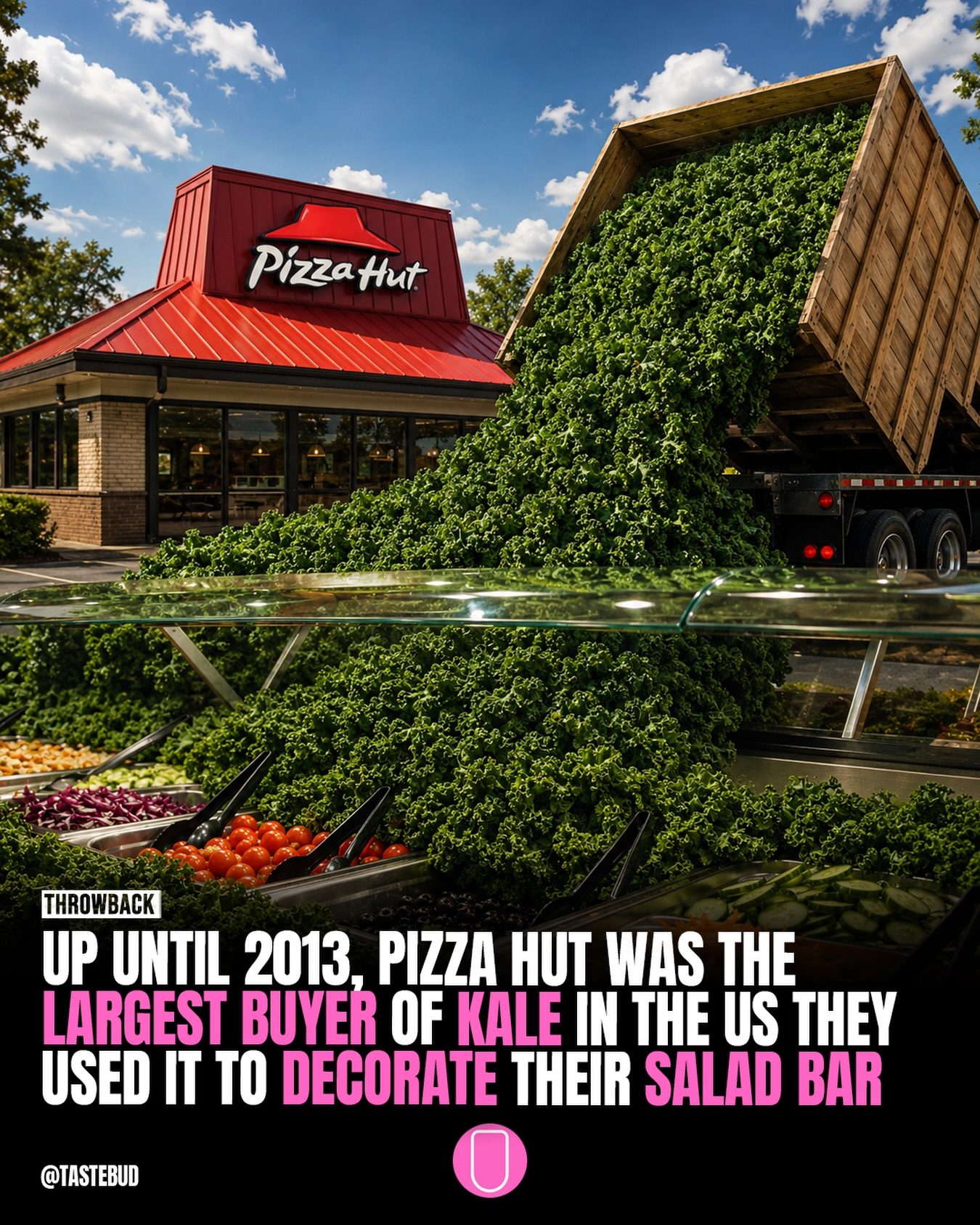
Pizza Hut's Surprising Kale History
Before kale became a staple in health-conscious diets, it served a very different purpose at Pizza Hut. During the 1980s and 1990s, Pizza Hut was the largest purchaser of kale in the United States. However, this wasn't because customers were clamoring for kale salads. Instead, the chain used kale purely as decoration on their popular salad bars.
Why This Matters
The story of Pizza Hut's kale purchases offers a unique glimpse into the evolution of food trends and the strategies restaurants use to present their offerings. It also highlights how ingredients that are now celebrated for their nutritional value were once overlooked or underutilized.
The Kale Decoration Trend
A Decorative Role
In the 1980s and 1990s, kale was not a widely consumed vegetable in the U.S. Despite this, Pizza Hut was buying massive quantities of it. The leafy greens were used to decorate salad bars, placed around trays to cover ice and make the displays look fresh and full. This practice continued until 2013, when health trends shifted and kale became a popular ingredient.
The Shift in Perception
The contrast between kale's past decorative role and its current status as a health food is striking. Today, kale is celebrated for its nutritional benefits, including high levels of vitamins K, A, and C, as well as antioxidants. Back then, its primary function at Pizza Hut was to enhance the visual appeal of the salad bar, not to provide nutritional value.
The Evolution of Kale
From Decoration to Superfood
Kale's journey from a decorative garnish to a superfood is a testament to changing dietary trends. As health-conscious eating became more prevalent, kale transitioned from being merely ornamental to a key ingredient in salads, smoothies, and other healthy dishes. This shift is reflected in the way kale is now marketed and consumed.
Health Trends and Restaurant Strategies
The story of Pizza Hut and kale also sheds light on how restaurants adapt to changing consumer preferences. By 2013, as kale's popularity rose, Pizza Hut likely adjusted its menu to better align with health trends. This adaptability is crucial for restaurants to stay relevant and meet the evolving tastes and health concerns of their customers.
Practical Tips
Incorporating Kale into Your Diet
For those looking to add more kale to their diet, here are some practical tips:
- Start Simple: Begin with kale salads. Massage the kale leaves with a bit of olive oil to make them more tender.
- Smoothies and Juices: Add kale to your smoothies or juices for an extra nutritional boost.
- Cooking Methods: Try different cooking methods like sautéing, baking, or steaming to find your preferred texture and flavor.
- Pairings: Pair kale with complementary flavors like lemon, garlic, and olive oil to enhance its taste.
Using Kale at Home
If you're inspired by Pizza Hut's kale decorating strategy, you can use kale to enhance the visual appeal of your own dishes. Here are a few ideas:
- Salad Bar Display: Place kale leaves around trays of fruit and vegetables to make your salad bar look more vibrant and fresh.
- Garnishes: Use kale to garnish soups, stews, and other dishes to add a pop of color.
- Centerpieces: Create a kale centerpiece for your dining table by arranging the leaves in a decorative bowl or vase.
Important Takeaways
- Historical Context: Pizza Hut's use of kale as a decorative element highlights how food trends and perceptions change over time.
- Adaptability: The story illustrates how restaurants adapt to evolving consumer preferences and health trends.
- Versatility of Kale: Kale can be used not only as a nutritional ingredient but also as a decorative element in food presentation.
- Culinary Creativity: Encourages culinary creativity and adaptability, showing that even seemingly mundane ingredients can have multiple uses.
Conclusion
Pizza Hut's history with kale is a fascinating tale of how food trends evolve and how restaurants adapt to changing tastes. From being a decorative element to becoming a nutritional powerhouse, kale's journey reflects broader shifts in dietary preferences and culinary practices. Whether you're looking to incorporate more kale into your diet or simply appreciate the history behind this leafy green, understanding its past and present roles in the culinary world can enrich your appreciation for food and dining experiences.
Watch the Reel
Questions readers ask
Why did Pizza Hut use kale in the 1980s and 1990s?
Pizza Hut used kale during the 1980s and 1990s primarily as a decorative element in their salad bars, not as a food item. This was a time when kale was not a popular ingredient in meals.
How did Pizza Hut's use of kale reflect the food trends of the time?
Pizza Hut's extensive use of kale for decoration highlights how certain ingredients were overlooked in the past, and how food trends have since shifted. This trend reveals how ingredients can be reimagined and revalued over time.
Was Pizza Hut the only restaurant using kale in this way?
While Pizza Hut was the largest purchaser of kale in the U.S. during this period, it is likely that other restaurants also used kale for decorative purposes. However, Pizza Hut's scale of usage was notably significant.
When did Pizza Hut stop using kale as a decoration in their salad bars?
The article mentions Pizza Hut's kale use from the 1980s to 2013, however, it does not specify the exact year they stopped using kale as decoration. It is implied, however, that the practice ended around 2013.
How did consumer preferences change regarding kale over time?
Consumer preferences for kale have evolved significantly since the 1980s. While kale was once merely a decorative garnish, it is now a celebrated ingredient in many diets, valued for its taste and nutritional benefits.
Did Pizza Hut's use of kale influence other restaurants' use of kale?
While there is no direct evidence that Pizza Hut's use of kale influenced other restaurants, it is clear that the chain's practice reflects broader trends in the restaurant industry during that time. The chain was simply following the strategy of making their salad bars look more appealing.
What other ingredients were commonly used for decoration in salad bars during the 1980s and 1990s?
While the article does not specify other ingredients, it is likely that other leafy greens and vegetables were used in a similar decorative manner. Iceberg lettuce, for example, was commonly used as a base for salad bars during this time.
Related deep dives
Similar reads based on topic and creator.


Recent articles
Fresh deep dives from the latest Reels we unpacked.




Comments
Be the first to comment.