Pharmaceutical R&D: Where the Money Goes
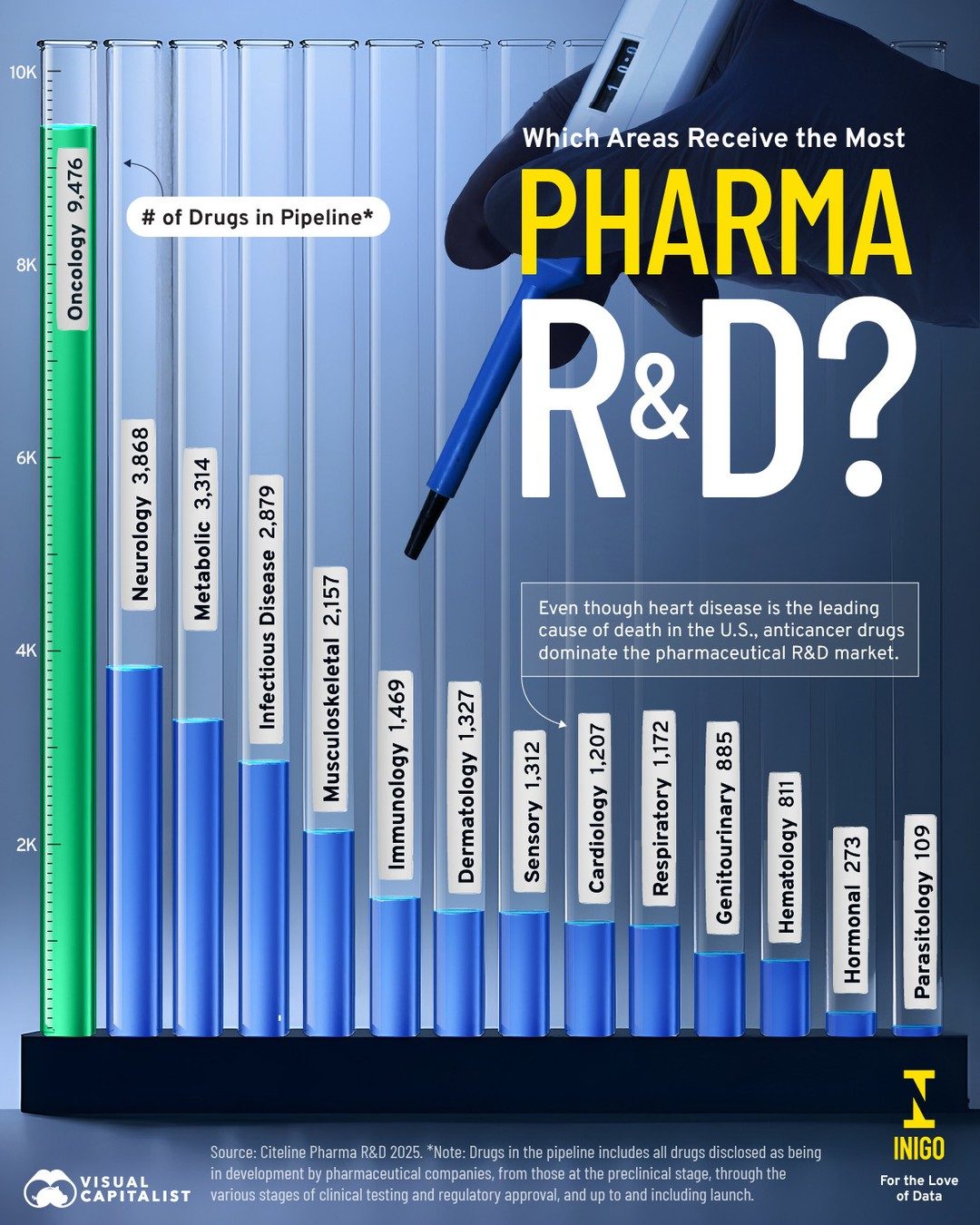
The pharmaceutical research and development (R&D) market is a dynamic and ever-changing landscape. Understanding where investments are concentrated can provide insights into future trends in healthcare. Despite heart disease being the leading cause of death in the U.S., anticancer drugs dominate the pharmaceutical R&D market, as highlighted by recent data visualizations.
Why this Matters
The allocation of R&D resources in the pharmaceutical industry reflects societal priorities and market demands. By examining which therapeutic areas receive the most investment, we can predict future advancements in treatments and understand the direction of healthcare innovation.
Main Discussion
Oncology: The Dominant Therapeutic Area
Oncology, the field of medicine concerned with the diagnosis and treatment of cancer. It receives by far the most pharmaceutical R&D investment. With 9,476 drugs in the pipeline, oncology far outpaces other therapeutic areas. This focus is driven by several factors, including the high prevalence of cancer, the emotional and economic impact of the disease, and the potential for significant advancements in targeted therapies and immunotherapies.
Neurology and Metabolic Diseases: Significant Investments
Neurological and metabolic diseases also receive substantial R&D funding. Neurology, with 3,868 drugs in development, is a close second to oncology. This therapeutic area encompasses a wide range of conditions, from neurodegenerative diseases like Alzheimer's and Parkinson's to neurological disorders like epilepsy and multiple sclerosis. The high investment in neurology reflects the growing understanding of the brain and nervous system, as well as the need for effective treatments for these often-debilitating conditions.
Metabolic diseases, with 2,879 drugs in development, are another significant area of focus. This category includes conditions like diabetes, obesity, and metabolic syndrome, which are increasingly prevalent in modern societies. The high investment in metabolic diseases underscores the need for better management and treatment of these conditions, which have far-reaching implications for overall health and quality of life.
Heart Disease: Relatively Low Investment
Cardiology, despite being a leading cause of death in the U.S., receives relatively less R&D investment compared to cancer and neurology. With 885 drugs in the pipeline, cardiology trails behind other therapeutic areas. This discrepancy may be attributed to several factors, including the already-established treatments for heart disease, the focus on preventive measures, and the perception that further innovations may not yield significant returns. However, ongoing research in areas like regenerative medicine and personalized treatments continues to show promise.
Other Therapeutic Areas
Several other therapeutic areas also receive notable R&D investment. Infectious diseases, with 2,157 drugs in development, remain a critical focus, especially given the ongoing threat of antibiotic resistance and emerging infectious diseases. Musculoskeletal disorders, with 1,469 drugs in the pipeline, are another significant area, reflecting the need for better treatments for conditions like arthritis, osteoporosis, and musculoskeletal injuries.
Immunology, with 1,327 drugs in development, is another key area of investment. This therapeutic category includes conditions like autoimmune diseases, allergies, and inflammatory disorders. The growing understanding of the immune system and its role in various diseases has led to increased investment in this field.
Dermatology, with 1,207 drugs in development, focuses on conditions affecting the skin, hair, and nails. This therapeutic area includes a wide range of conditions, from common issues like acne and eczema to more serious conditions like skin cancer.
Sensory disorders, with 1,172 drugs in development, encompass conditions affecting the senses, including vision, hearing, and smell. This therapeutic area includes conditions like glaucoma, macular degeneration, and hearing loss.
Respiratory diseases, with 811 drugs in development, include a range of conditions affecting the lungs and respiratory system. This category includes conditions like asthma, chronic obstructive pulmonary disease (COPD), and cystic fibrosis.
Genitourinary diseases, with 273 drugs in development, focus on conditions affecting the reproductive and urinary systems. This therapeutic area includes conditions like prostate cancer, urinary tract infections, and kidney disease.
Hormonal and parasitological diseases, with 109 drugs in development each, are smaller but still significant areas of focus. Hormonal disorders can have far-reaching effects on overall health and well-being, while parasitic diseases remain a significant health burden in many parts of the world.
Practical Tips
Understanding the pharmaceutical R&D landscape can be valuable for investors, researchers, and healthcare professionals. A few practical tips to navigate this complex field include:
- Stay Informed: Keep up-to-date with the latest developments in key therapeutic areas. This can help identify emerging trends and potential investment opportunities.
- Diversify Investments: Considering the high investment in oncology and neurology, diversifying investments across different therapeutic areas can mitigate risk and maximize returns.
- Focus on Innovation: Invest in companies that are at the forefront of innovation, particularly in areas like targeted therapies, immunotherapies, and personalized medicine.
- Consider Long-Term Trends: While current trends can be informative, it's essential to consider long-term trends and the potential for breakthroughs in less-explored therapeutic areas.
- Evaluate Market Demand: Assess the market demand for treatments in different therapeutic areas. Conditions with high prevalence and significant unmet need may offer the most significant opportunities for growth.
Important Takeaways
The pharmaceutical R&D market is dynamic, with oncology leading the way in terms of investment. Neurology and metabolic diseases also receive significant funding, reflecting the growing understanding of these complex conditions. While cardiology receives relatively less investment, ongoing research continues to show promise in areas like regenerative medicine. Other therapeutic areas, including infectious diseases, musculoskeletal disorders, and immunology, also receive notable investment. Understanding these trends can help guide investment decisions and identify future advancements in healthcare.
Conclusion
The pharmaceutical R&D market is a complex and multifaceted landscape, shaped by a variety of factors including disease prevalence, societal impact, and market demand. By examining the allocation of R&D resources, we can gain insights into future trends in healthcare and predict areas of innovation and growth. Whether you're an investor, researcher, or healthcare professional, staying informed about the latest developments in key therapeutic areas can help you navigate this dynamic field and capitalize on emerging opportunities.
Watch the Reel
Questions readers ask
Why does oncology receive the most investment in pharmaceutical R&D despite heart disease being the leading cause of death?
Oncology receives significant investment due to several factors, including the prevalence of cancer, its profound emotional and economic impact on society, and the promising advancements in targeted therapies. Additionally, the market demand for effective anticancer drugs drives more investment towards this sector.
How many drugs are currently in the oncology pipeline?
As of recent data, there are nearly 10,000 drugs in the oncology pipeline, indicating a robust and active area of research and development in this therapeutic area.
What are the primary reasons behind the focus on oncology in the pharmaceutical industry?
The primary reasons include the high prevalence of cancer, the urgent need for better treatments, and the potential for significant breakthroughs in targeted therapies. This focus also reflects the market's readiness to embrace and invest in new cancer treatments.
Why is heart disease not receiving more R&D investment despite being the leading cause of death?
Heart disease is primarily managed through a combination of lifestyle changes, preventive measures, and existing treatments, which reduces the immediate demand for new drugs. However, the market for anticancer treatments is more dynamic and continuously seeks breakthroughs.
What insights can be gained from understanding pharmaceutical R&D investment trends?
Analyzing pharma R&D investment trends provides valuable insights into future healthcare innovations, emerging therapeutic areas, and potential new treatments. This information can also help predict upcoming advancements in treatments and understand the evolving landscape of healthcare.
What are the market demands that drive R&D investment in oncology?
Market demands for oncology R&D are driven by the need for effective treatments, the emotional and economic burden of cancer on society, and the potential for high returns on investment in successful targeted therapies and breakthroughs.
Recent articles
Fresh deep dives from the latest Reels we unpacked.




Comments
Be the first to comment.