Public Opinion on Country's Direction
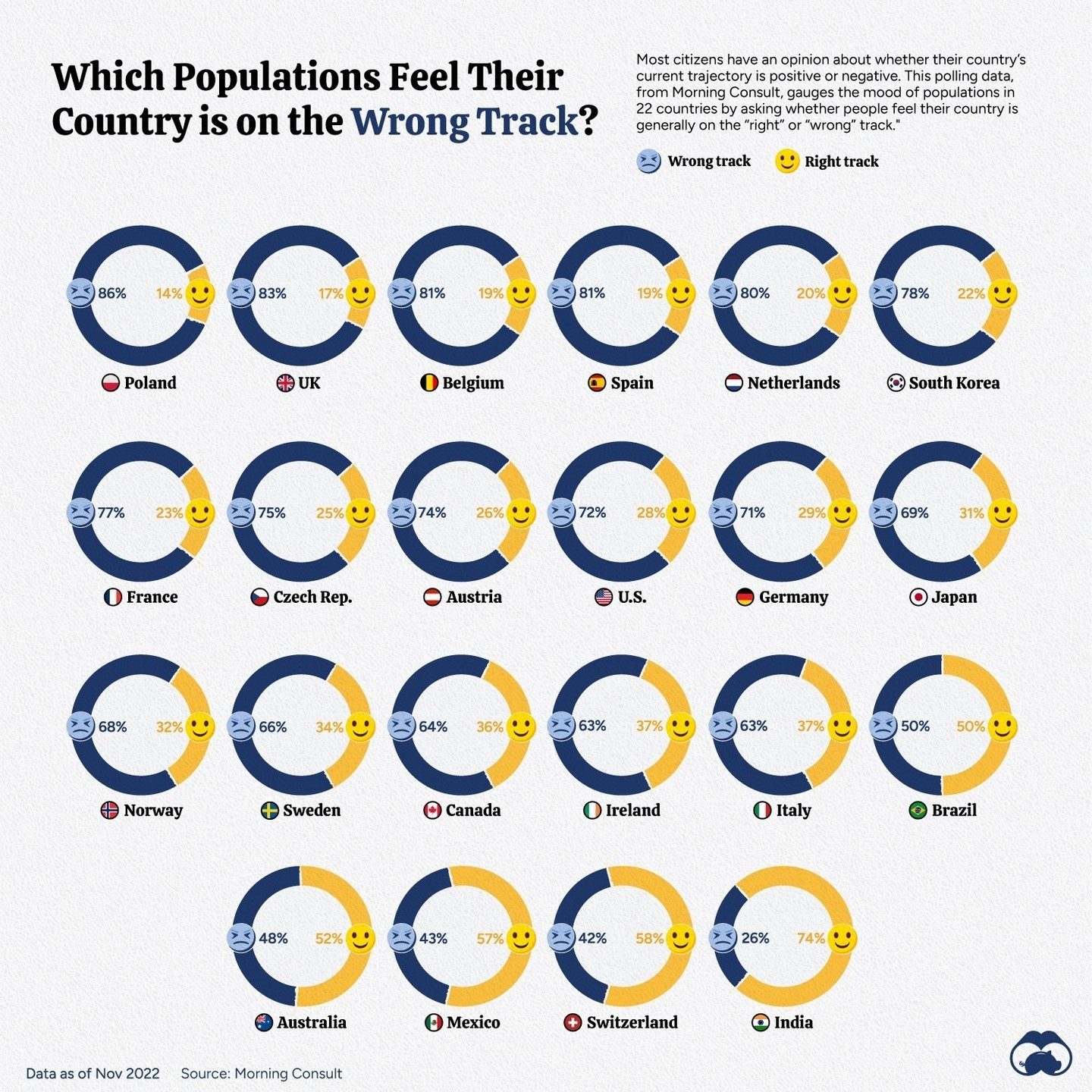
The impact of the pandemic, rising inflation, and growing geopolitical instability has left many people feeling uncertain about their country's trajectory. According to a recent survey by Morning Consult, a significant portion of citizens in many countries express concern about their nation's direction. These sentiments are reflected in the data collected in November 2022, which shows that a majority of respondents feel their countries are on the "wrong track."
Why This Matters
Understanding public opinion on a country's direction is crucial for several reasons. It provides insights into the collective sentiment of a population, which can influence policy decisions, political stability, and economic strategies. Moreover, it offers a snapshot of how global events, such as the pandemic and geopolitical tensions, are perceived by individuals worldwide. This information is invaluable for governments, international organizations, and corporations aiming to navigate an ever-changing global landscape.
Main Discussion
Global Sentiment Overview
The data from Morning Consult reveals a bleak outlook in many nations. Countries like the United States, France, and Italy show high percentages of citizens who believe their countries are on the wrong track. This sentiment is particularly pronounced in nations grappling with economic challenges and political unrest. For instance, in the United States, a significant portion of the population feels discontented with the current trajectory, reflecting concerns over economic policies, social issues, and political divisions.
Regional Variations
While the overall sentiment is largely negative, there are notable variations across regions:
-
Europe: Countries like Poland, the United Kingdom, and Spain show a mix of negative and positive sentiments. For example, in Poland, a substantial percentage of respondents feel their country is on the wrong track, while in the UK, the sentiment is more evenly split. This variation could be attributed to different experiences with the pandemic, economic policies, and political stability.
-
Asia: In South Korea and Japan, the sentiment is more positive compared to Europe. This could be due to more effective pandemic management and stable economic policies in these countries. However, even in these nations, a significant portion of the population expresses concerns about the future.
-
Americas: In the Americas, countries like Canada and Mexico show a more balanced sentiment, with a notable percentage of respondents feeling optimistic about their nation's direction. Brazil, however, leans more negatively, reflecting ongoing economic and political challenges.
Factors Influencing Sentiment
Several factors contribute to the public's perception of their country's direction. Key among them are:
-
Economic Stability: Economic performance is a significant determinant of public sentiment. Countries experiencing economic downturns, inflation, and unemployment often see a higher percentage of negative feelings about their trajectory.
-
Healthcare and Pandemic Response: The handling of the pandemic and the effectiveness of healthcare systems have had a profound impact on public opinion. Nations that successfully managed the pandemic and provided robust healthcare services generally have more positive sentiments.
-
Geopolitical Stability: Political stability and international relations play a crucial role. Countries with stable governments and favorable international relations tend to have more optimistic citizens, while those facing political turmoil and geopolitical tensions often see negative sentiments.
Practical Tips for Analyzing Public Sentiment
When analyzing public sentiment, it is essential to consider the following:
-
Data Sources: Use reliable and comprehensive data sources to get an accurate picture of public opinion. Organizations like Morning Consult provide valuable insights based on extensive surveys and data collection methods.
-
Contextual Analysis: Understanding the context in which the data was collected is crucial. Factors such as recent economic events, political developments, and global trends can significantly influence public sentiment.
-
Regional Differences: Recognize that regional differences exist. What affects public sentiment in one region may not have the same impact in another. Tailoring analysis to regional contexts can provide more nuanced insights.
-
Longitudinal Studies: Conducting longitudinal studies can help track changes in public sentiment over time. This approach can identify trends and patterns that may not be apparent in single-time-point analyses.
Important Takeaways
-
Global Concerns: The majority of citizens in many countries feel their nations are on the wrong track, highlighting global concerns about economic instability, pandemic management, and geopolitical tensions.
-
Regional Variations: Public sentiment varies significantly across regions, influenced by factors such as economic performance, healthcare systems, and political stability.
-
Key Factors: Economic stability, healthcare and pandemic response, and geopolitical stability are critical factors influencing public opinion.
Conclusion
The data from Morning Consult underscores the widespread concern among citizens about their country's direction. Understanding the underlying factors and regional variations in public sentiment is essential for policymakers, international organizations, and corporations. By analyzing reliable data and considering the context, stakeholders can gain valuable insights to navigate the complexities of the global landscape effectively.
Watch the Reel
Questions readers ask
Which countries have the highest percentage of citizens feeling their country is on the 'wrong track'?
The survey by Morning Consult indicates that a majority of respondents in many countries feel their nations are on the 'wrong track.' Specific countries with high percentages include those heavily affected by economic struggles, geopolitical tensions, and the pandemic. For the most accurate and up-to-date information, refer to the detailed results of the Morning Consult survey.
How has the pandemic influenced public opinion on a country's future?
The pandemic has significantly heightened uncertainty about national futures. Many people are concerned about the economic fallout, healthcare systems, and social disruptions caused by the pandemic, leading to a sense of instability and pessimism about their country's direction.
What role do economic struggles play in shaping public sentiment on national direction?
Economic struggles, including rising inflation and job insecurity, are major contributors to the widespread feeling that many countries are on the 'wrong track.' These economic challenges directly impact people's daily lives, leading to increased anxiety and dissatisfaction about their country's future.
How do geopolitical tensions affect global public opinion on national futures?
Geopolitical tensions contribute to a sense of global instability, which in turn influences public opinion on national futures. Concerns about international conflicts, trade wars, and diplomatic crises can make people feel uncertain and pessimistic about their country's trajectory and stability.
Why is understanding public sentiment on a country's direction important for policymakers?
Understanding public sentiment on a country's direction helps policymakers gauge the collective mood of their constituents, which can inform better decision-making. This insight is vital for crafting policies that address people's concerns, promote stability, and enhance economic strategies. By acknowledging and responding to public sentiment, policymakers can foster greater trust and support.
How can rising inflation impact public opinion on national future?
Rising inflation erodes purchasing power and increases the cost of living, which directly affects people's financial well-being. This economic strain can lead to a sense of discontent and pessimism about a country's future, as people worry about their ability to sustain their lifestyles and meet basic needs.
What can be inferred about the global public opinion trends from the survey data?
The survey data reveals a prevalent trend of pessimism about national futures, driven by a combination of the pandemic, economic struggles, and geopolitical tensions. This trend suggests a growing global sentiment of instability, which can have profound implications for policy-making, political stability, and economic strategies worldwide.
Recent articles
Fresh deep dives from the latest Reels we unpacked.




Comments
Be the first to comment.