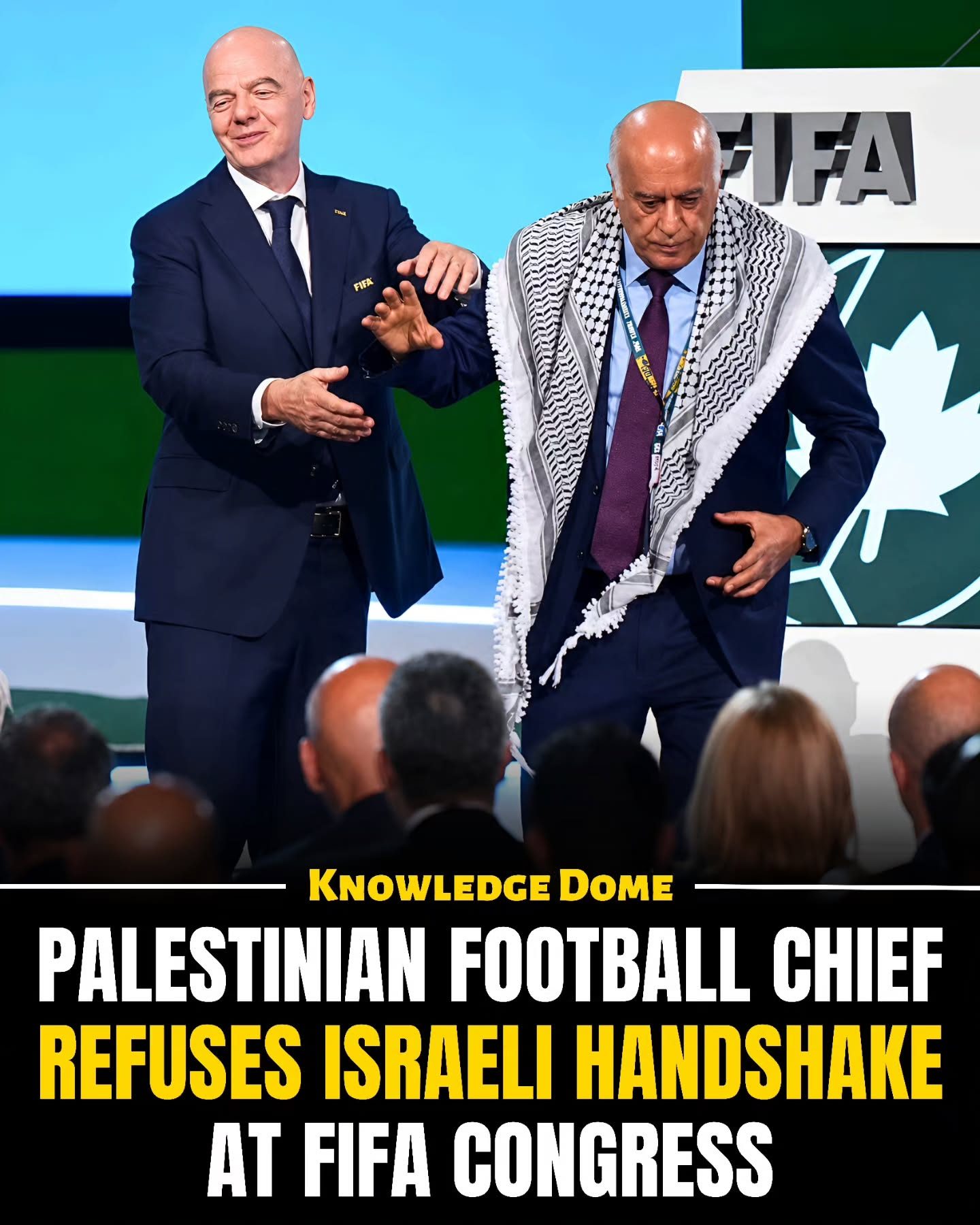
The FIFA Congress Handshake Debate
The 76th FIFA Congress in Vancouver, Canada, was highlighted by a tense moment.
The controversy unfolded when Jibril Rajoub, President of the Palestinian Football Association, refused to shake hands with Bassem Sheikh Suliman, Vice-President of the Israeli Football Association. This refusal, at a planned photo opportunity, attracted significant attention from delegates. FIFA President Gianni Infantino initiated the moment, inviting both Rajoub and Suliman to come forward and shake hands as a symbol of unity. However, Rajoub declined the invitation, both initially and when Infantino called them up a second time.
Why This Matters
The handshake incident shines a spotlight on the complex political dynamics at play in international football. It underscores the challenges of fostering unity and cooperation in an environment where deep-seated political and nationalistic issues are present. This moment serves as a reminder that the world of sports is not immune from broader geopolitical tensions.
The Context: A Long-Running Dispute
The handshake incident comes amidst a long-running dispute between the Palestinian and Israeli football associations. The Palestinian Football Association has persistently challenged FIFA over Israeli football clubs playing in settlements located in the occupied West Bank. The Palestinians have sought stronger action against the Israeli Football Association, viewing the current situation as a form of recognition that they oppose.
Rajoub's Perspective
Following the incident, Rajoub explained his stance, stating that he believed "national dignity is not subject to protocol." He emphasized that he could not shake hands with someone he viewed as defending a government he strongly opposes. Palestinian Football Association officials also echoed this sentiment, asserting that such a gesture would ignore or "whitewash" the suffering of Palestinians.
The Reactions and Infrastructure
FIFA President Gianni Infantino addressed the incident by acknowledging the complexity of the situation. He urged both sides to work together and give hope to children through football. This appeal for unity underscores the broader role that sports can play in fostering dialogue and cooperation, even in the face of deep political divisions.
The "Knowledge Dome" setting, where the incident took place, highlights the symbolic and infrastructural importance of such events. This venue, often used for educational and diplomatic purposes within the realm of football, becomes a stage for both political gestures and public scrutiny.
The Broader Implications
The incident at the FIFA Congress raises questions about the role of international sporting bodies in mediating conflicts. It also highlights the delicate balance between promoting unity and respecting the political sensibilities of member nations. This particular moment serves as a microcosm of the larger geopolitical tensions that often play out within the world of sports.
The importance of national and cultural identities within international sports cannot be underestimated. It’s essential to consider the broader context and the long-standing issues that shape these interactions. The handshake incident underscores how symbols and gestures, even in the realm of sports, can carry significant weight and meaning.
Practical Tips for Navigating Diplomatic Moments in Sports
-
Understand the Context: Before engaging in any diplomatic gesture, understand the broader political and cultural context. This understanding can help avoid unnecessary tensions and misunderstandings.
-
Respect National Dignity: Always respect the national dignity and political sensibilities of all parties involved. Acknowledge their perspectives and the deeper issues at play.
-
Promote Unity Through Action: Foster unity and cooperation through actions and initiatives that bring people together. Use sports as a platform for dialogue, understanding, and hope.
-
Leverage International Bodies: Utilize the influence and reach of international sporting bodies to promote dialogue and cooperation. These bodies can play a crucial role in mediating conflicts and fostering unity.
Important Takeaways
- The handshake incident at the FIFA Congress underscores the delicate balance between promoting unity and respecting political sensibilities in sports.
- It highlights the broader geopolitical tensions that often play out within the world of sports.
- Understanding the context and respecting national dignity are crucial for navigating diplomatic moments in sports.
Conclusion
The FIFA Congress handshake incident serves as a reminder that the world of sports is not immune from broader geopolitical tensions. It underscores the importance of understanding the context, respecting national dignity, and promoting unity through action. By leveraging the influence of international sporting bodies, we can foster dialogue, understanding, and cooperation, even in the face of deep political divisions.
Watch the Reel
Questions readers ask
Why did Jibril Rajoub refuse to shake hands with Bassem Sheikh Suliman at the FIFA Congress?
Jibril Rajoub, President of the Palestinian Football Association, refused to shake hands with Bassem Sheikh Suliman, Vice-President of the Israeli Football Association, as a gesture that reflected the ongoing political tensions between Palestine and Israel. The refusal was made during a planned photo opportunity at the 76th FIFA Congress in Vancouver, Canada, where FIFA President Gianni Infantino encouraged the handshake as a symbol of unity, but Rajoub declined both times he was invited.
What was the significance of the handshake controversy at the FIFA Congress?
The handshake controversy highlighted the deep-seated political dynamics that often intersect with international football. It underscored the challenges in fostering unity and cooperation between football associations from countries with complex political relationships, such as Palestine and Israel.
How did FIFA President Gianni Infantino respond to the handshake controversy?
FIFA President Gianni Infantino initiated the handshake moment as a gesture of unity and sportsmanship. He invited both Jibril Rajoub and Bassem Sheikh Suliman to come forward and shake hands, but when Rajoub refused, Infantino called them up a second time, but the handshake did not take place. This incident underscored the challenges FIFA faces in promoting harmony within the global football community.
What implications might the handshake controversy have on future FIFA Congress events?
The handshake controversy may influence how future FIFA Congress events address political sensitivities and diplomatic gestures. It could prompt FIFA to implement more nuanced strategies when promoting unity and understanding between football associations from countries with contentious political histories. The incident serves as a reminder of the delicate balance FIFA must maintain to foster international football unity while respecting the unique challenges each association faces.
Did the handshake controversy impact the overall FIFA Congress in Vancouver?
The handshake controversy was the most tense moment at the 76th FIFA Congress in Vancouver, Canada. It drew significant attention from delegates and highlighted the underlying political tensions that can affect international football. Despite the incident, the Congress continued, focusing on other important matters related to the sport and its global governance.
What is the Palestinian Football Association's stance on engaging with the Israeli Football Association?
The Palestinian Football Association, led by Jibril Rajoub, has a complex relationship with the Israeli Football Association due to the ongoing political conflict between Palestine and Israel. Rajoub's refusal to shake hands with the Israeli Football Association's vice-president reflects the Association's stance on political disputes, emphasizing that unity and cooperation in football cannot be separated from the broader political context.
How do international football organizations navigate the challenges of political tensions in sport?
International football organizations, including FIFA, often navigate political tensions by promoting sportsmanship, unity and fair play. These organizations have a challenging task in balancing the promotion of global unity with respecting the political sensitivities of member associations. Efforts to foster cooperation and dialogue between associations with contentious histories are ongoing, but they require careful consideration to ensure that all parties' interests and concerns are respected.
Recent articles
Fresh deep dives from the latest Reels we unpacked.




Comments
Be the first to comment.