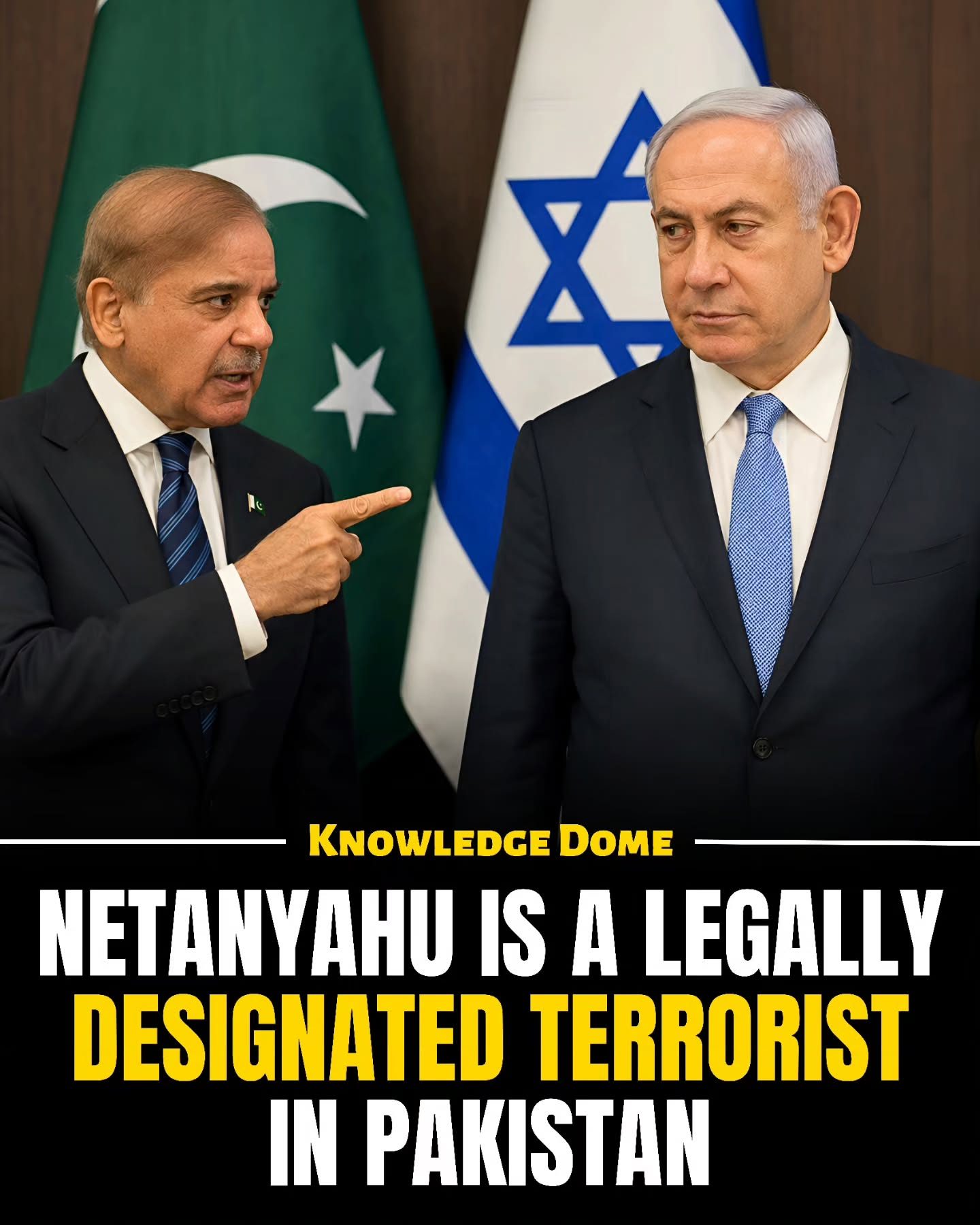
Understanding Pakistan's Designation of Benjamin Netanyahu as a Terrorist
In July 2024, Pakistan officially declared Israeli Prime Minister Benjamin Netanyahu a terrorist. This significant political move was announced by Rana Sanaullah, the political and public affairs adviser to Pakistani Prime Minister Shehbaz Sharif. The declaration came after complex political negotiations and public pressure.
Context / Why this matters
Pakistan's decision to designate Netanyahu as a terrorist is deeply rooted in the country's stance on the ongoing conflict in Gaza. The announcement followed a deal between the Pakistani government and the right-wing religious party Tehreek-e-Labbaik Pakistan. Supporters of this party had held a large sit-in near Islamabad, demanding that Pakistan take a stronger stand against the war in Gaza.
This move is more than just a political statement; it signifies a shift in Pakistan's foreign policy and its approach to international relations. By officially designating Netanyahu as a terrorist, Pakistan aims to send a clear message to the international community about its position on the conflict and the actions of the Israeli government.
Main discussion
Political Background
The announcement was a result of negotiations between the Pakistani government and Tehreek-e-Labbaik Pakistan. The party's supporters had been staging a sit-in near Islamabad, demanding stronger action against Israel. These negotiations led to a joint announcement where government leaders declared Netanyahu a terrorist and a person responsible for war crimes.
Legal and Diplomatic Implications
The designation of Netanyahu as a terrorist means that Pakistan considers him legally responsible for war crimes. This move could have significant legal and diplomatic implications for Netanyahu and Israel. Pakistan's government has called for international justice, urging the world to bring Netanyahu to court. However, it is essential to note that Netanyahu is not listed as a terrorist by the United Nations or other standard global lists, although he has faced international legal scrutiny, including ICC-related war crimes claims.
Pakistan's Stance on Israel
Pakistan does not officially recognize Israel as a country, which is why it refers to Israel as an "entity" in its official statements. The designation of Netanyahu as a terrorist aligns with Pakistan's long-standing position on the Israeli-Palestinian conflict. By labeling Israel as an entity committing war crimes, Pakistan emphasizes its support for the Palestinian cause and its opposition to Israeli policies.
Boycott and Economic Pressures
In addition to the designation, Pakistan has announced plans to form a special committee to support a boycott against products and companies that directly or indirectly support the Israeli military. This move is seen as a strong political message, aimed at exerting economic pressure on Israel.
Practical tips
Understanding the Conflict
To grasp the full implications of Pakistan's move, it is crucial to understand the ongoing conflict in Gaza. The war in Gaza has been a longstanding issue, with both sides suffering significant losses. Pakistan's decision to designate Netanyahu as a terrorist is a response to this conflict and reflects its support for the Palestinian cause.
Staying Informed
Staying informed about international politics and conflicts is essential for understanding the broader context of such announcements. Following reliable news sources and analyzing multiple perspectives can provide a more comprehensive understanding of the situation.
Important takeaways
- Pakistan has officially designated Israeli Prime Minister Benjamin Netanyahu as a terrorist.
- This move is a response to the ongoing conflict in Gaza and the actions of the Israeli government.
- Pakistan's announcement is a significant shift in its foreign policy and reflects its support for the Palestinian cause.
- The designation has legal and diplomatic implications for Netanyahu and Israel.
- Pakistan plans to support a boycott against products and companies that support the Israeli military.
Conclusion
Pakistan's designation of Benjamin Netanyahu as a terrorist is a significant political move with far-reaching implications. It reflects Pakistan's stance on the Israeli-Palestinian conflict and its support for the Palestinian cause. The announcement is a result of complex political negotiations and public pressure, and it signals a shift in Pakistan's approach to international relations. Understanding the broader context and implications of this move is crucial for grasping its significance on the global stage.
Watch the Reel
Questions readers ask
What prompted Pakistan to declare Benjamin Netanyahu a terrorist?
Pakistan's decision was driven by its stance on the Gaza conflict and the influence of local political dynamics. The declaration was a result of negotiations between the Pakistani government and the party Tehreek-e-Labbaik Pakistan, which had held a sit-in near Islamabad to demand a stronger stance on the conflict.
Who announced the designation of Benjamin Netanyahu as a terrorist by Pakistan?
Rana Sanaullah, the political and public affairs adviser to Pakistani Prime Minister Shehbaz Sharif, made the official announcement about the designation.
How does this declaration reflect a shift in Pakistan's foreign policy?
The declaration marks a notable change in Pakistan's foreign policy approach, indicating a more assertive stance on international issues that align with domestic pressures and political negotiations.
What was the deal between the Pakistani government and Tehreek-e-Labbaik Pakistan?
The deal involved the Pakistani government agreeing to take a strong stance on the Gaza conflict, which led to the designation of Benjamin Netanyahu as a terrorist. This was in response to the party's demands and public pressure.
Recent articles
Fresh deep dives from the latest Reels we unpacked.




Comments
Be the first to comment.